Who Are the BRICS and why do they matter?
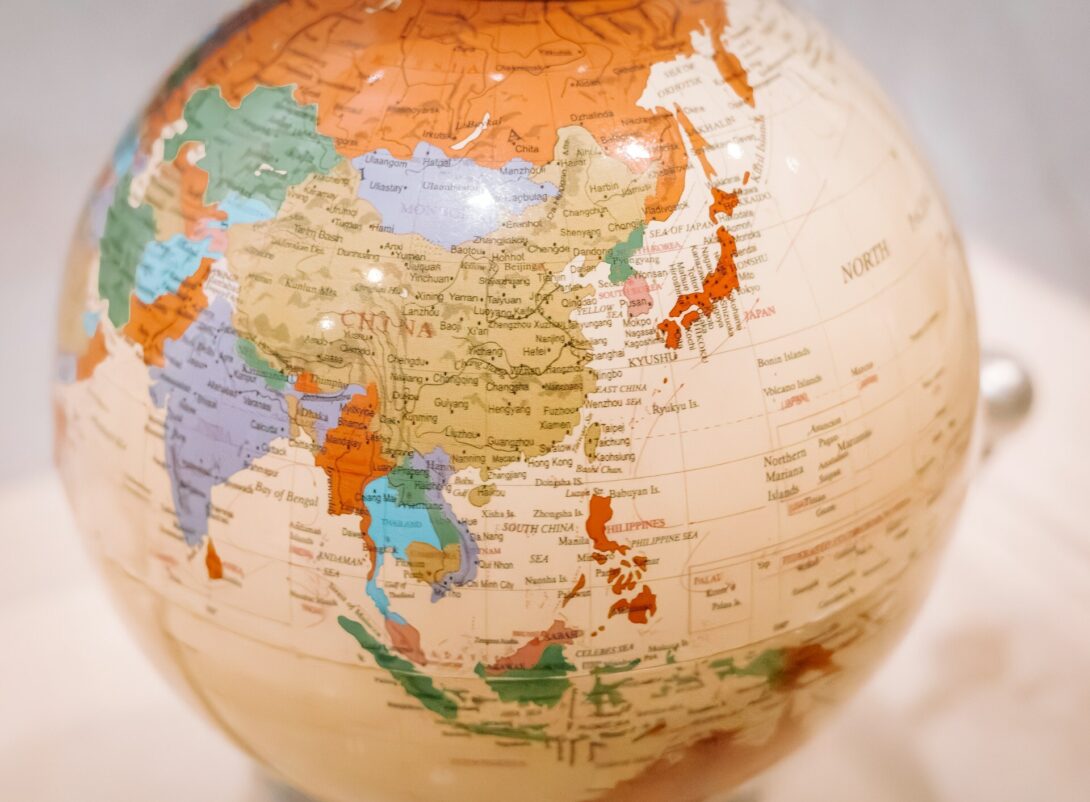
President Trump may dominate the world’s headlines with his social media posts, rambling monologues, and erratic, dangerous behaviour. But the long term future of the planet depends much more on two men who met this weekend out of the limelight: China’s Xi and India’s Modi. Their countries account for a third of the world’s population and two of the three biggest economies in the world (in terms of GDP in Purchasing Power Parity). They account for 30% of global oil imports; around 40% of Greenhouse Gas Emissions; and India now drives global economic growth as China has done for decades. They matter. Indeed, that is the main premise of my book Eclipsing the West.
Their meeting matters for their bilateral relationship: not enemies or friends but ‘frenemies’. It also matters since they are two of the four cornerstone founders of the BRICs group of countries: Brazil, Russia, India and China with South Africa next to join. There are now 11 BRICS members (also includes Ethiopia, Egypt, Indonesia, the United Arab Emirates, Iran and- unconfirmed- Saudi Arabia).
The group could hardly be described as close. Several members are at war with each other. Others have little in common. There is also a fundamental difference of objective: the Chinese attempt to create a front of China-aligned countries to act as a counter-balance to the USA and its allies; and the Indian idea of ‘multi-alignment’ involving looser alignments including also with Western countries.
Where common ground has been established is in finding alternative payments arrangements to the dollar in order to insure against the risk of US sanctions and secondary sanctions for countries which trade with Russia and Iran (and potentially China). Led by China, there is some progress in developing alternative payments mechanisms (though mainly via bilateral arrangements rather than the BRICS). There is also a BRICS multilateral bank designed to provide alternative development funding to that provided by the World Bank and regional banks in which the USA and Japan have controlling shares.
The more substantial question concerns China’s relationship with India. That relationship is primarily defined by the 3,500 Km shared and disputed border about which there were clashes in 2020 and the broader issue of security as between two adversarial nuclear-armed powers. India had aligned itself with the US and had a loose security tie-up with the USA, Japan and Australia.

But Trump’s capricious behaviour has thrown that into doubt- with India one of the main targets of Trump’s tariffs and infuriated by Trump’s seeming cultivation of the military leadership in Pakistan. No doubt President Xi is seeking to persuade Modi that China, while not exactly an ally, can be a more reliable partner.
That partnership has considerable economic potential though trade and investment flows are currently very low and heavily one sided, favouring Chinese exports and companies. Bilateral trade has doubled in 10 years and is worth $155 bn. (2025) with a $100 bn. balance in China’s favour. After being largely excluded from India, there are moves to relax entry for Chinese firms especially in renewable energy technologies.
Undoubtedly there is an appetite for Chinese goods and technology amongst Indian firms and the wider population. But the Indian authorities are suspicious of Chinese intentions and are unlike to liberalise much. A friendly handshake, some common positioning on global issues and limited relaxation of Indian investment rules are the most likely outcomes of talks. Meanwhile, the two countries continue to grow, especially India: increasingly important pillars of the world economy and whatever replaces the collapsing US-led world order.
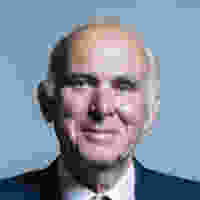
Sir John Vincent Cable is a British politician who led the Liberal Democrats from 2017 to 2019 and represented Twickenham in Parliament from 1997 to 2015 and again from 2017 to 2019. He served as Secretary of State for Business, Innovation and Skills and President of the Board of Trade in the coalition government between 2010 and 2015. Cable studied natural science and economics at Cambridge before working as a finance officer in the Kenya Treasury and lecturing in economics at Glasgow University, where he also earned his PhD. His distinguished career included roles in the Diplomatic Service, directing research at the ODI, advising the Commonwealth Secretary-General, heading the international economics programme at Chatham House, and serving as Chief Economist for Shell Group Planning.