Andy Burnham Should Clean Up Britain’s Dirty Money Problem
September has been a defining month for Reform UK and perhaps an awakening call as to how Britain’s financial services infrastructure does not just launder money for kleptocrats abroad, but builds the pathways that channel dodgy money into its own politics. Days after Channel 4 News and Verbatim filmed Nigel Farage’s chief of staff coaching a fake foreign donor on how to funnel cash into the party through a UK-based “son,” Reform accepted the two largest political donations in British history: £36 million each from British crypto billionaires, both until recently based overseas. The scandal and the windfall are the same story told twice: a party caught scheming to disguise foreign money - now simply handing the foreign-adjacent money in plain sight, because Britain’s laws are loose enough and no disguise is needed. This isn't a Reform problem. It's a London problem - a system built to be the world’s easiest place to move money nobody wants to explain, and a Labour government that promised to shut it down, only to watch £72 million pass through the gap in under 48 hours.
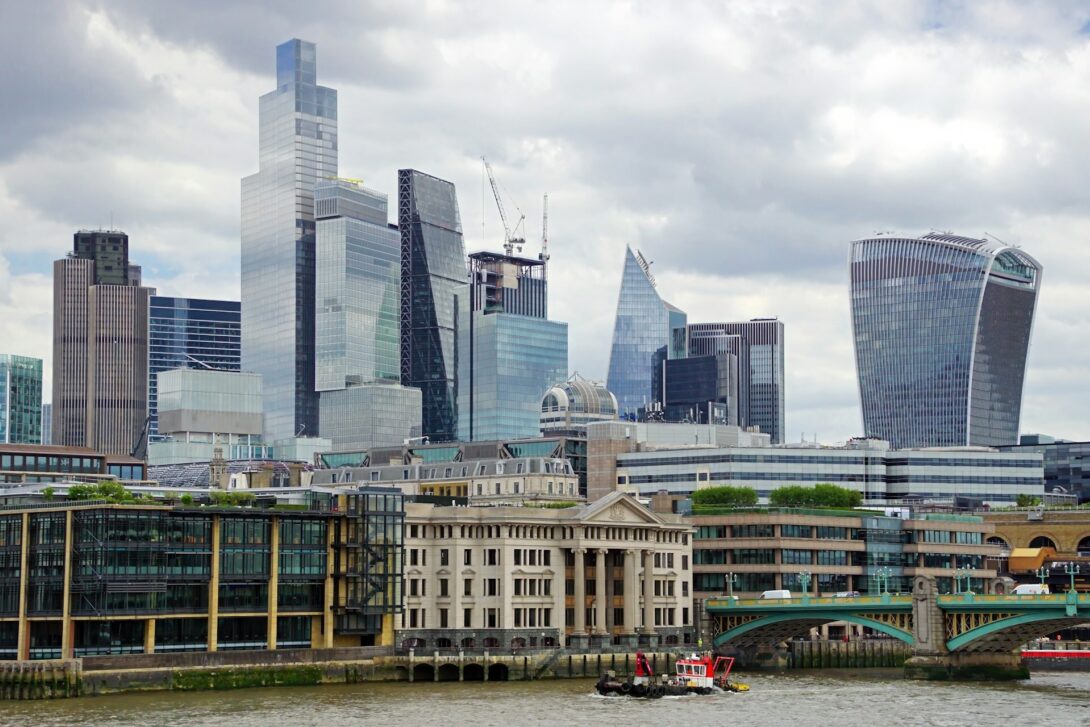
The Reform's scandals are not alone. For years Londoners walked past the opulent mansion in Primrose Hill, or the row of apartments on New Oxford Street, never imagining that the buildings above them could be linked to torture, slavery and fraud in Southeast Asia. But they were just two of multiple properties reportedly owned by a Cambodian crime group overseeing a sprawling transnational scam empire which used trafficked workers from the Global South to defraud victims of billions. In October, the companies - incorporated in the British Virgin Islands - were sanctioned by the UK and US governments.
The Burnham government has a valuable opportunity to rid Britain of dirty money. The Cambodian scam group was only one of an endless string of criminal gangs, oligarchs and dictators who have found refuge in London’s opaque financial structures to hide ill-gotten gains from the public eye. The Reform’s case also shows how foreign elites use an array of local professionals able to exploit loopholes to influence British politics, to buy property anonymously and hide untaxed wealth in the UK, inflating housing costs and depriving the country’s struggling public services of revenue. These illicit financial flows fuel instability abroad and inequality at home, and Burnham has a chance to act quickly and build on his predecessor’s efforts.
In November 2024, then Foreign Secretary David Lammy, reflecting a pre-election promise to combat kleptocracy, declared that ”the golden age of money laundering is over.” Three notorious kleptocrats were hit with asset freezes and travel bans, £15m was pledged to the City of London Police anti-corruption unit, and a new campaign to crack down on domestic and international illicit finance was heralded. For campaigners against dirty money, it was a long-awaited moment of leadership on an issue that threatens societies and undermines democracy worldwide.
Since then, progress has stalled. Last summer the UK was due to host the Illicit Finance Summit - a convening of anti-corruption experts from government, civil society and the private sector - until the Foreign Commonwealth and Development Office (FCDO) announced it will no longer take place. The cancellation is regrettable, but a fresh UK government can now productively use the intervening period to bring together a strong alliance of partners aimed at delivering meaningful, concerted action on one of the gravest threats to global stability and equality. The upcoming presidency of the G20 provides further opportunity for the British government to lean on the available support from the inter-agency working groups and the civil society both in the UK and the Global South.
Despite its pernicious influence, tackling illicit finance remains a misunderstood, underreported and underfunded issue. The United Nations estimates that the amount of money laundered globally could be between $800 billion and $2 trillion, equivalent to 2 - 5% of the world’s GDP. Illicit financial activity is linked to the plundering of treasuries and resources around the world, particularly in lower- and middle-income countries, which undermines trust in governments and fuels discontent, as witnessed by recent youth protests in Nepal, Madagascar and Bangladesh. In Africa alone the amount lost is estimated at $88.6bn annually.

The British government is not only well placed to lead the fight against illicit financial activity, it has a moral duty to do so. Every year, estimated hundreds of billions of illegally acquired wealth is spent, cleaned or held in the UK and its overseas territories. With its powerful legal and financial services industries, London acts as an incubator for a network of professional enablers who help conceal stolen loot through legitimate institutions. The UK is home to a booming industry of lawyers, accountants, bankers, estate agents, wealth managers and public-relations specialists making a fortune by helping the world's most corrupt political elite and cold-blooded autocrats safely invest their stolen wealth in the British economy.
It is true that in recent years, authorities have frozen property linked to officials from Russia, Azerbaijan, Bangladesh and Malaysia. Similarly, in March, the Crown Prosecution Service froze a fugitive Chinese national’s £81m London property empire bought using a passport from St Kitts and Nevis - one of several Caribbean countries which sells citizenship. But loopholes continue to being exploited. Nearly 100,000 properties in England and Wales are still owned by offshore companies, totalling £460bn. In almost half the cases the ownership is undisclosed, despite laws requiring disclosure.
From the UK’s side there is a pressing need for existing enforcement agencies like the National Crime Agency and Serious Fraud Office to be better resourced, more ambitious legislative changes to ensure more transparency over the beneficial owners of shell companies, and tighter regulation over cryptocurrency markets that are swiftly becoming vehicles for criminal wealth. Recent sanctions against Russia-linked cryptocurrency exchanges are encouraging, though reports of Reform UK overseas crypto billionaires have prompted calls for tighter rules on political funding.
As the world’s largest centre for gold trading, London is significantly exposed to illicit flows that emanate from acute suffering around the world. In Venezuela, the hidden profits of illegal gold extraction in Bolivar state are generated by a child workforce terrorised by armed groups. In Ghana, unregulated and illegal gold mining (known as “galamsey”) fuels catastrophic environmental damage including the poisoning of rivers and destruction of forests the size of European cities. In Sudan, the looting and laundering of the country’s gold supplies helps sustain one of the world’s most grave humanitarian crises.
The UK cannot let political turmoil get in the way of delivering meaningful outcomes at December’s Illicit Finance Summit. There is a chance to take global leadership on this issue. The incoming Burnham administration could intensify pressure on the UK’s international financial centres, sharpen legislation on corporate transparency and funnel asset recovery funds into supporting law enforcement and customs and tax authorities in the Global South, all in time for the UK’s G20 Presidency commencing in 2027. Amid such global turmoil there can be no excuse for failing to target a criminal system that underpins so much exploitation and inequality in the UK and abroad.
Nancy Muigei, Programme Manager under the Democratic Futures in Africa programme at Open Society Foundations, also contributed to this piece.

Eka Iakobishvili is an advocacy advisor for Europe at Open Society Foundations. Currently she is focusing on a wide range of issues, including illicit financial flows, authoritarian pushback and civic space, Russia’s war economy and accountability, Ukraine’s economic resilience. Eka is also key contact for the UK policy related issues. Over the last 10 years at Open Society Foundations, Eka co-led portfolios focusing on human rights, closed societies, transnational repression, international financial institutions and corporate accountability.
Before Open Society Foundations, Eka worked for International Bar Association’s Human Rights Institute, United Nations Office on Drugs and Crime, Penal Reform International, Harm Reduction International as well as UK and Georgian parliaments. She has authored a number of reports and publications on human rights, civic space and rule of law.
Eka holds a PhD from University of Essex Law School and Human Rights Centre in International Human Rights Law and is a human rights lawyer by training.
Academic title: Doctor of Philosophy in International Human Rights Law
Academic affiliation: Research Fellow at Ulster University School of Applied Social and Policy Science, Department of Corporate Crimes and Human Rights Accountability