The "Board of Peace" has no legal foundation. Nor did the British Mandate in Palestine.
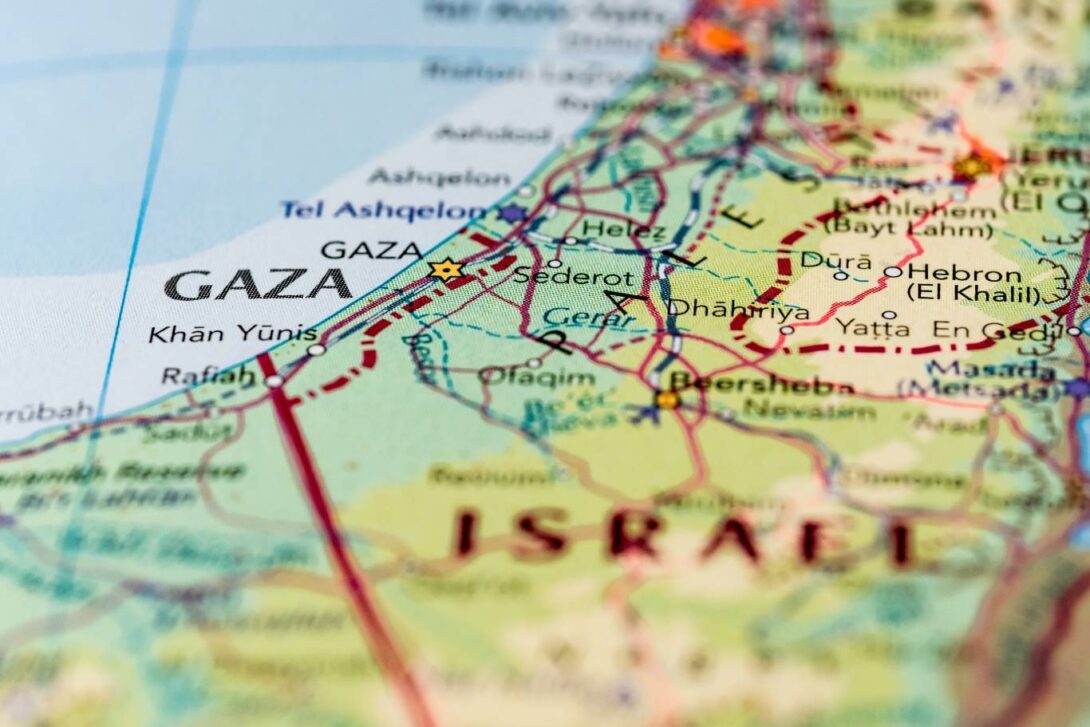
35 states have joined the Board of Peace, chaired by President Donald Trump and charged with supervising the temporary governance of Gaza as the "most consequential international body in history.” Not one Palestinian sits on the board.
A century ago, another international body was used to the same end: to lend a dominant power's presence in Palestine a legitimacy it did not, in law, possess.
On 3 October 1923, Britain's foreign secretary, George Curzon, cabled the League of Nations Secretary-General, Eric Drummond, asking whether the British Government could ‘assume officially’ that the mandate for Palestine had entered into force at the League Council’s meeting four days earlier. Drummond replied the next day ‘Mandates for Palestine and Syria entered officially into force as from 29 September.’
The Council had done no such thing. Its minutes record that it simply 'noted' that the mandates 'would now enter into force' at some unspecified future point. Under Article 22 of the League Covenant, certifying a state's claim to a mandate was not within the Council's powers. More importantly, Britain lacked the one thing it publicly conceded it needed: territorial title, which could pass only through a ratified peace treaty with Turkey. The Treaty of Lausanne did not enter into force until August 1924.
Drummond, a former British Foreign Office official, went further, circulating to every League member a letter stating that the mandates 'had automatically and simultaneously entered into force.' He had discreetly changed the Council's future tense into a past one. On this fabricated basis, Britain remade Palestine for a quarter of a century while holding no status beyond that of belligerent occupant.
No one examined the claim. In 1947, justifying its presence to the United Nations, Britain said the Council had given effect to the mandate 'after the Treaty of Lausanne had entered into force.' It had not. Britain had moved a date by eleven months to supply the title it knew it needed. No one objected.
A century later, the Board of Peace occupies a similar position: an ad hoc body, dominated by a single power, whose authority over Palestinian territory has been proclaimed rather than lawfully constituted. Decisions affecting millions of Palestinians are made by a body answerable to no court, no electorate and no process of review.

In 1948, Britain departed Palestine, leaving it with no government and no capacity to defend itself. In the chaos that followed, 700,000 Palestinians were displaced. That displacement did not end; it set a pattern that has continued through occupation, settlement and, in Gaza, mass destruction. A wrongful act does not lapse with time. States that act unlawfully incur an obligation to make reparations.
That claim is now before the British Government. The Britain Owes Palestine campaign has petitioned for formal acknowledgement, an apology and reparations, resting first on the contention that the Mandate itself was unlawful. The Curzon-Drummond telegrams are further evidence.
Having declared the West Bank occupation unlawful and banned settlement goods, the Government marks a year since recognising Palestinian statehood on 21st September. None of this touches Britain's own conduct in the same territory. Our petition asking it to examine that was submitted a year ago and remains unanswered.
The anniversary of Britain’s recognition of Palestine is the opportune moment to speak to its own record. While other states can sanction and condemn, only Britain can admit its own history of misconduct. Legitimacy could not be conjured by officials acting outside their authority in 1923, and Britain can't be blind to this a century later.

John Quigley is Professor Emeritus of Law at the Moritz College of Law, Ohio State University, where he taught international law for decades. He is part of the team of historians and international lawyers, alongside Professor Avi Shlaim and Ben Emmerson KC, who analysed the evidence behind the Britain Owes Palestine petition. His books include The Case for Palestine, The Statehood of Palestine and, most recently, Britain and Its Mandate over Palestine: Legal Chicanery on a World Stage.