The jihadist files Britain must not forget as it embraces Syria’s new ruler
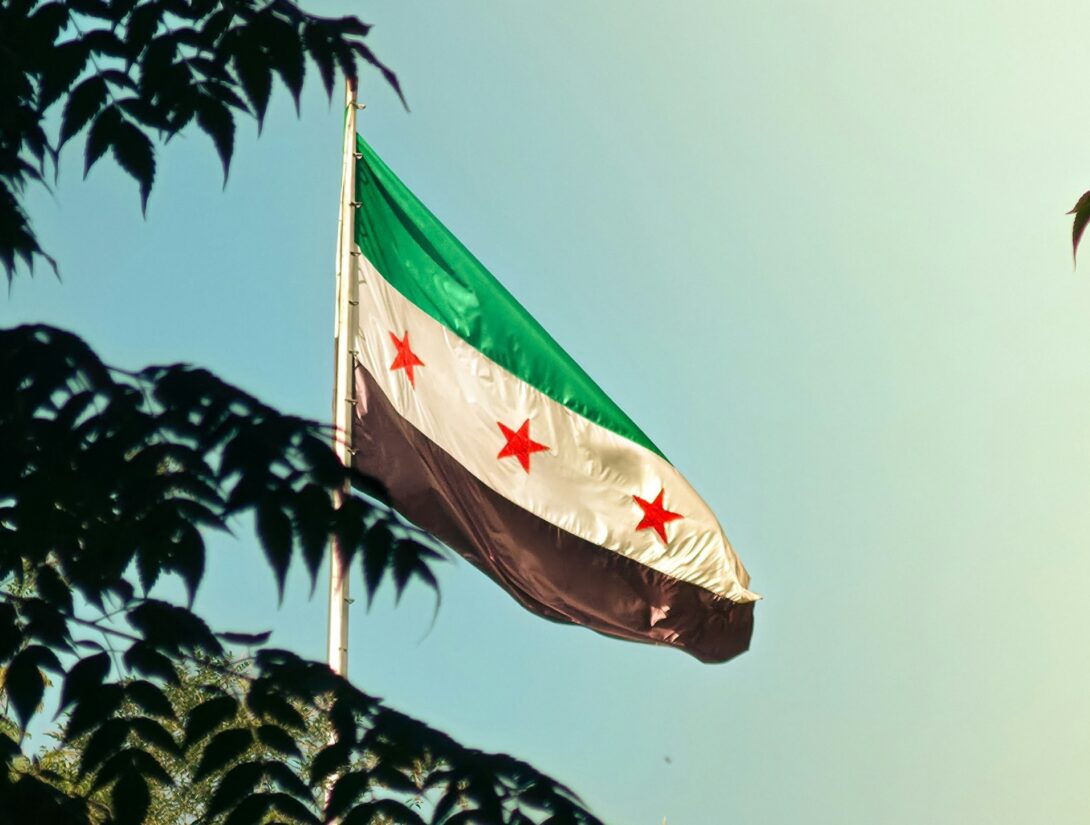
The UK is deciding what kind of relationship to build with a Syria led by Ahmed al-Sharaa. Until a few years ago, London knew him mainly by another name - Abu Mohammed al-Jolani, the jihadist commander whose path ran through al-Qaeda, Jabhat al-Nusra, then Jabhat Fateh al-Sham and finally Hay’at Tahrir al-Sham. The transformation has been extraordinarily rapid. Bashar al-Assad fled to Moscow on 8th December 2024. On 21st October 2025, the British government removed HTS from its list of proscribed terrorist organisations, explaining that the decision would facilitate cooperation with Damascus on terrorism, migration and chemical weapons. On 7th September 2026, the House of Commons Foreign Affairs Committee began taking evidence on Britain’s strategy towards the new Syria. The diplomatic logic is understandable. Governments deal with governments, and Syria has changed. But diplomacy should not require amnesia. Especially Britain, which has lived through one of the darkest consequences of the Syrian jihad.
Mohammed Emwazi, “Jihadi John”, grew up in London before becoming the face of ISIS’s filmed executions of Western hostages. Hundreds of people travelled from the UK to Syria and Iraq, creating a national-security problem that occupied intelligence agencies, police and courts for years. Birmingham occupies a particular place in that story. As early as 2013, West Midlands Police warned of “influential extremists” in the city who were supporting and facilitating people seeking to travel abroad to fight. Gyms, restaurants and cafés were among the places used to establish contacts and spread propaganda.
That same year, two young men from Birmingham travelled to Syria, spent eight months with an al-Qaeda-linked jihadist group and, after returning, received lengthy terrorism sentences. It is within this environment that Francesco Cascio, the husband of Lara Bombonati, appears. Before Turkey and Syria, his path passed through the United Kingdom. Birmingham features in accounts of the small circle of radicalised Italian converts to which he was connected. Giuliano Delnevo, the first known Italian foreign fighter to die in Syria, had also previously spent time in Britain.

Some years ago, I helped review and work on the manuscript of Siriana, Marcello Barbieri’s book published by Paesi Edizioni. During that work, I was able to examine material from the Bombonati case - photographs, handwritten documents and judicial records connected to Lara, her movements between Turkey and Syria, and the period in which HTS was taking shape. Italian investigators described Lara Bombonati as a “courier” between Syria and Turkey. She crossed the border, assisted fighters, delivered documents and collected others. On 15th January 2017, Turkish police detained her near the Syrian border as she attempted to re-enter using false papers. The most important detail emerged later.
The Italian State Police reported to Parliament that electronic devices seized from Bombonati contained two documents relating to the establishment of Hay’at Tahrir al-Sham. Bombonati was detained on 15th January 2017. HTS was formally established on 28th January - thirteen days later. Among the case material I was able to examine were also images and handwritten documents relating to that formative phase and to jihadist groups joining the new organisation. In 2017, those documents belonged to an Italian case concerning the Syrian jihad. Today, they belong to the history of the organisation once led by the man who now governs Damascus. The UK Government is now discussing counter-terrorism, migration, stability, reconstruction and cooperation with the new Syrian authorities. The Foreign Affairs Committee is examining precisely these issues, including the level of scrutiny Britain should maintain towards the new government.
The Bombonati files are the other end of the same story - Birmingham and Europe's foreign fighters, the Turkish route, a courier crossing two borders, documents on the formation of HTS. In 2017, that was evidence in an Italian terrorism case. In 2026, it's the record of the man now running Damascus - the man the UK is sitting down with.
Costantino is an Italian writer and foreign affairs analyst specialising in geopolitics, security and international affairs.