Why Labour must take this opportunity for meaningful reform
When Andy Burnham opened No. 10 North in Manchester, it was more than a new government office. It was a statement about how Britain should change.
Andy is the first Scouse Prime Minister since Gladstone. He is rightly proud of where he comes from, and the communities that shaped him. That connection matters, because politics is not just about institutions. It is about whether people feel those institutions belong to them.
No. 10 North is now a reality. The question is what we do with it.
If we are serious about rebalancing our country, it cannot simply be a political gimmick. It needs to represent a fundamental change in how power is exercised in Britain.
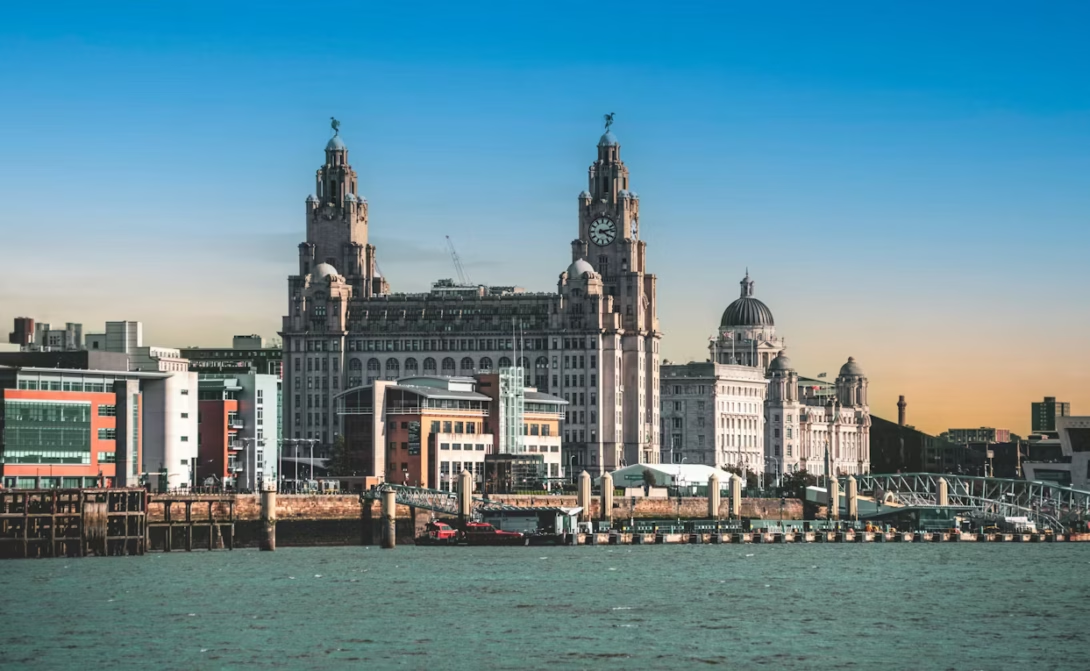
Representing Liverpool Riverside, I know what decades of centralisation and economic neglect have created. Deindustrialisation destroyed industries, jobs, and communities like mine from the 1970s onwards. Economic power became concentrated elsewhere, while too many northern communities were left behind.
We remain one of the most regionally unequal and economically unbalanced countries in Europe. The answer cannot be to recreate the past. It must be building a brighter economic future for all.
For me, that means putting reindustrialisation, redistribution, and publicly-owned public services at the heart of our agenda.
We have seen the power of Labour working at different levels. The relationship between Liverpool City Council and the Liverpool City Region Combined Authority demonstrates the dynamism of local, regional, and national government work in partnership.
But we need to move beyond the idea that one northern city represents the whole agenda.
This cannot just be about “Manchesterism”. We need Liverpoolism, Leedsism, Newcastleism – the strength of our towns and cities working together, each demonstrating its own strengths and sharing power, rather than competing for scraps from Westminster.
That is what No. 10 North should help facilitate.
It needs clear objectives and proper resources. It needs diverse representation. It needs people from across our communities, not just Westminster insiders. And it must break with the factionalism pervading our politics.
Most importantly, we need to make sure people outside the North feel connected to this project too.
Rebalancing Britain must never become about pitting North against South. It should be about giving every community a genuine stake in our country’s future.
It means confronting the extraordinary inequalities of wealth. The richest 1% of Britons own more wealth than the bottom 70% combined, while 50 families are wealthier than the poorest half of the population. That concentration of wealth has not delivered the economic transformation our country needs.

We need redistribution between people and between regions. The working class did not cause the current crises. It wasn't the person struggling to pay their bills responsible for a system that rewards wealth extraction over productive investment.
For me, our answer has to be more ambitious than simply managing the status quo.
The revival of our communities requires proper socialist economics. It means being prepared to expand public ownership and control of essential services, and directing long-term investment towards the people who have been left behind.
The success of this project should ultimately be measured by what happens to our children. In Liverpool, around 40% of children live in poverty. That is not a statistic we can accept. A child’s postcode should never determine their futures.
When we talk about “good growth in every postcode and hope in every heart”, I want to know what that means for the child growing up in Liverpool Riverside.
Does it mean a secure home? A properly funded school? Affordable transport? Access to opportunities? Good, secure jobs for their parents? Clean, safe neighbourhoods? A future they can believe in?
Children and young people cannot be a footnote to Andy’s agenda. They have to be at its centre.
He’s already committed to expanding vocational education and reforming education. That matters because young people should have routes into skilled, secure work that are valued just as highly as any other path.
If we genuinely want to challenge the far right, we must give people something to believe in. We cannot simply tell communities to reject division, while leaving the inequalities that fuel frustration untouched.
Hope has to be material.
No. 10 North is an important symbol of where Labour could go next. But symbolism is insufficient. Its existence is not the destination. It is an opportunity to begin dismantling a political and economic settlement that has left many communities behind.
One of this government’s tests will not be whether power has physically moved north. It will be whether power has actually moved to the people. That is the promise Labour now has to deliver.

Kim Johnson is the Labour MP for Liverpool Riverside.