Britain’s ‘class ceiling’ won’t be broken by education alone
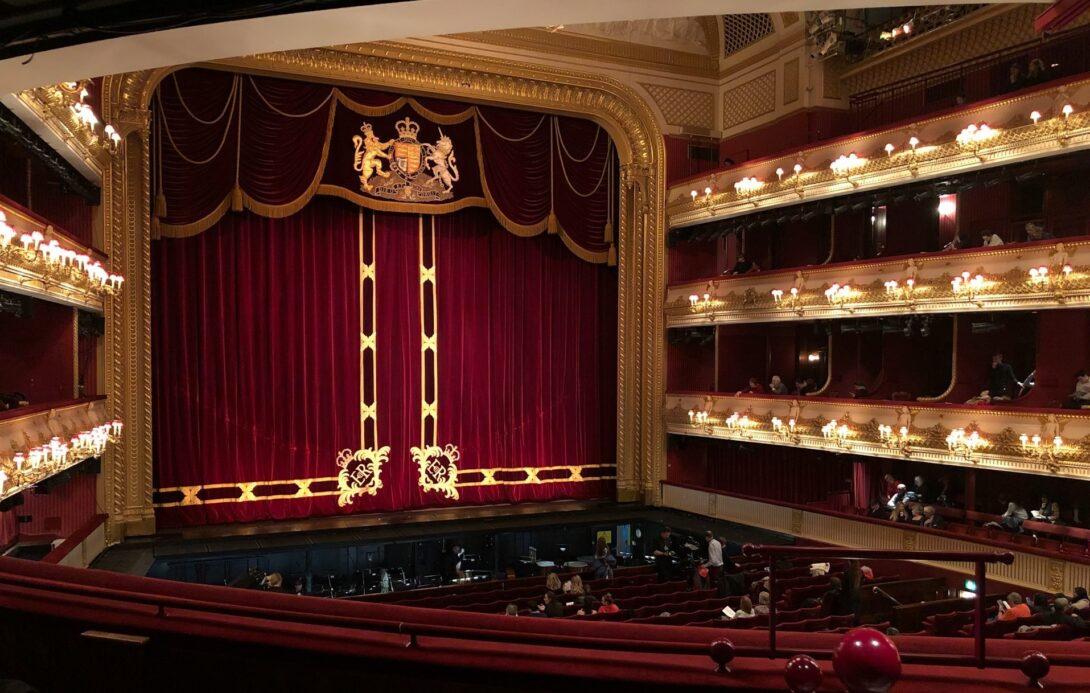
What does going to the opera have to do with how much you earn? At first glance, not very much. Yet new research suggests our cultural engagements may be more closely associated with our economic prospects than we might think.
For decades, education has been presented as the UK’s great engine of social mobility. Work hard, get a good education, and the circumstances into which you were born should matter less. But while expanding educational opportunity has undoubtedly opened doors, other class-related factors still appear to matter. People from working-class backgrounds can find themselves earning less than colleagues who grew up in more privileged circumstances in professional and managerial occupations. This raises an uncomfortable question. If two people make it through the same educational system and into professional employment, why should their class backgrounds continue to matter? My latest research offers a possible insight into one mechanism which may be playing a role in this - cultural capital. The term cultural capital relates to our knowledge, tastes, and cultural experiences and can operate as a form of social currency. Knowing how to behave in particular workplace settings, sharing certain cultural reference points, or simply appearing comfortable in traditionally middle-class environments can signal that we belong.
To investigate this, I examined the association between participation in five ‘highbrow’ cultural activities - attending the opera, ballet, a classical music performance, visiting a museum or gallery, performed drama theatre - and individuals’ earnings, and whether this relationship varies across social origin (measured via parental occupation). The findings suggest that while engagement in these forms of cultural participation is associated with higher wages, the benefits are not shared equally. They accrue primarily to people from managerial and professional backgrounds, highlighting how cultural capital can reinforce, rather than reduce, inequalities in the labour market. While the research examines associations, and not causal estimates, it does indicate some important implications regarding the role of cultural capital in the UK labour market.
Engagement in such activities acts as a class signal and may help people establish cultural affinity with senior management and clients. This is understandable from a client relationship and business perspective, but it closes the door on individuals from working-class origins who inherit different forms of culture. This complicates the comforting idea that cultural capital is simply another ‘skill’ anyone can acquire. We might think that if working-class children engage in forms of highbrow culture, they can accumulate the same cultural resources as their wealthier peers and eventually reap the same rewards. However, the research findings suggest this isn't so simple.
Cultural capital may work partly because it reinforces advantages that are already present. This matters because inequality in the UK is rarely as explicit as a manager declaring that they would prefer to hire or promote someone from privileged origins. Instead, class can operate through apparently innocuous judgements about who is articulate, “polished”, or appears the right “fit”. Such assessments may feel instinctive and meritocratic to those making them, but our instincts about who appears competent or comfortable do not develop in a social vacuum.

A childhood spent around particular cultural institutions and social environments can help people learn the unwritten rules and opaque behaviour codes of professional life long before their first job interview. More importantly, the same cultural interest may not carry the same value when displayed by people from different social backgrounds.
None of this means that taking children to galleries or making the arts more accessible is pointless. Access to culture has intrinsic value and should not be restricted by income or postcode. However, we should be wary of turning cultural participation into yet another task for working-class people to complete to become sufficiently middle class for professional Britain. The findings also indicate that engagement in some cultural activities is more valued than others in the labour market, but this begs the question: why? Why is engagement in certain cultural activities more desired than others? Why should conforming to middle-class norms and forms of engagement be desired or perhaps even expected in jobs in which they are largely irrelevant?
The responsibility also lies with employers. Recruitment and promotion processes should force us to think differently about what we mean by qualities such as “fit”, “polished” and “potential”. Are they really measures of someone's ability to do a job? Do we conflate these as indicators of talent? Or sometimes measures of how familiar they seem to the people already occupying positions of power?
The UK has spent decades trying to improve social mobility by widening access to education; that project remains vital. But getting more working-class young people into universities and professional occupations is only part of the problem if less visible class advantages follow them through the workplace. A genuinely meritocratic society cannot simply teach more people the cultural codes and unwritten rules of the workplace; it must also ask why knowing such codes pays in the first place.

Dr Michael Vallely is a Chancellor’s Fellow at the Scottish Centre for Employment Research at the University of Strathclyde. His primary research interests are social class and labour market outcomes. Prior to Michael's current role, he was a Postdoctoral Research Fellow at the Economic and Social Research Institute, during which he was awarded a European Consortium for Sociological Research Visitor Grant to carry out a research visit at Pompeu Fabra University.