Climate Will Change How India Fights Its Wars
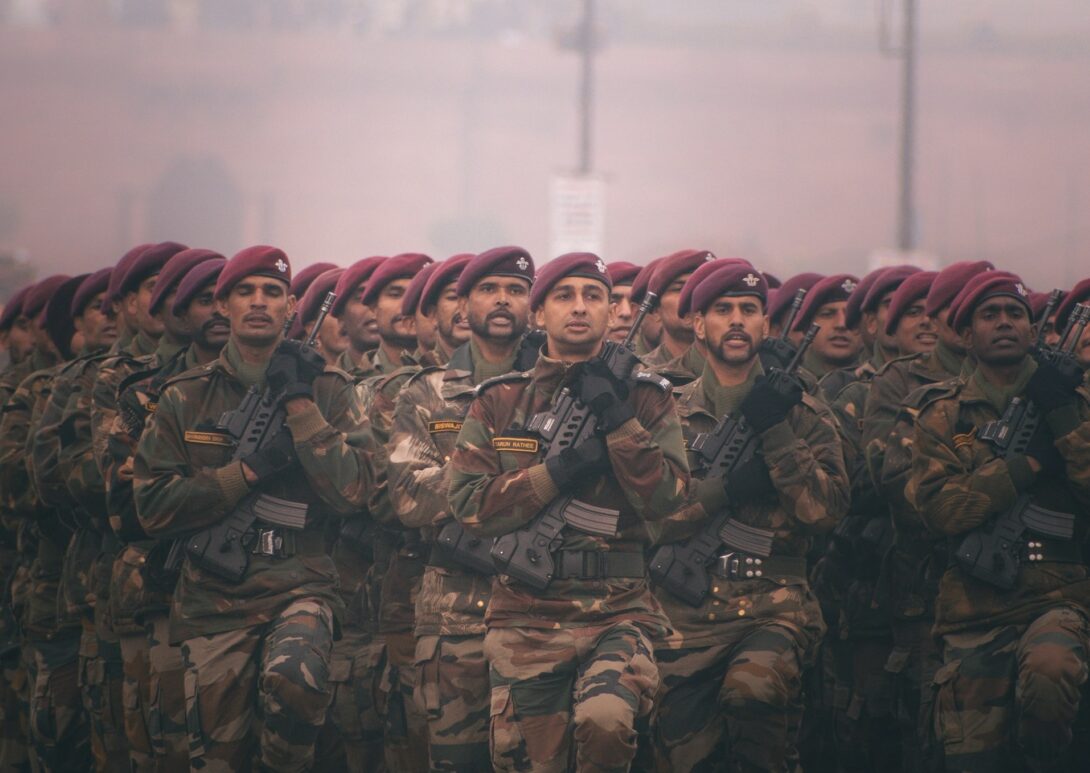
In early October, General Dhiraj Seth, India’s new Chief of Army Staff, delivered his first public address at a defence conclave in New Delhi. He outlined a clear vision for the Indian Army in an era of ongoing “millennium wars.” Notably, however, two of his observations regarding the factors shaping the character of modern war highlighted a critical but often overlooked one: climate change.
First, he noted that the Army, like its counterparts, operates in diverse terrains: “from plus 50⁰C to -40⁰C, our peculiarities impose unique demands on our capability development.” Gen. Seth emphasised the need for “Indian solutions to Indian conditions.” Second, he stated that the Indian armed forces must accelerate the pursuit of self-reliant capabilities, as “the battlefield itself is changing faster than we can acquire them.” He acknowledged that “…the capability clock is slower than the technology clock,” given the time required to develop and deploy new weapons systems.
His observations are accurate. The Indian military operates in environments that can cause dehydration, heatstroke, frostbite, or hypothermia, while also contending with the rapid and mutating use of drones, networks, and missiles. These insights are essential as the military modernises and restructures. However, while Indian military leaders like Gen. Seth engage in the discourse of the geopolitical and technological impact on warfare, they often overlook climate change.
Like these two shifts and leaps, climate change will accelerate the evolution of warfare and increase its unpredictability. While “Indian conditions” remain diverse, they are changing, and the Indian “capability clock” has not yet adapted. My report, published in April, draws on interviews with senior officers to illustrate how climate change affects Indian military readiness. It offers three key observations to plug those by Gen. Seth.
First, conditions are changing rapidly and worsening. India is experiencing hotter, wetter, colder, and drier extremes simultaneously. Studies show an overall temperature increase of 1.90°C compared to the 1961-1990 baseline, and some reports attribute more than 3,400 deaths in a single day to extreme heat this year.

Heavy precipitation has inundated towns nationwide, even as India faces its weakest monsoon in 20 years, with a shortfall of nearly 15 percent. Despite rising average temperatures, unusually cold spells have reached 0.6°C in some cities, the lowest in 50 years. As a result, there is no longer a reliable baseline for “Indian conditions.”
Second, these changing conditions directly impact military operations. Interviews indicate that heatwaves reduce the payload and sortie rates of helicopters and fighter jets. Excess dust and humidity strain engines in tanks and trucks and degrade electronics and radomes. Cloudbursts and rising sea levels damage critical infrastructure, including runways, railways, roadways, and frontline positions. Increased salinity impairs submarine dive rates and disrupts drone communications. Temperature fluctuations in low orbit affect satellite fuel efficiency and material integrity. Climate fluctuations also affect soldiers’ health, nutrition, and morale. As a result, the current “capability clock” is outdated and may leave the implements of war unsuited to new conditions.
Third, and a combination of the first two, the Indian military’s operational tempo is becoming increasingly unpredictable. While this is largely due to geopolitical shifts described by the “No War, No Peace” continuum, climate change has become a significant factor. These demand differentiated capabilities and contingency plans for both human and state security. These contingencies are arising rapidly, straining the military’s capacity. For example, the 2020 standoff with China lasted months, while the 2025 conflict with Pakistan escalated in days. Now imagine the disruptive influence of frequent, gradual climate shifts: soldiers disrupted, supplies lost, convoys cut off, and the entire operation in jeopardy.
Indian military leaders like Gen. Seth are correct that the battlefield is changing faster than the Indian military can field new capabilities. However, these changes are driven not only by geopolitics or technology, but also by climate change. Climate change will shape where, when, and how the military fights. In some parts of the world, especially in the West, militaries have taken greater cognisance of this fact. Climate change must become a core planning variable, integrated into Indian readiness assessments and wargaming scenarios, and reviewed regularly.
India needs solutions for the world it will face, not simply the one it has left behind, and that includes today.

Siddharth Anil Nair is a Research Associate at the Centre on Asia and Globalisation at the Lee Kuan Yew School of Public Policy, Singapore. His research lies at the intersection of armed conflict, naval strategy, and climate security in the Indian Ocean littoral. Previously, Siddharth worked as a Researcher in the South East Asia Research Programme at the Institute of Peace and Conflict Studies in New Delhi. He was a Li Ka Shing Foundation Scholar in the Master in International Affairs programme at the Lee Kuan Yew School of Public Policy and has a Bachelors Honours in Political Science from Ashoka University, India.