A stable Libya would strengthen the Mediterranean
Libya, when discussed at all, is often discussed as a source of problems for its neighbours. Whilst sadly understandable in some ways, the discussion would benefit from more attention paid to what a Libya that was finally stable and prosperous could contribute to its neighbours and the wider region.
Our plentiful resources (not just energy but many others), our Mediterranean coastline (both strategic and beautiful) and our links with Africa give Libya a potential importance that reaches well beyond its borders. For Libyans, such a recovery would mean the prospect – finally, after so long – of a more secure and prosperous life. But Europe and the international community more broadly also have substantial reasons to want a stabilised Libya to thrive.
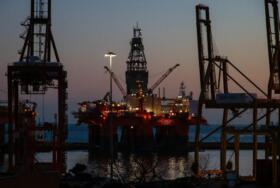
The economic opportunity is obvious. Libya holds Africa's largest proven oil reserves, roughly 48 billion barrels, as well as substantial natural gas reserves. It sits right on the doorstep of major European markets, and more gas could be supplied through the Greenstream pipeline, which already carries Libyan gas to Italy. In March 2026, the Italian energy company Eni announced two new offshore gas discoveries, with future production intended for Libya's domestic market as well as exports to Italy.
But as ever, political disputes and interruptions to production have repeatedly limited the value of this natural bounty. More dependable government would lead to the conditions that would allow for a much greater investment in infrastructure. This would make Libya a more reliable and very natural energy supplier as European countries seek exactly that greater security of supply.
Oil wealth could and should support public services and create conditions in which businesses can grow beyond just the energy sector. At the same time, we Libyans must recognise that investors need contracts they can trust, just as much as Libyan citizens will need confidence that their national resources are being managed for their benefit.

Beyond hydrocarbons and the boom they would generate, Libya is also supremely well placed to take advantage of the energy transition. 95% of the country is desert, and it receives roughly twice as many sunshine hours a year as London. With investment in generation and transmission links, solar electricity could in time be sold to the parts of Europe not as blessed by the sun! This is not to mention the potential to develop other mineral resources, including Libya's iron ore deposits.
Then there is the crucially important Libyan geography. Better ports and safer transport links could expand commerce between Africa and Europe. Our Mediterranean position also makes cooperation on migration essential.
Obviously, migration is another issue of enormous consequence. Now, Libya is a major departure point for people attempting the central Mediterranean crossing to Europe. A stable government, with effective authority over its borders and coastline, would be better placed to reduce irregular migration flows, especially if it could partner with European agencies and authorities. Together, smuggling networks could be pursued, and criminal businesses that profit from dangerous journeys disrupted and dismantled. I am aware of how central a political and social issue this is for Europe, and the ability of Libya to help with this should be a major incentive for international support towards our stability.
All must recognise that effective border management must also protect people against exploitation and ensure humane treatment. Libya is itself a destination for migrant workers, not just a transit country. Clear rules for work and residence would help employers recruit lawfully and make migrant workers less vulnerable to exploitation.
Of course, none of these gains can be sustained without a lasting political settlement. Libya needs stability and democratic government that commands public confidence and international recognition. The immediate purpose of international engagement should be to help Libyans establish those conditions, with consistent support for the existing UN-supported, Libyan-led political process.
I would hope that Britain and America make that engagement a durable part of their foreign policy, working with European and regional partners. Their leadership carries great weight with the people of Libya. Britain played an important role in the UN process that led to Libya's independence in 1951. For Libyans, independence brought the sweet taste of liberty.
The overthrow of Gaddafi was a pivotal moment in our history, but the work towards making Libya a reliable member of the international political and economic community is not yet done. When it is, the whole world will benefit.
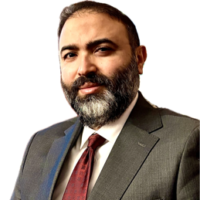
Mr Bait Elmal was born in Libya on 13th January, 1988. His career has enabled him to build an expert understanding of Defence and Security Issues, together with Political and Public Affairs/ Issues Management expertise. Having joined the Libyan Ministry of Defence in 2014, he obtained a Bachelor's degree in Political Science in 2018. This was followed by a Master's degree in 2020 based on the study of “State Sovereignty and Contemporary Changes”