Bangladesh is rewriting the old rules on who can afford medicine
For decades, the world assumed India held the only card in the generics game. That assumption is now outdated.
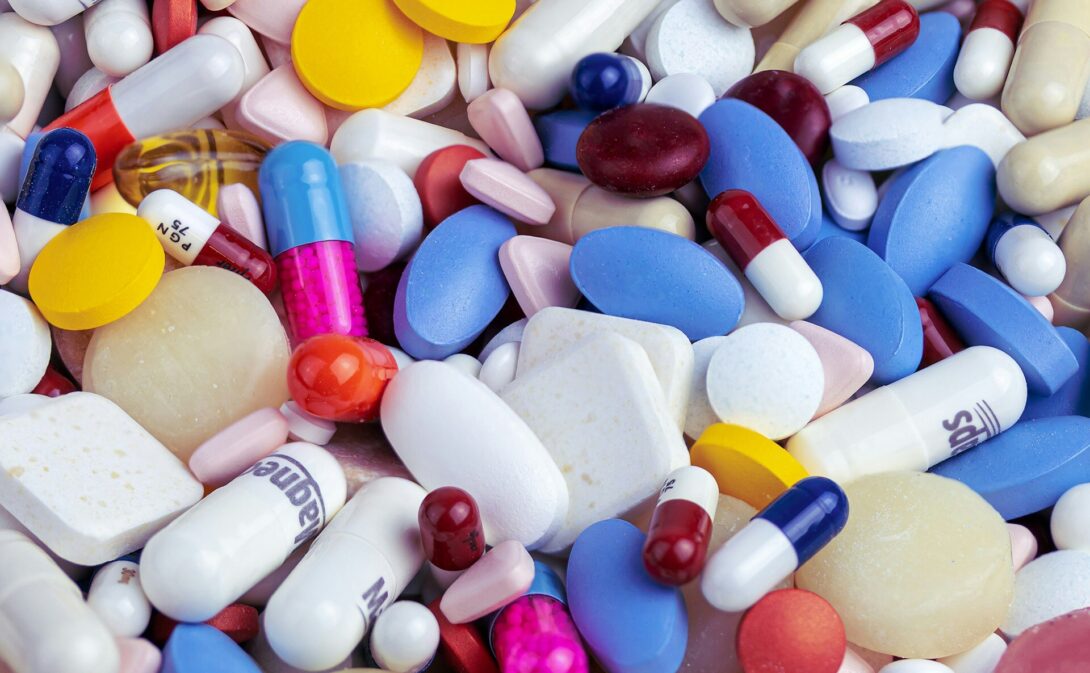
In June, a pharmaceutical company in Dhaka did something Big Pharma did not expect. Beximco Pharmaceuticals began shipping a generic version of Trikafta, the breakthrough cystic fibrosis drug made by Vertex Pharmaceuticals. In the United States, a year's supply costs close to $370,000. Beximco's version, called Triko, costs a fraction of that. Patients who once had to choose between bankruptcy and breathing now have another option.
This is not charity. It is chemistry, patent law, and a country that finally understood its own leverage.
Bangladesh could do this because of a quirk in international trade rules. As a least-developed country, it has enjoyed a TRIPS waiver that lets its manufacturers produce and export patented drugs without paying licensing fees, an exemption now extended to 2033. Vertex never registered Trikafta for sale in Bangladesh. That oversight, or strategic neglect, left a legal opening. Beximco walked through it.
Families are noticing.
Patients from South Africa, Eastern Europe, and beyond have started arranging trips to Dhaka. Not for tourism, but for treatment they cannot get at home. A Bangladeshi company built its business model around reverse-engineering breakthrough medicines that patent holders refuse to price fairly for the developing world. Vertex has called this an unfair shortcut around a decade of clinical investment. Patients call it survival.
The pattern is bigger than one drug.
Bangladesh's pharmaceutical sector already meets 98 percent of domestic medicine demand and exports to more than 150 countries, including tightly regulated markets like the US, UK, and EU. The sector is projected to cross $6 billion this year, growing at more than 12 percent annually. Over 200 companies operate here, many certified by the US FDA, UK MHRA, and other global regulators. This is not a cottage industry anymore.
But the foundation has a crack in it.
Bangladesh imports more than 85 percent of the active pharmaceutical ingredients it needs, spending roughly $1.3 billion a year, mostly to India and China. A country cannot claim to be the world's pharmacy while depending on its neighbours for the raw material of every pill it makes. Price competitiveness collapses the moment your suppliers raise their rates or restrict exports, and both India and China have done exactly that during past shortages.
The government has started responding. A 200-acre API park in Munshiganj is now under development. Tax holidays for select API molecules run through 2032. Export subsidies exist, at least for now. These are the right instruments. They are not yet at the right scale.
There is also a harder deadline approaching. Bangladesh graduated from least-developed country status in 2021, and the patent waivers built into that status begin phasing out from November 2026. When they go, so does the loophole that made Triko possible in its current form. Companies chasing the Beximco model have a narrow window to build capacity, diversify their export basket toward off-patent and biosimilar drugs, and lock in regulatory approvals in markets that will matter long after the waiver disappears.
None of this happens by accident. It requires bioequivalence testing facilities that do not currently exist at scale, so exporters stop depending on India and Malaysia to certify their own products. It requires faster product registration support, the kind India already offers its exporters through dedicated government schemes. It requires deeper partnerships with multinational drugmakers willing to license production locally instead of treating Bangladesh purely as a market to sell into.
The prize is not abstract. Global generics already make up 44 percent of pharmaceutical sales by volume, and demand is only rising as ageing populations and chronic disease spread across both rich and poor countries. Rare-disease treatments like Trikafta are just the visible edge of a much larger opportunity in insulin, cancer therapies, and biologics, categories where Bangladesh still holds under 5 percent global share.
Cystic fibrosis patients in Dhaka this summer got their medicine because one company was willing to bet on affordability over patent deference. That bet worked. The next one requires infrastructure, not luck.
Bangladesh does not need to become the next India. It needs to become the country that proved medicine access does not have to bankrupt the people who need it most. The world is watching to see if it can do that at scale, not just once.

Dr. Sukalyan Kumar Kundu serves as a distinguished Selection Grade-1 Professor within the Department of Pharmacy at Jahangirnagar University, standing as a prominent figure who successfully bridges the gap between Bangladeshi pharmaceutical academia and the emerging industry landscape. He earned his Ph.D. in Oral Life Sciences from Niigata University, an elite academic foundation that he subsequently complemented with two advanced postdoctoral research fellowships at both the University of Fukui and Jadavpur University.