Bangladesh needs to break the cycle
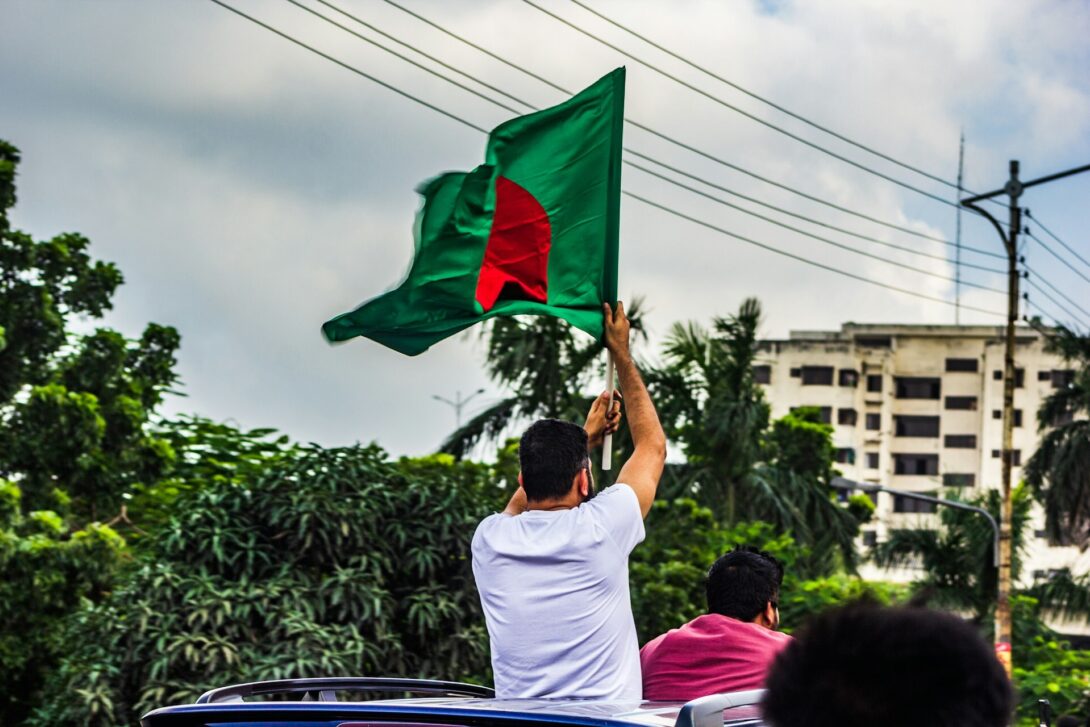
Bangladesh’s revolution was a reaction to the status quo. It was not the antidote. Too much of what followed has used the same poison, poured from a different bottle.
The country has suffered for decades from warring political factions. Student organisations, which should give young people somewhere to debate ideas and challenge authority, have too often served as party militias. Violence involving the student wings of the Awami League, BNP and Jamaat is well documented. Generations have learnt that political advancement can depend on the ability to intimidate.
That culture reaches every level of politics. Opponents become enemies. Public institutions become weapons. Too many leaders discover human rights when they lose power and forget them when they regain it.
The 2024 uprising offered an opportunity to break that cycle. The anger against Sheikh Hasina’s government had real causes. Its repression cannot be explained away by pointing to economic achievements. But removing a government does not automatically remove its methods.
I have written about Bangladesh for many years. I have praised its economic progress and defended the importance of its secular foundations. That does not oblige me to defend the abuses committed under Sheikh Hasina. Nor should condemning those abuses oblige anyone to accept what has followed.
In her July interview with Reuters, Hasina acknowledged that a long-serving government could make mistakes, saying “no government is above error”. The victims and their families deserve a fuller accounting. They need answers about decisions taken, orders given and responsibility for the violence.
Her successors have their own obligations. The suffering of those victims cannot authorise the persecution of somebody else.
David Bergman addressed this hypocrisy in August 2025. Muhammad Yunus and Adilur Rahman Khan had both experienced politically motivated proceedings. Yet once in office, they failed to protect others from arbitrary detention. People who had depended on bail and demanded fair treatment were presiding over a system that denied those protections to political opponents.
The problem has outlasted the interim administration. In August 2026, Human Rights Watch reported that hundreds of people associated with the former Awami League government remained imprisoned without charge. It raised concerns about deaths in custody and allegations that detainees had been denied medical care. Lawyers said they advised some clients against seeking bail because police responded to their release by filing another case.
What does the right to bail mean if exercising it opens another route back to prison?
The people occupying the chairs have changed. The willingness to deny opponents the protections once demanded for oneself remains.
Bangladesh needs help from its real friends. That requires honesty about its past and consistency about its future.
Justice for 1971 was needed. The victims needed it. The nation needed it. The crimes committed during the Liberation War could not simply be buried because bringing them to court was politically difficult. Equally, the importance of that history never relieved a court of its obligation to conduct a fair trial.
Bangladesh must also be able to move forward. Jamaat’s return to electoral politics, following the restoration of its registration in 2025, demonstrates that political exclusion need not be permanent. Given its opposition to independence, the party’s rehabilitation shows the country’s capacity to accommodate even a deeply contested political movement.
That capacity must extend to everyone. If Bangladesh can find room for Jamaat, it should be able to find room for Awami League voters.
Hasina has questioned why her conviction should mean the suspension of her party, calling on the authorities to “let the people decide”. Whatever one thinks of her record, the distinction matters. A leader's criminal responsibility and the political rights of millions of voters are separate questions.
The Awami League must confront the reasons so many Bangladeshis turned against it. Its leaders cannot expect to recover public trust without doing so. But excluding its supporters from peaceful politics prevents that argument from taking place before the electorate. Restrictions on peaceful political activity should be lifted. Individuals against whom there is evidence of criminal conduct should face credible proceedings.
Political rehabilitation, however, cannot establish innocence in a criminal case.
Consider Nazmul Hasan, known as “Bomaru” Mamun, whom police have identified as a Neo JMB figure and alleged bombmaker. In January 2026, a Dhaka court acquitted him and the other defendants in the 2017 Hotel Olio blast case. Reporting said the verdict characterised the defendants as opponents of the previous “fascist government”. Another report said the charges had not been proved beyond reasonable doubt.
An acquittal where evidence is insufficient is an essential protection. But a defendant’s opposition to a previous government should carry no weight in determining criminal responsibility. Describing somebody as an “anti-fascist activist” cannot answer an allegation of involvement in a bombing. Evidence must answer it.

The same standard must protect somebody accused because of their association with the Awami League. Political identity can establish neither guilt nor innocence. Once it begins to do either, justice depends on who holds power.
This danger also hangs over the International Crimes Tribunal. Human Rights Watch has identified serious shortcomings in its proceedings, including weaknesses in detention safeguards and defence rights. These affect a court’s ability to establish individual responsibility and deliver judgments that withstand scrutiny.
Victims deserve a process that establishes the truth. A defective trial leaves them with an outcome that can be challenged for reasons entirely separate from the crimes they suffered.
Hasina’s proposed return in December would put these questions directly before the authorities.
“They may arrest me on my return, they may even kill me,” she told Reuters in July, explaining her intention to return with party colleagues and surrender. She was speaking as a former prime minister already sentenced to death in absentia, who denies the charges against her.
Her stated willingness to return does not settle those charges. It makes the treatment she would receive a concrete test of the system her opponents now defend.
She must have access to lawyers of her choice, the evidence against her, adequate time to prepare her defence and a meaningful opportunity to challenge testimony and judgment. Her personal safety must be protected. The gravity of the accusations makes those safeguards essential.
Her opponents cannot justify denying her rights by pointing to the rights denied under her rule. Hasina, in turn, must recognise that the protections she now seeks should have been available to her opponents when she governed.
Bangladesh’s international partners should apply that same consistency. Britain, Europe and others should press for credible trials, an end to arbitrary detention, protection for journalists and minorities, and space for peaceful political opposition. Their standards must survive a change of government.
The country’s leaders must accept that governing brings responsibility for people who despise them. Prisoners require medical care. Allegations require investigation. Courts require evidence. None of those obligations disappears after a revolution.
The danger is a dystopian future in which the language of liberation excuses repression and the language of justice conceals revenge. Rights become favours. Political labels determine whose suffering matters. Bangladesh has already paid too much for that way of governing.
True friends should support efforts to break the cycle by addressing systemic failures comprehensively. The nation must change how it handles those outside of power, regardless of who holds office. Reforms are impossible without reconciliation. Does Bangladesh have a leader brave enough to acknowledge this?

Chris Blackburn is a political and security expert and a director of the European Bangladesh Forum (EBF). He has been writing on Bangladesh, regional security, human rights, and international issues for more than two decades.