Ending the triple lock was the rare act of a politician levelling with the public. Now he needs to do the same for the NHS.
There is a category of British political problem that everyone privately agrees on and no one dares say out loud. The pensions triple lock has sat at the top of that list for a decade. Chancellors of both parties have called it unsustainable in private while not feeling that they can touch it. It guarantees that one cohort, pensioners, receives the best of three possible outcomes every single year, ratcheting upwards regardless of what happens to the working-age families paying for it. Everyone can see the unfairness. Almost no one in power has been willing to name it.
This week, Andy Burnham did. In his first conference speech as Prime Minister, he announced that the triple lock will end, replaced from 2030 by a more modest settlement, with the savings redirected towards a National Care Service. The Institute for Fiscal Studies has long argued the policy is fiscally corrosive. Burnham is the first person actually running the country to act on that logic rather than flinch from it.
What deserves attention is not just that he did it, but how. The change is distant, five years off, and deliberately restrained. He is not slashing pensions; he is removing one leg of an indefensible three-legged guarantee, and handing something back to the same generation in the form of social care. That is not timidity. It is how you move a sacred cow in a country where prime ministers are routinely bounced into U-turns by vested interests inside and outside their own party when they try to do anything vaguely radical. You make the first step small enough and far enough away that the coalition to reverse it never quite forms, while the principle, that no single group should be permanently insulated from the trade-offs everyone else lives with, is established. It is, in the truest sense, clever politics: honest about the destination, patient about the route.
If Burnham wants credit for courage, though, the triple lock is the warm-up. The real test, the sacred cow no British politician has been willing to approach, is the NHS.
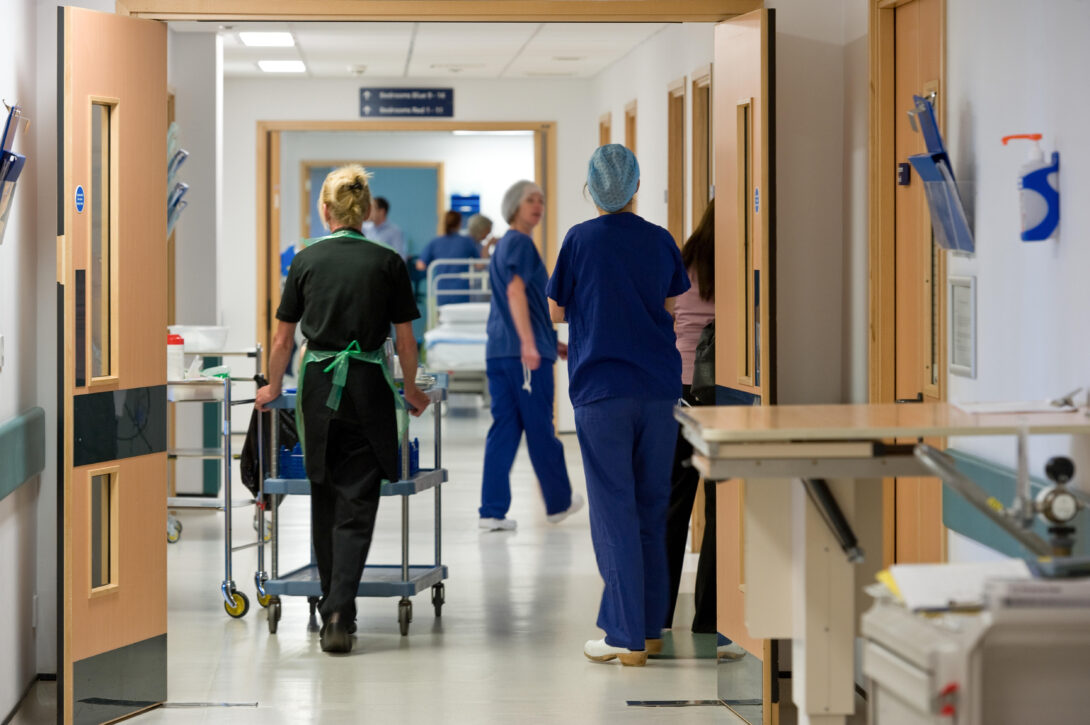
Here is the sentence that ends careers, so let me say it plainly: the British public no longer gets good value from the health service. Note the word value. This is not an argument for privatisation, insurance models, or charging at the door. It is an argument about bang for buck. The UK now spends around eleven per cent of national income on health - a peacetime high, above the OECD average, and among the higher shares in Europe.
For a top-table price, we get mid-table results: some of the worst cancer survival rates in the developed world, waiting lists that have become a fixture of national life, and life expectancy that has stalled while comparable countries pulled ahead. On the impartial measures that matter to patients, we are not getting what we pay for.

The reason no one says this is the reason it needs saying. We have made it impossible to criticise how money is spent inside the NHS without being accused of attacking the very idea of it. Point out that a particular process is wasteful, that productivity has gone backwards despite rising budgets, or that too little reaches the front line, and you are instantly recast as an enemy of a free health service. So the criticism never comes, the inefficiency never gets confronted, and the service deteriorates, which is itself the greatest betrayal of the principle its defenders claim to protect.
A country that cannot audit its largest single area of public spending is not protecting that spending; it is abandoning it to decline. Loving the NHS and scrutinising the NHS are not opposites. They are the same act.
Burnham has just proved he can say the unsayable about pensions and survive. The question that will define his premiership is whether he can say it about health. Ending the triple lock showed he understands the disease that afflicts British politics, the inability to be honest with the public about trade-offs. Reforming how the NHS spends its money would show he has the cure. That would be genuinely rare. It would also be genuinely brave.

John Higginson, is Editor-in-Chief of Comment Central, founder of purpose-led communications agency Higginson Strategy, CEO of sustainable fashion communications agency Eco Age. He is a former national newspaper political editor and runs Parliament's annual Political Purpose Awards.