Andy Burnham’s North Sea Dilemma
Now that the Prime Minister is back from his trip to see Donald Trump and has enjoyed the warm emotional bath of Labour conference, he rejoins the world of hard choices. The budget looms. A more immediate question is to decide whether to proceed with drilling for gas and oil in the Jackdaw and Rosebank fields in the North Sea.
The politics are horrible. Environmentalists regard the issue as central to the government’s credibility on climate change. The Labour v Green battle in Camden provides context. On the other hand, rejection of the developments will send a negative signal to those, including bond traders, who are looking for signs of commitment to economic growth and those who worry about energy security. Both sets of voices have been loudly heard at Labour conference, not least from the new Scottish Labour leader, Michael Marra, who wants to press ahead with both developments. For her part, Kemi Badenoch has made this a signature issue for the Tories and will be shouting ‘Drill baby drill’ at the Tory conference. President Trump will provide his own, loud backing for fossil fuel exploitation if he can tear himself away from his obsession with his giant ballroom and triumphal arch.
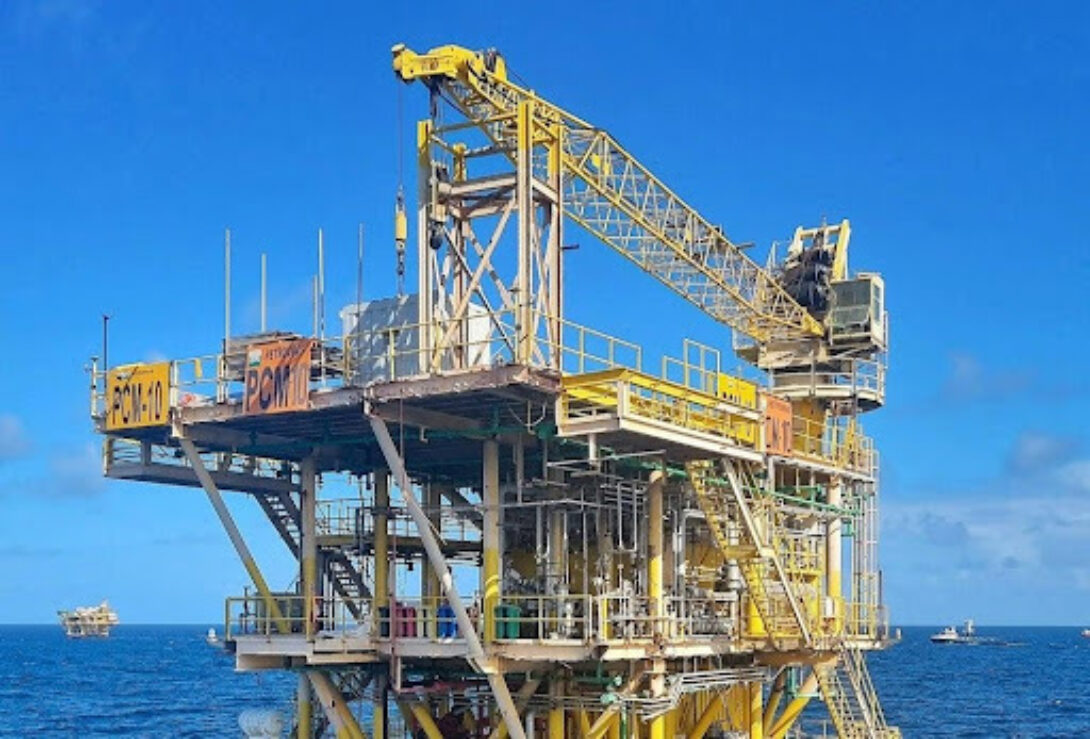
In fact, the serious arguments are complex and allow for a nuanced approach. I took to the airwaves to defend Ed Davey’s decision to back the Jackdaw field on its own separate merits. Jackdaw is a Shell development (spoiler alert: I used to work for them 30 years ago). The gas field, east of Aberdeen, is already underway but was paused by a Greenpeace injunction seeking a climate change assessment. The field should provide around 5% of gas demand in the UK and that gas would be otherwise imported. Gas will remain a transitional fuel while renewables are developed and there are good reasons for producing it in Britain rather than importing it (Norway is the major and uncontroversial source; the USA and Qatar more subject to political intrusion).

The Rosebank field is a different matter. It is a large oil field, west of Shetland. The developer, Equinor, is, in effect, the Norwegian government. The economics/environment ‘trade off’ is much less favourable than for Jackdaw. The oil it produces would not have a market in the UK and would have to be exported; its production would have no bearing on UK domestic energy prices or on energy security. The long-term budget benefit for the budget through tax revenues would be offset by a large upfront payment from the government under the complexities of windfall taxation. The argument for proceeding with Jackdaw but not Rosebank has been made by one of Britain’s leading authorities on climate change policy and energy systems, Professor Michael Grubb at UCL, as well as Ed Davey.
There should be common ground on the need to restrain demand for fossil fuels where possible, since lower imports add to energy security, and lower demand would reduce emissions from new production. (For this reason, I confess I struggled to defend Ed’s support for subsidising motor fuel, though the issue is highly sensitive in rural and remote areas.)
Both extremes of the debate will be infuriated by a compromise to develop one field but not the other based on evidence rather than dogma. But it may provide the Prime Minister with an elegant and responsible way out of a dangerous political trap.

Sir John Vincent Cable is a British politician who led the Liberal Democrats from 2017 to 2019 and represented Twickenham in Parliament from 1997 to 2015 and again from 2017 to 2019. He served as Secretary of State for Business, Innovation and Skills and President of the Board of Trade in the coalition government between 2010 and 2015. Cable studied natural science and economics at Cambridge before working as a finance officer in the Kenya Treasury and lecturing in economics at Glasgow University, where he also earned his PhD. His distinguished career included roles in the Diplomatic Service, directing research at the ODI, advising the Commonwealth Secretary-General, heading the international economics programme at Chatham House, and serving as Chief Economist for Shell Group Planning.