Energy, Empire and the Politics of Life and Death
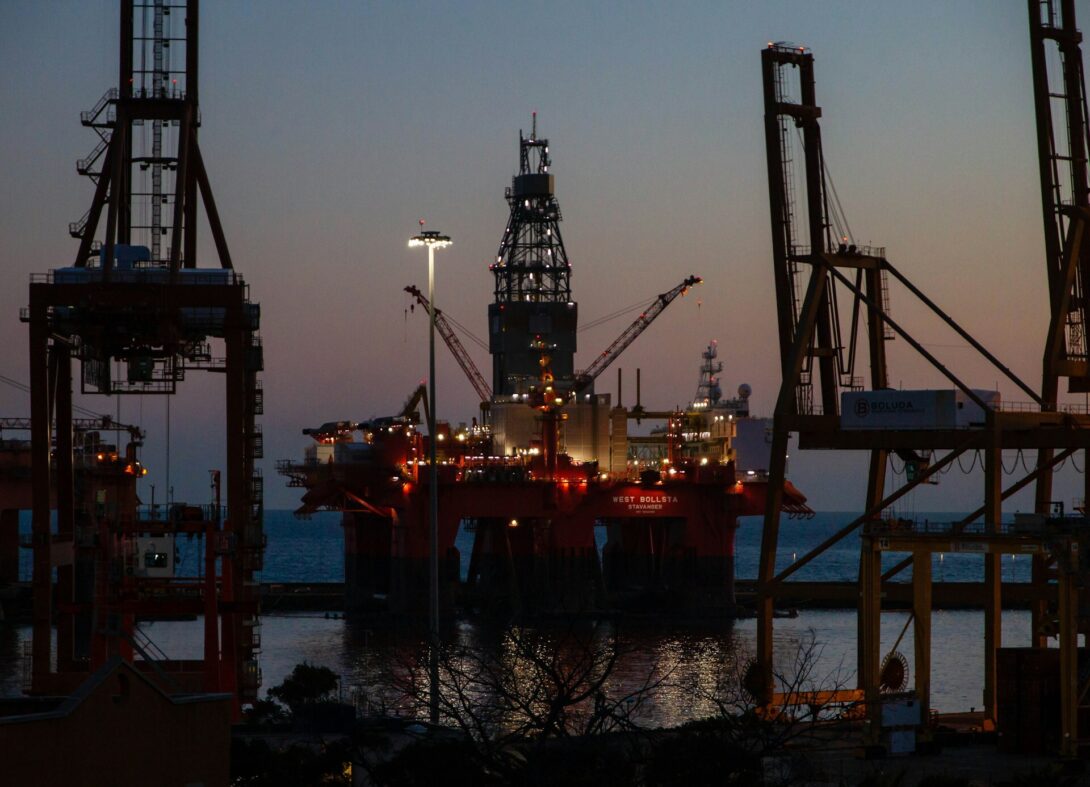
In this year of unhinged militarism, the US government has been bombing countries, blaming them for high oil prices, and remaking politics globally. In our recent article, “Oil blockades and the geopolitics of double standards: Energy imperialism, normalization of coercion and the hierarchy of suffering,” we argued that contemporary oil politics reveals a deeply unequal international order, shaped by changing power dynamics but also long standing forms of colonial relations. Energy is not simply a commodity to be bought and sold; control over oil and energy infrastructure is a form of geopolitical power, one that determines whose economies function, whose populations receive essential supplies, and whose suffering becomes politically tolerable.
We called this energy imperialism: the unequal ability of powerful states to control, weaponise and regulate energy flows, while presenting their own coercive practices as legitimate and those of others as violations of the international order.
The ethical imperative now is to take that argument further. We need to re-imagine oil politics around a principle that has been repeatedly weakened by geopolitics: international law must apply to powerful states as well as their adversaries. If governments invoke international law to condemn energy coercion by their enemies, they must also be willing to sanction allies, and think introspectively, when comparable violations occur.
The concept of necropolitics, we suggest, helps to recognise how energy systems distribute vulnerability and exposure to death. Decisions about fuel, electricity, infrastructure and access to essential resources can determine which populations are able to survive and which are subjected to conditions of deprivation. When energy becomes an instrument of political control, the ability to determine who can access the material conditions necessary for life becomes an exercise of sovereign power over life and death.
The consequences are visible in Cuba and Gaza, where restrictions on fuel and energy have formed part of a wider system of deprivation. In Gaza, the International Court of Justice ordered Israel to take measures to prevent acts covered by the Genocide Convention and ensure the provision of urgently needed humanitarian assistance. In 2024, the Court further concluded that Israel’s continued presence in the Occupied Palestinian Territory is unlawful and that states have obligations not to recognise or assist in maintaining that situation. These findings require states to directly address economic relationships through which unlawful situations are sustained.
The problem extends beyond Israel. Our earlier analysis showed how energy coercion is routinely interpreted through geopolitical double standards. Measures imposed by adversaries are described as aggression or illegitimate coercion; comparable practices by powerful states are more readily presented as sanctions, security policy or the defence of international order. This produces what we described as a hierarchy of suffering: not all suffering carries the same political weight. The suffering produced by the energy policies of a geopolitical adversary can become evidence of that state’s barbarism, while suffering produced by an ally’s policies is rendered invisible, exceptional or necessary. The result is the normalization of coercion.
American neo-imperialism is central to this problem. Washington has repeatedly used economic sanctions and energy restrictions as instruments of foreign policy while insisting that the international order depends upon respect for law.

At the same time, the US government has sought to undermine the authority of the International Criminal Court when its investigations implicate American or Israeli nationals. Such exceptionalism matters because international law cannot function as a rules-based order if its application depends upon geopolitical hierarchy and military power.
For nearly four years, Ukraine has endured systematic Russian attacks on its civilian energy infrastructure, with few consequences for Russia in the absence of unified international enforcement of international law. As Ukraine has developed longer-range strike capabilities, some of Russia’s own critical energy assets, including refineries, have become vulnerable. Both sides now denounce the other’s attacks as “terrorism,” while the cycle of strikes continues with no end in sight. An analogous dynamic has been playing out in the Middle East, with Saudi energy infrastructure now under direct attacks from the Houthis forces it sanctioned.
A legal system in which some states can impose coercion while resisting scrutiny is not universal; it is an architecture of differentiated accountability.
What, then, would an ethical oil politics look like?
First, states should impose sanctions on officials and entities credibly implicated in serious violations of international law, irrespective of nationality or political alliance. Asset freezes, travel restrictions and financial measures should be available against those responsible for unlawful conduct, subject to evidence and due process.
Second, governments should restrict arms, energy-related goods, infrastructure, finance and other forms of material support where there is a substantial risk that these resources will facilitate serious violations of international humanitarian law. Companies and financial institutions should not be treated as politically neutral when their activities materially sustain unlawful practices.
Third, states should reconsider preferential trade and economic relationships that help entrench internationally unlawful situations. The growing willingness of European governments, Canada’s government and the UK government (as of September) to impose measures relating to products originating from Israeli settlements points towards a broader principle: economic relations should not be insulated from international law.
Fourth, the same standards must apply to all countries, whether Russia or the United States. When states violate international law, every government, including those of allied countries, should be prepared to impose sanctions or advance other forms of accountability, highlighting principles of human rights protection for all.

- Professor Sam Spiegel is the Chair of Global Studies and International Development at the University of Edinburgh and has published extensively on social justice, energy politics, Indigenous-led struggles against oil pipeline megaprojects and Canadian legal and political entanglements in extraction
- Philippe Le Billon is a Professor of Geography and Public Policy and Global Affairs at the University of British Columbia whose research examines the links between natural resources and armed conflict, the political economy of war, and the governance of extractive sectors.