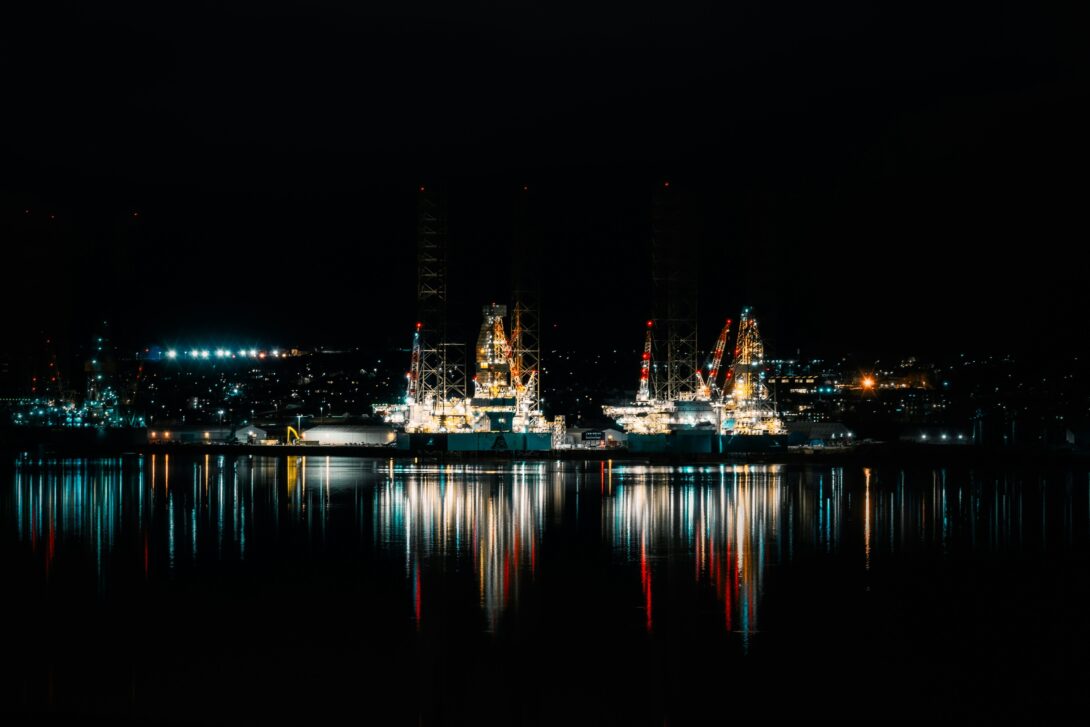
Why the North Sea Matters
The North Sea is a national treasure. Not just because of its past, but because of its future potential. For more than five decades, it has powered homes, supported hundreds of thousands of skilled jobs and created one of the world's leading offshore engineering industries. Today, those same capabilities are indispensable to delivering the UK's transition to a lower-carbon economy.
The transition is no longer simply an environmental challenge. It is an economic, industrial and strategic one.
The UK is pursuing one of the world's most ambitious energy transitions at a time of heightened geopolitical uncertainty, growing competition for investment and increasing pressure on energy security. In this environment, the question is no longer whether the UK should decarbonise, but how it can do so while strengthening the industrial capabilities on which future prosperity depends.
This is the central message of Robert Gordon University's 'Striking the Balance' report (2025). Net zero, energy security and economic competitiveness are not competing objectives; they are mutually reinforcing. The challenge is one of sequencing. The UK must build tomorrow's energy system without undermining the industrial foundations that make it possible.
Nowhere is that challenge more evident than in the North East of Scotland. The region remains the centre of the UK's offshore energy industry. Around one in six people are employed directly or indirectly in offshore energy. More importantly, it possesses something that cannot easily be recreated: world-class engineering expertise, internationally competitive supply chains, a specialist ecosystem and decades of operational experience in one of the world's most demanding offshore environments.
These capabilities are not legacy assets. They are the foundations of the UK's future energy system. Around 70% of the UK's ScotWind lease areas lie within 100 nautical miles of the North East of Scotland, placing the region at the heart of the UK's offshore wind ambitions. By 2050, Europe is expected to deploy around 300 gigawatts of offshore wind, with the UK delivering a significant share. This will require the installation of almost 17,000 new 15-megawatt turbines, around 700 every year for the next quarter century, supported by major investment in associated infrastructure, ports, vessels, fabrication, new technologies and highly skilled people.

There is a tendency to present offshore oil and gas and offshore renewables as competing industries. In reality, they share much of the same industrial ecosystem. Capabilities developed in the North Sea are similar to those required to deliver offshore wind, carbon capture and storage, hydrogen and electrification. Countries rarely succeed by abandoning their competitive strengths. They succeed by adapting them.
Above all, successful transitions require confidence. New energy infrastructure is financed over decades, not political cycles. Investors commit capital where policy is stable, regulation is predictable and industrial strategy is consistent. Uncertainty undermines investment, weakens supply chains and encourages skilled people to look elsewhere. The greatest risk is therefore not technical; it is strategic inconsistency.
The UK will continue to require oil and gas as demand declines over time. Reducing domestic production faster than demand falls will not eliminate the need for hydrocarbons; it will increase dependence on imports while weakening the industrial base needed to deliver the next generation of offshore energy projects.
A managed transition, aligning domestic production with the growth of low-carbon industries, offers a more resilient pathway. It supports energy security, sustains high-value employment and preserves the capabilities needed to accelerate decarbonisation.
The next five years will shape the UK's industrial landscape for decades. Few countries possess the combination of natural resources, offshore engineering expertise and innovation capability that the UK already has. The energy transition should therefore be viewed not as an exercise in replacing one industry with another, but as an opportunity to build the next generation of industries on existing strengths.
The North Sea transformed the UK economy once. With the right long-term policy, sustained investor confidence and world-class execution, it can do so again. That is the balance the UK must strike.

Paul is a senior industry leader and executive with over 37 years’ experience in the global energy sector. He has worked for a wide range of companies and organisations, including Shell, Marathon Oil, Amoco, BP, Venture Production and Centrica.