When will return to Syria from neighbouring countries be safe and dignified?
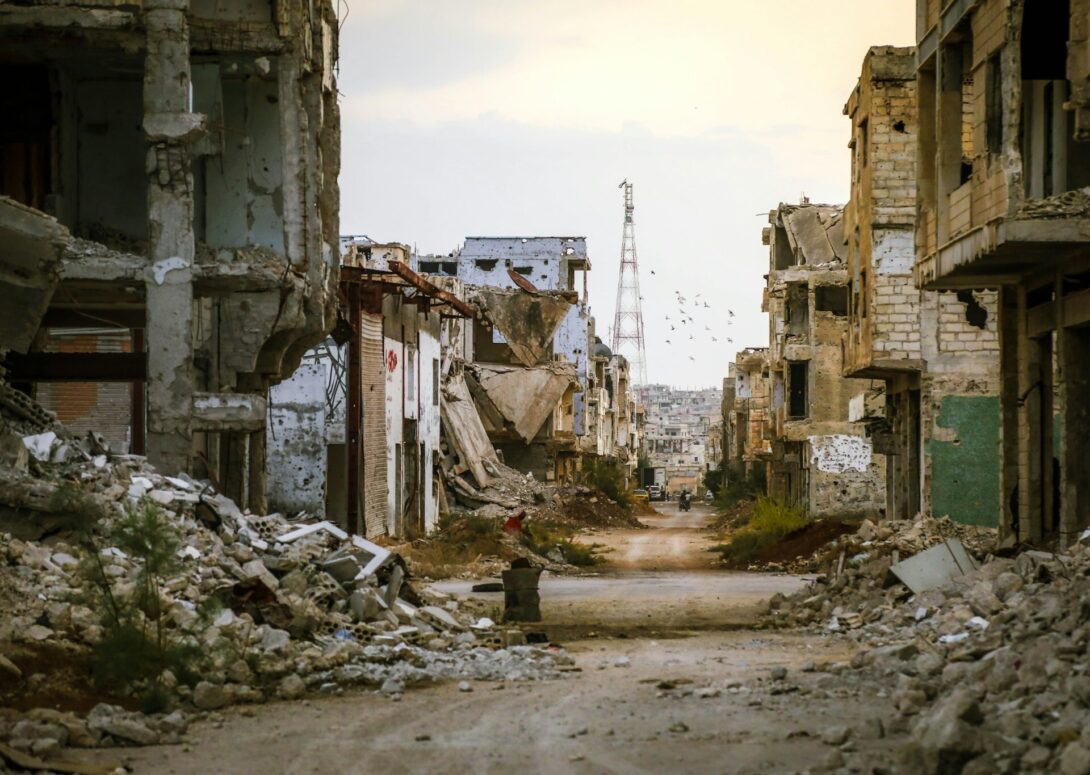
More than half the Syrian population of twenty-three million was displaced across national borders (6 million) and internally (6 million) between 2011 and 2024 during the Syrian Uprising, which turned into a Revolution. The scale of destruction by the Assad regime, which targeted schools, health centres, hospitals, and any locations that local coordinating committees had set up to provide basic services to its population, is nearly unfathomable. Neighbourhoods, especially informal settlements, were reduced to rubble in Daraa, Damascus, Homs, and Aleppo. Infrastructure was destroyed; electricity was almost non-existent. Even today, in 2026, most cities can only provide a few hours a day, if lucky.
The country, which had severe sanctions imposed on it, is watching them be slowly lifted, making reconstruction and rebuilding a slow, painful process. Sanctions on banking have not yet been lifted to allow normal transactions, and many Syrians in the diaspora wishing to send remittances to help build homes, villages and neighbourhoods face enormous challenges getting money into Syria even today.
Given these conditions on the ground in Syria, the key words regarding safe and voluntary return are freedom (to choose to return) and dignity. And here dignity means much more than simply being respected. It means being able to return to a country where infrastructure works, where electricity and water are available, and for families, where schools are functioning along with health centres and hospitals. Each country on Syria’s border has taken a different approach to free and dignified return.
Turkey received nearly four million displaced Syrians between 2011 and 2024. In 2014, Turkey passed a domestic Asylum law for displaced Syrians, providing health care and education – through to and including university education – for free. Many Syrians in Turkey (about 240,000) were granted Turkish as well as Syrian citizenship. Furthermore, between January and July 2025, Syrian household heads could make three ‘exploratory’ trips back to Syria to assess whether return was possible in dignity.
This decree was similar to the Dayton Accords of 1995 (annex 7), which set out the right of Bosnians to return to their own home and to recover pre-war property. One million Bosnians returned under these arrangements. Since December 2024, around 700,000 Syrians have returned to Syria from Turkey. About 2.5 million Syrians remain in Turkey under temporary protection status (kimlik). Some are considering when return might be safe and dignified; others may never return.

Lebanese records suggest that it received nearly one million Syrians out of a total population of nearly 4 million. However, before 2011 there were nearly 500,000 Syrians as seasonal labourers in Agriculture and Construction. Many brought their families from Syria, bringing the figures of Syrians in Lebanon very rapidly up to nearly 1 million. Voluntary returns to Syria are currently being managed by the United Nations Agency for Refugees (UNHCR) and the International Organization for Migration (IOM). The nature of these returns is questionably voluntary. Displaced Syrians in Lebanon have had no opportunity to see if conditions in Syria are safe, if their homes still exist, or if they have been reduced to rubble. Nevertheless, the Lebanese state supports this pushback with cash incentives of $100 per person and additional top-ups of $300-$600 per family.
Jordan received nearly 800,000 to 1 million Syrians as temporary guests. In 2016, the Jordan Compact was agreed, providing mechanisms to issue work permits for Syrians prepared to work in construction or agriculture, as well as in factories based in the public ‘free trade zones’ of the country. The project was not a success for Syrians, as little effort had been made to understand how they would respond to these limited opportunities. Since 2024, about 220,000 Syrians have returned ‘voluntarily’ to the major cities of Daraa, Homs and rural Damascus – cities where whole neighbourhoods have been reduced to rubble by the Assad regime, and with little prospect of employment opportunities emerging yet. Those who have returned to Syria prematurely have no possibility of turning around and waiting in Jordan until conditions improve.
What is clear from this brief overview is that the Turkish model needs to be extended in Turkey and adopted in Lebanon and Jordan. The Dayton Accords set the international humanitarian standard on voluntary return. Go ‘Look and See visits’ are vital if returns are to be voluntary, safe, and in dignity.

Dawn Chatty is Emeritus Professor in Anthropology and Forced Migration and former Director of the Refugee Studies Centre, University of Oxford, United Kingdom. She was elected Fellow of the British Academy in 2015. Her research interests include refugee youth in protracted refugee crises, conservation and development, pastoral society and forced settlement. She is the author of Displacement and Dispossession in the Modern Middle East Cambridge University Press, 2010, From Camel to Truck, White Horse Press, 2013, and Syria: The Making and Unmaking of a Refuge State, Hurst Publishers, 2018.