While Europe Sleeps, Putin’s Ghost Fleet Sails On
Europe has developed a remarkable talent for administrative theatre when confronting Russian threats. Show Brussels a drone, a hacker or a severed undersea cable, and someone will produce a briefing paper, convene a committee and issue a solemn declaration of concern.
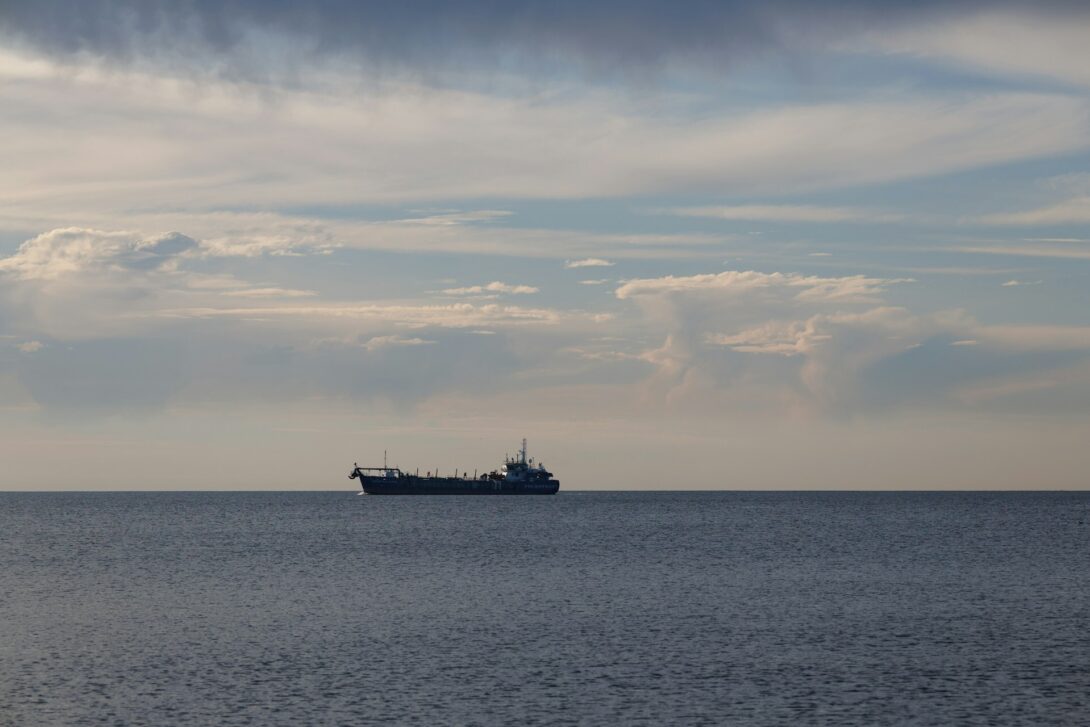
Meanwhile, Moscow is moving military equipment to Africa by sea, along routes passing Europe's front door. The ships have official passenger lists. The passengers, however, are harder to account for.
An investigation published on 19 October by the Dossier Center, Danwatch, Follow the Money, Süddeutsche Zeitung and Delfi examined seven Russian civilian vessels used for military shipments. Investigators identified 28 passengers whose stated identities they could not independently verify. Some passport numbers were unusually close; two were consecutive. The Kremlin's talent for secrecy seems to have met its match in the stationery cupboard.
Consider the Sabetta. In March, it reached Conakry, Guinea, carrying roughly 50 Russian military vehicles destined for Mali. There, Moscow's Africa Corps, which succeeded the Wagner mercenary organisation, supports the country's military rulers. Four passengers accompanied the shipment. Their names, birth dates and passport numbers appeared in shipping documents, but investigators could not independently corroborate their identities.
Fabricated identities are a plausible explanation, according to experts consulted for the investigation. That does not establish that all 28 were spies. Some could have been military technicians or security personnel. Still, an unverified passenger accompanying armoured vehicles is a more consequential mystery than a misplaced suitcase at Heathrow.
The Sabetta was hardly alone. Other shipments headed towards Libya and Togo. The Mys Zhelaniya reached Tobruk with military equipment after travelling part of the way with a Russian naval escort. Some of the vessels crossed the Danish straits, the gateway between the Baltic and the North Sea. Denmark's military command told Danwatch it had not been informed of the arms shipments identified by the reporters.
There is a legal distinction worth keeping. Merchant vessels generally have rights of passage through international straits, even when carrying weapons. Suspicious paperwork does not automatically entitle a European navy to board a ship. The challenge is to make better use of information authorities can lawfully gather and share, rather than pretend maritime law disappears whenever Moscow is involved.

Britain has good reason to pay attention. Russian vessels travelling from the Baltic to West Africa may pass through the North Sea and the English Channel. London has devoted considerable attention to Russia's sanctions-evading oil tankers. Military logistics aboard civilian ships present a different question: who accompanies the cargo, who employs them and where does the equipment end up? Counting tankers is useful. Reading the passenger lists might be useful too.
Seen from Italy, the map looks different but the concern is familiar. Libya lies across the Mediterranean; instability in the Sahel affects European security interests further south. Russian military shipments connect northern shipping corridors with conflicts and power struggles on Europe's southern approaches. London and Rome are looking at opposite ends of the same voyage.
The response need not begin with another grand declaration. Maritime authorities, customs services and intelligence agencies can improve the exchange of information on suspicious identities and military logistics. Governments can examine the companies involved and apply existing sanctions where the evidence and law permit. That is less theatrical than announcing a new strategy, but potentially more useful.
A handful of investigators reconstructed seven vessels, 28 questionable identities and a trail of shipping documents. European governments have far greater resources, although the public cannot know everything their intelligence services already track. The investigation nonetheless raises a fair question: how consistently are these pieces of information connected across borders?
Europe has heard the alarm clock ringing for years. Perhaps someone should check the harbour.
Costantino is an Italian writer and foreign affairs analyst specialising in geopolitics, security and international affairs.