Aid May Start Rebuilding Gaza, But Only Markets Can Finish It
Gaza's reconstruction is back in the news after Pope Leo XIV recently appealed to the world to help begin the post-war reconstruction of the area.
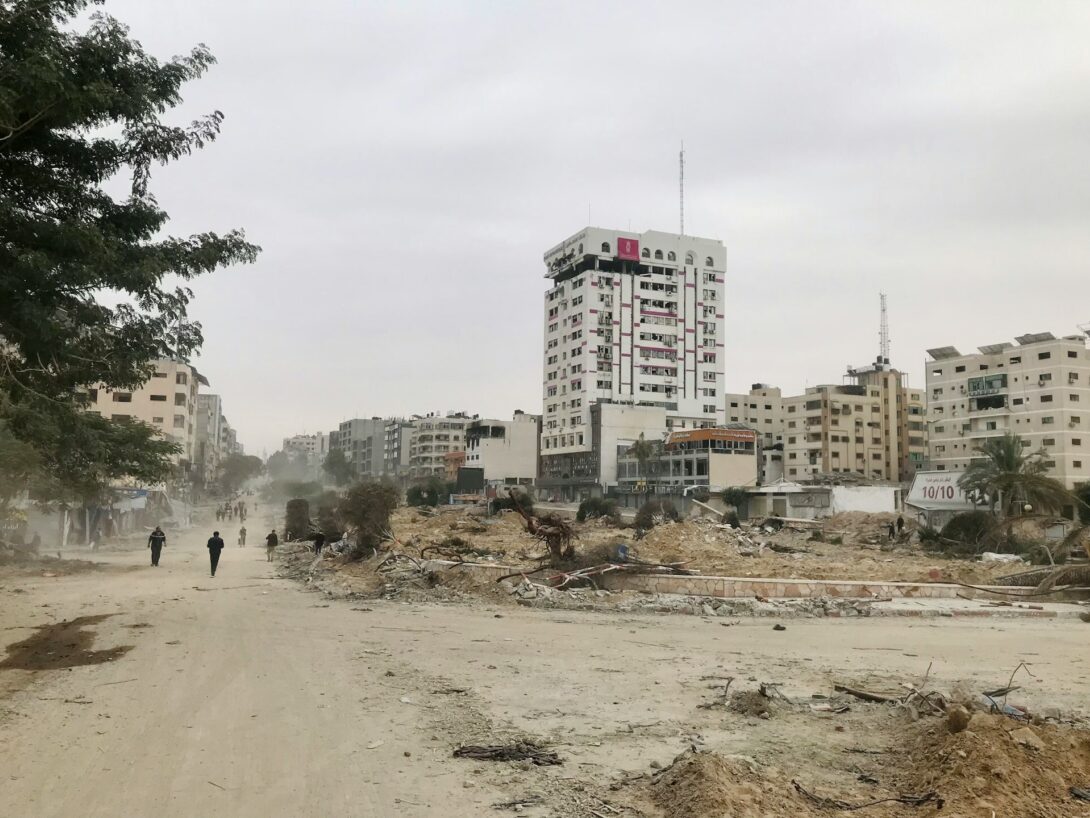
A secure and prosperous Gaza is beneficial to Gazans, Israel, and stability across the Middle East, but we must think more deeply about how we get there. There is a pattern to the end of wars. A donor conference is convened, a headline aid figure is debated, and an international authority is selected to spend the aid. Gaza is the latest example. International organisations have estimated the cost of rebuilding the Strip is $71.4 billion over a decade.
This staggering number is the equivalent of the UK’s entire defence budget. Before that money is committed, we should ask: does aid on this scale deliver enduring and sustainable peace, or simply short-term temporary calm that fades once the cheques stop?
Aid is indispensable to the first step in rebuilding post-conflict societies. It's fast and visible. At this time, private investors are largely absent, and the focus is on humanitarian solutions for conflict-ridden populations. After this initial phase, OECD studies have shown that aid hardly raises growth and employment prospects.
Too often, aid and private investment are seen as binary. In conflict resolution, they are two sides of the same coin. Diplomacy has the potential to end conflicts; open markets and trade can be guarantors of long-term peace and stability.
Aid cannot replace the sustainable effects of long-term investment; these two pools of capital must work together. Aid often contends with competing political visions, donor country priorities, local corruption, and other factors. In contrast, intelligent, long-term foreign investment will flow towards a country’s real comparative long-term advantages.
The experience of Northern Ireland offers a direct precedent. Its peace process demonstrated that political agreements are more durable when accompanied by economic integration and investment. Robert Putnam's acclaimed Bowling Alone inspired Americans to view civil society organisations as a means of rebuilding resilient interconnected communities within a nation.
Lord Jonathan Kestenbaum, a member of the House of Lords and the founding CEO of The Portland Trust, which built its reputation on shaping economic opportunities for Palestinians and a commitment to dialogue in the Middle East, has drawn on these frameworks for conflict resolution between Israel and the Palestinian Territories.

Lord Kestenbaum’s work on using trust-building methods between business communities in the region serves long-term reconciliation between Israelis and Palestinians. People who trade with each other and are jointly invested in their society’s future will work cooperatively, building an enduring peace. According to Kestenbaum, such an approach gives both sides everything to gain and creates a sense of hope for the next generation. The Portland Trust published research showing how shared prosperity can be achieved and support peace. In “Beyond Conflict: The Economic Impact of Peace on Palestinians and Israelis”, Lord Kestenbaum, who spent time in Israel before returning to the UK in 1991 when he relinquished his dual nationality, argued peace would transform opportunities on both sides of the divide.
Based partly on a survey of around 70 businesses in the West Bank and Gaza, it estimated a post-conflict rebound could generate $800 million in additional value-added within five years. It could also catalyse $100 million a year in additional private-sector investment and create an estimated nearly 1.2 million new jobs for Palestinians within five years of peace. Crucially, it warned that while aid could accelerate infrastructure investment and provide a temporary wage boost, it could not create sustainable jobs; the durable anchor of employment has to be the domestic private sector. Any Gaza reconstruction package should explicitly focus on catalysing private investment, not be a substitute for it.
This means understanding and promoting sector-by-sector modelling that lets investors price risk. The World Bank demonstrated how this can work in the Palestinian territories: its Finance for Jobs programme mobilised $47.8 million in private capital through risk-sharing and co-financing mechanisms, supporting the first private investment in solar energy in Gaza, facilitating over 700 jobs. Aid tranches could be structured with explicit sunset clauses alongside guarantees, risk-sharing, and other mechanisms that allow public money to crowd in private capital rather than displace it.
The international community’s current approach to peacemaking has opened doors that a decade of conventional diplomacy could not, but that does not mean peace, whether it is in Gaza or other war-torn parts of the world, will be sustained. Global powers and global institutions must come to understand: aid can start the rebuilding, but only markets can finish it.

Harry Richer is the Director of Fighting for a Free Future, working under Chairman the Rt Hon Steve Baker. Fighting for a Free Future is a new cross-institutional movement advocating for liberty, low taxes, free enterprise, and smaller government. It is designed to amplify free market voices in Westminster, and aims to shift the terms of debate towards free markets and individual freedom.