The global implications of the drone war in Ukraine
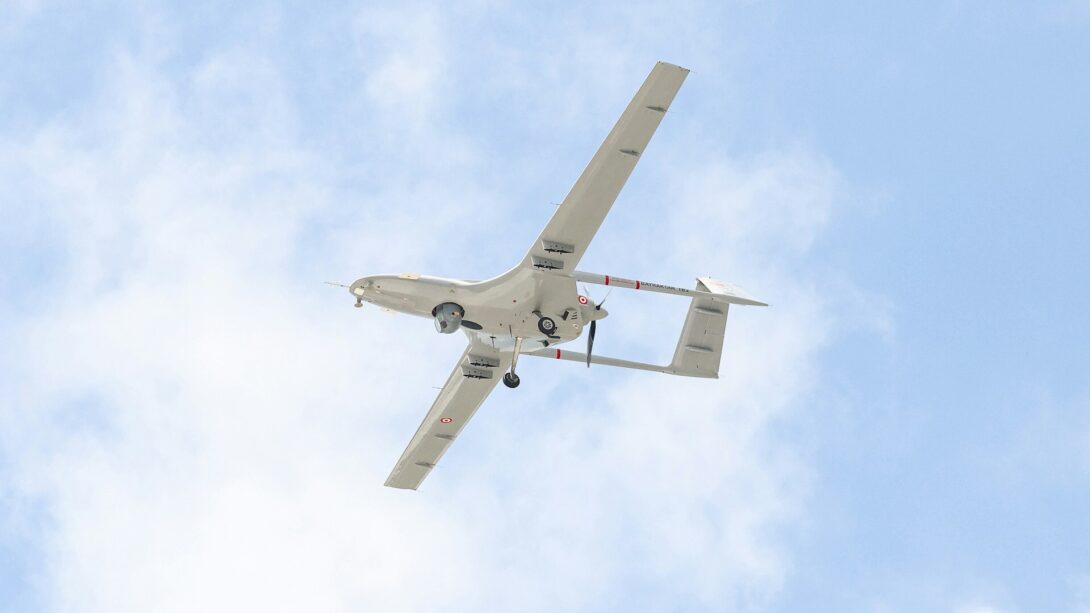
War has always been difficult, but it is about to get harder. During its Global War on Terror, US forces maintained the advantage of complete and total air superiority, an advantage unlikely to continue. We need only look to the battlefields of Ukraine, swarming with small, cheap, commercial drones retrofitted with military capabilities, to account for this new reality. Sometimes, of course, Ukrainian drone use mimics the targeted killing strategy of the US war on terror, individually picking off isolated soldiers in the field. Increasingly, however, Ukrainian drone use replicates the artillery of older wars, in massed barrages used to overwhelm defenses and break through entrenched defenses or to target critical infrastructure with long-range precision strikes. While drones used in these ways appears as old wine in new skins, the accuracy and accessibility of the technology will have important ramifications for war in the 21st century—especially as the US and other global powers are looking to stretch their arms to new “near abroads.”
Stephen Biddle’s 2004 award-winning Military Power outlines a modern system born out of the trench warfare of the First World War—an operational method for achieving movement on the battlefield under industrial advancements in weaponry and firepower. This system consists of a combination of cover, concealment, dispersion, suppression, small independent unit maneuver, and combined arms. When the components function in unison, they amount to a complex field maneuver that involves small independent units moving across a battlefield by way of dispersing, taking cover, concealing themselves, and suppressing enemy fire through combined arms fires. It was the effective implementation of these tactics, in coordination with one another, that allowed the stalemated troops to regain maneuver along the Western Front in 1917. In short, the side that deploys the modern system most effectively in a conventional war is more likely to gain ground on stalemated battlefields. This point remains as true today as it was in 1917, and drones, especially small drones, are aiding the modern system’s implementation. Ukraine’s invasion of Kursk was a perfect example of this.
In August 2024, Ukrainian forces advanced up to 35km into Russia’s Kursk Oblast, capturing key settlements, including the town of Sudzha. The invasion surprised an ill-prepared Russian defensive line of conscripts and inexperienced young soldiers. Ukrainian assault brigades advanced under the cover of “a creeping barrage of jammers and drones,” taking territory piece by piece and allowing the defensive lines to move up to continue the practice of suppressive fire.

The barrage of jammers worked to limit Russia’s ability to use its own drones for reconnaissance and strike, aiding Ukrainian quadcopter drones in clearing Russian trenches. Russian troops defending Kursk were not prepared for a modern system offensive and were thus overpowered by the Ukrainian advance. Elsewhere, however, Russia has employed modern system tactics, recreating the stalemates and trench warfare of World War One. When modern system militaries collide, wars of attrition are likely.
At the turn of the century, few militaries were thought able to implement modern system tactics with any effectiveness due to the complexities of integrating across its components. Combining cover, concealment, dispersion, suppression, small independent unit maneuver, and combined arms to achieve operational breakthrough and battlefield victory remains as difficult in war, but the increasing accessibility of drone technology and their precision capabilities lowers the barrier for smaller states or non-state groups to achieve effective implementation of the modern system.
If the tactical lessons of the Ukrainian Armed Forces are being learned or imitated by states and non-states around the world (which is appears they are), the drone revolution is occurring before our eyes—not by circumventing the modern system, but by the lowering of the threshold for access to modern system force employment. But the evidence in Ukraine suggests, much like Biddle, that a clash of two modern system militaries still generates wars of attrition.
The consequence is that drones are unlocking the modern system for smaller actors. In doing so, they are shifting the balance of power, making it harder for larger powers to turn material superiority into decisive victory. While this is a painful lesson for Russia, it is also a lesson that all great powers should take note of, be it the US with Iran, China with Taiwan, or Saudi Arabia with the Houthis.
Small drones are making weaker armies more powerful and decisive victories harder to achieve. War is always a political choice. Making that choice now has grave consequences for great powers and should not be taken lightly.
This article draws from the authors' latest article, 'Theorizing the role of small drones in the Russia-Ukraine war', published in Contemporary Security Policy. The full academic journal article can be read for free here: https://doi.org/10.1080/13523260.2026.2724964

- Wes Hutto is Associate Professor of Military Strategy and Security Studies at the School of Advanced Air and Space Studies (SAASS), a Research Fellow at the Modern War Institute at West Point, and a non-resident senior fellow at the Cornell Brooks Tech Policy Institute.
- James Patton Rogers is Lecturer in Security and Technology within the Department of War Studies at King's College London and Co-Director of the Future Threats Lab. He is the author four books, including Drones: What Everyone Needs to Know (Oxford University Press, 2025, w/ S. Kreps) and Rethinking Remote Warfare: AI, Drones, and Future War (Palgrave, 2026, w/ W. Hutto, Eds).