A Budget of Small Things
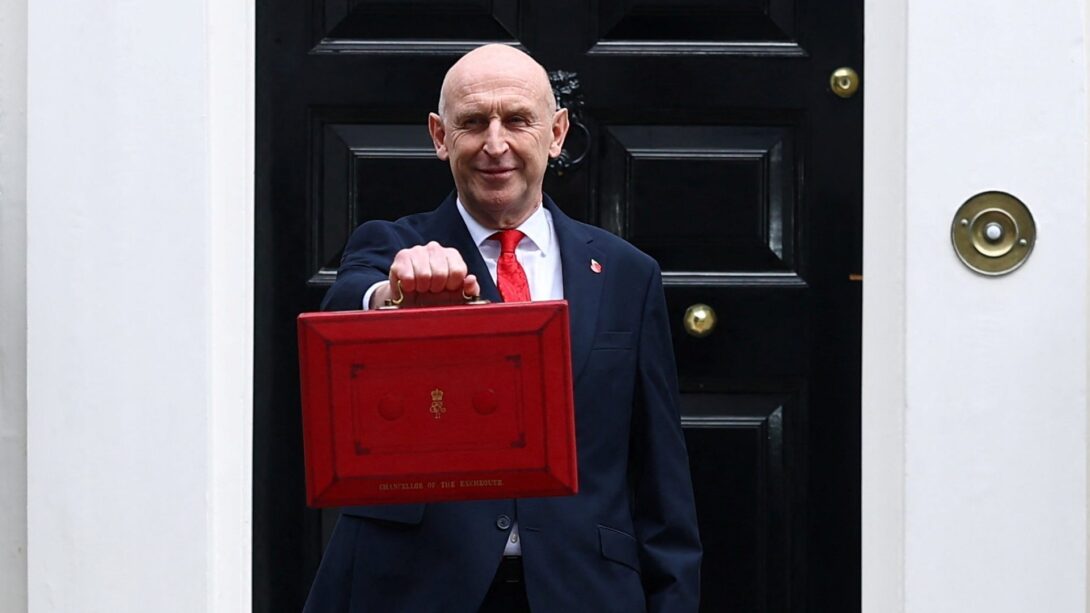
The Chancellor hasn’t crashed the economy by reckless unfunded commitments. Perhaps we should be grateful for small mercies (of which Liz Truss’s new book helpfully reminds us). Nor were there any damaging measures like Rachel Reeves’ big hike in employers’ national insurance contributions. There were lots of small, uncontroversial reliefs for consumers and business which are being paid for by raiding the banks (as I previewed in my last Substack article: The Endless Search for Painless Taxes). But as Kemi Badenoch asked, in her rather effective reply to the Budget, ‘Is that It?’
Much of the budget had been trailed in advance so that there were few surprises. But the reason why the budget was so light on serious content was that the big difficult decisions have been deferred to the Spring Statement. This will explain what is being cut to pay for defence commitments and rising welfare costs, sufficient to keep the government on a financially sustainable path, credible to our international creditors (or, if the expected cuts prove to be too painful, would provide a pretext for the government to go to the country to get a mandate to raise the taxes which were ruled out in the last Labour manifesto).
To be fair to the Chancellor his speech was built around a recognition that the only way of escaping the painful trap of rising fiscal deficits and debt, rising taxation and public spending austerity is to achieve more rapid economic growth. Groth has suffered badly from successive shocks: the global financial crisis; Brexit; Covid; the Ukraine war; now the Middle East war.
The government’s own projections are in the 1.5 to 2% range, barely adequate to match the needs of an ageing population, debt service and a growing need to spend more on national security. The forecasts are, frankly, optimistic given the poor external environment of conflict, protectionism and geo-political uncertainty.

There were a few encouraging signs that the government takes the challenge seriously, albeit after two years of measures like onerous employment regulation which have made matters worse. There was a pro-business tone along with limited but welcome steps to ease business rates and to incentivise company founders within the CGT regime. There appears to be a serious commitment to reducing energy costs by reforming the electricity pricing regime; though detail is lacking. There was a welcome injection of government investment, alongside private investment, through the so-called PuFins: the National Wealth Fund and the British Business Bank. Credit goes to Rachel Reeves for creating a fiscal framework for borrowing to invest. One of my biggest regrets in the Coalition was not being able to persuade George Osborne to go down this route but, having set up the British Business Bank, I am pleased to see it now being used at scale to help British companies to grow.
One big uncertainty is what happens to our relationship with the EU. The Prime Minister has reopened the debate over how to reverse the damage caused by Brexit and the possibility of rejoining in some form. Ed Davey continues to make the case for rejoining the Single Market as the missing element in a growth strategy. We shall see in forthcoming ‘re-set’ negotiations how far it is possible to get some alleviation of the Brexit damage. There are many issues to resolve, notably the costs of re-entering the European market. Leading EU countries, notably France, are themselves in deep economic and political trouble. But without some progress in repairing the damage to our trading relationship with our neighbours, there will continue to be a big hole in the plan to revive the economy.

Sir John Vincent Cable is a British politician who led the Liberal Democrats from 2017 to 2019 and represented Twickenham in Parliament from 1997 to 2015 and again from 2017 to 2019. He served as Secretary of State for Business, Innovation and Skills and President of the Board of Trade in the coalition government between 2010 and 2015. Cable studied natural science and economics at Cambridge before working as a finance officer in the Kenya Treasury and lecturing in economics at Glasgow University, where he also earned his PhD. His distinguished career included roles in the Diplomatic Service, directing research at the ODI, advising the Commonwealth Secretary-General, heading the international economics programme at Chatham House, and serving as Chief Economist for Shell Group Planning.