Europe's carbon market is working better than its critics assume
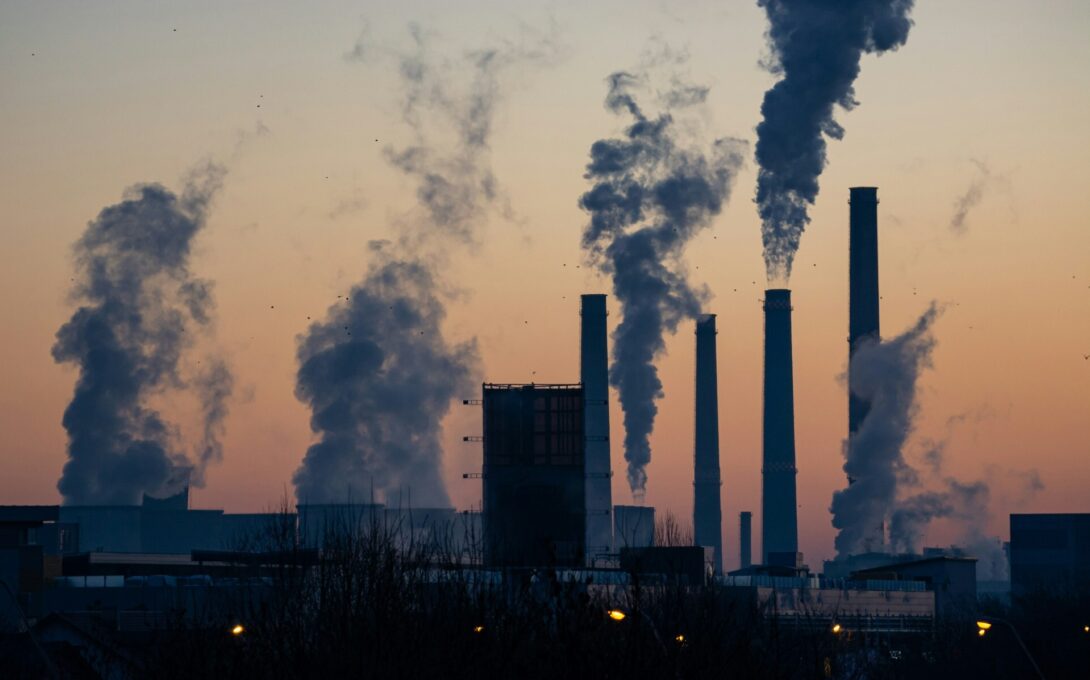
The installations covered by the EU Emissions Trading Scheme emitted 1,001 million tonnes of CO2 in 2024, half their 2005 level. A billion tonnes a year, gone.
That number alone proves nothing about the policy. European industry has been reshaped by cheap competition from Asia, the financial crisis, the long shift towards services, and two energy price shocks. Some of that decline would have happened without a carbon market. The question that matters for anyone voting on the scheme's future is how much.
Answering it requires a counterfactual, and the ETS supplies one. Inclusion depends on the physical size of an installation, not its emissions: a combustion plant above 20 megawatts of thermal input is covered; one below is not. A cement kiln firing 500 tonnes a day is in. Capacity is expensive and slow to change, so firms could not choose which side of the line to sit on, and because the thresholds apply per installation, a company running two small plants escapes while an otherwise identical competitor with one larger plant does not. The result is pairs of genuinely comparable firms, one regulated, one not.
The obstacle is data. The Europe-wide pollutant register only records CO2 above 100,000 tonnes a year, by which point almost everything is already in the ETS. Four countries — the UK, the Netherlands, France and Norway — require reporting at 10,000 tonnes and below. We matched roughly 1,100 ETS installations in those countries to comparable unregulated ones in the same country and sector, and followed both from 2003 to 2023.
The regulated plants pulled away from their unregulated twins after 2007, and the gap has widened with every phase: 12 per cent in phase two (2008-2012), 18 per cent in phase three (2013-2020), and 41 per cent since 2021. That last figure is around 800 million tonnes of CO2 a year. Cumulatively, it is some 4 billion tonnes between 2008 and 2023, or roughly €400 billion of avoided climate damage at a conservative €100 a tonne. No other single climate policy anywhere comes close.
If anything, these estimates are cautious. Our comparison group is not unregulated: France's carbon tax on non-ETS firms reached €44.6 a tonne, Norway's is near €75, and Dutch energy levies fall hardest on smaller consumers.
Since 2015, we have effectively been measuring the ETS against other climate policies rather than against nothing at all. We also start the clock in 2008, ignoring whatever the 2005-2007 trial phase achieved, and our sample tilts towards smaller firms near the inclusion threshold — the larger installations within it cut deeper than the smaller ones.

Two findings deserve particular attention in the current debate.
The first is that emissions kept falling through 2012-2018, when allowances traded below €10. Critics read low prices as evidence of a broken market. Firms behave differently. A furnace or boiler bought today will run for thirty years, so what governs the investment is the carbon price expected across its lifetime, not the spot price on the day the order is signed. A credible declining cap does work that a weak current price conceals.
The second is that the environmental outcome rests on arithmetic rather than hope. Covered installations cannot collectively exceed the cap. That is the structural advantage of cap-and-trade over a tax, and the price is what absorbs the uncertainty instead. On the current reduction trajectory, covered sectors approach zero emissions by 2050 with no further legislation at all.
"No further legislation" is doing a great deal of work in that sentence. The risks are political. Australia repealed its scheme; the United States has repeatedly walked away from federal carbon pricing. The ETS has so far avoided serious popular backlash, helped by the revenue it raises and a redistribution key that favours lower-income member states. That becomes harder in 2027, when ETS2 extends pricing to home heating and road fuels — costs voters feel directly. Support for low-income households is not a courtesy; it is what keeps the cap politically survivable.
Competitiveness is the other exposure. Free allowances shrink towards zero, and the Carbon Border Adjustment Mechanism, phasing in from 2026, protects only the home market. A fifth of EU steel production is exported, and the CBAM does nothing for it. Export rebates are dismissed in some quarters as subsidies for polluting goods. That gets it backwards: unlike fossil fuel subsidies, they lower global emissions by preventing cleaner European output from being displaced by dirtier imports.
As Parliament and Council work through the post-2030 trajectory, they can treat the scheme's effectiveness as settled. It works, and it has worked harder in each successive phase. What is genuinely uncertain is whether the political and industrial scaffolding around it will hold.

Frank is an Associate Professor and Deputy Research Director at the Grantham Institute of the London School of Economics.