Wildfires: for peat’s sake it is time to get real
This summer’s spate of wildfires across the UK has been termed by experts the ‘2026 firewave’ due to the ‘perfect conditions’ for a wildfire disaster, with temperatures that exceeded 30 degrees, 30mph winds, and 30% humidity. Although the data is not yet available, it is possible that it will be the worst year yet. Not necessarily in terms of the number of wildfires but in the damage done to the environment, the impact on businesses, human health and communities, and the pressure it puts on the Fire & Rescue Services and the volunteers from the farming, land and game management sectors who support them in fighting wildfires. Risk to life remains a very real threat.
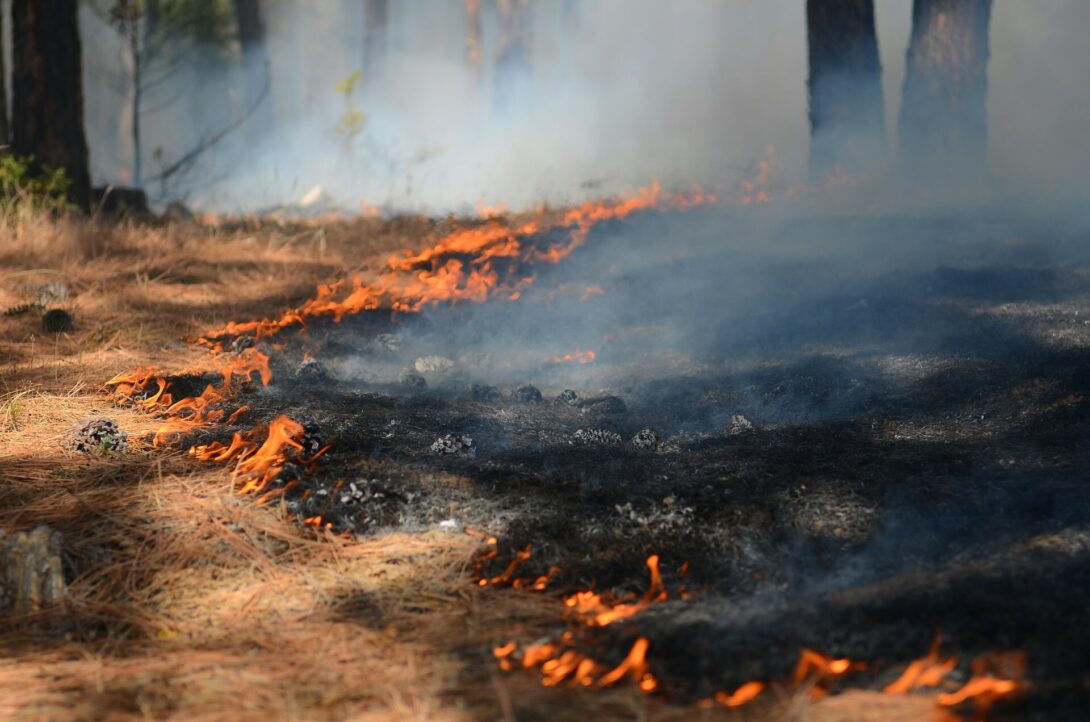
The question is often asked, “What causes a wildfire?”. Quite clearly there needs to be an ignition source, but too much emphasis is placed on that element of cause. Imagine a disposable BBQ on a bare piece of earth – no vegetation (fuel) available for the flames to light, and so no problem. The real problems occur when there is vegetation (fuel) available for the fire to spread, with the amount and structure of the vegetation (termed the fuel load) being determinants of its severity.
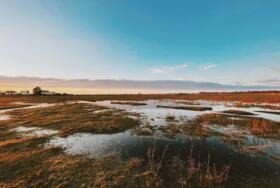
The trend towards reduced management of our peatlands in pursuit of climate resilience and nature recovery is ironically leading to the unintended consequence of wildfire risk increasing. The damage done by a wildfire undoes all the potential benefits of peatland restoration and more, as the severity of the wildfire changes the soil chemistry to make the peat surface repel water and destroys the seed bank on which recovery would rely. All peatland restoration schemes need a wildfire management plan whilst the transition occurs, as such schemes take decades, whereas wildfires are becoming annual.
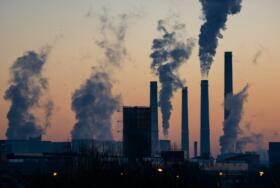
A severe peatland wildfire will burn down into the peat, releasing thousands of tonnes of stored ‘millennial carbon’. Recent research has shown that our peatland wildfires have accounted for up to 90% of annual fire-driven carbon emissions since 2021, and analysis of the UK’s first mega-fire at Dava Moor in Scotland last year indicates that nearly 85% of carbon emissions came from the underlying peat stores.
So whilst the accumulation of flammable vegetation above ground determines fire spread and severity, this has knock-on significance if weather conditions have been dry enough to result in the underlying peat igniting, creating a smouldering fire. The worst and most difficult to suppress.
Wildfires also occur in Spring, when the underlying substrate is wet but the surface habitat has yet to ‘green up ’, so it is dry and has a low fuel moisture content, a key determinant of wildfire risk and severity.

In these situations, rewetted peat may well protect against the wildfire burning down into the peat, but it does not protect against the loss of the surface habitat on which much of our upland biodiversity relies.
When you are next out walking in our moorlands, look around you at the structure of the vegetation and consider the rule of thumb used to judge the likely severity of a wildfire: a wildfire flame with no wind is approximately twice the height of the vegetation, with wind and aspect increasing this a further 2-3x. So, if you are walking through bracken up to your waist, or grass or heather up to your knees, this means that the flame length in the recent winds we have been experiencing will be over your head - at a minimum. Given that a flame length of approximately twice the height of the average human is beyond the direct control of the Fire & Rescue Services, you can see why a wildfire gets out of control so quickly.
We need to get real about managing the fuel load in the face of climate change, which is not only leading to the drought conditions that support extreme wildfire but also supporting more vegetative growth (available fuel) through warmer, wetter winters. Management needs to employ all the tools in the toolbox – grazing, rewetting, cutting (with brash removal) and controlled ‘cool’ burning – as each site will be different. If we don’t start managing our moorlands NOW, then we will continue to experience devastating wildfires both in terms of scale and impact on our environment, communities and the economy.
It is time to get real and put ideological beliefs about management and, in particular, the use of controlled burning, to one side, before we risk the loss of those very natural capital assets we are so keen to protect for future generations.
Henrietta Appleton works for the Game & Wildlife Conservation Trust (GWCT), a leading UK charity conducting conservation science to enhance the British countryside for public benefit. For over 90 years the GWCT has been researching, developing and delivering game and wildlife management techniques in farmland, upland and aquatic environments. We use this applied research and practical experience to inform the conservation issues that surround the sustainable management of habitats, game and wildlife. We aim to encourage evidence-led policy that is balanced and which meets multiple objectives. www.gwct.org.uk