Climate change has become Europe’s most systemic security risk
Climate change is no longer simply an environmental problem for the UK and Europe. It has become the continent’s most systemic security risk: no other threat is capable of simultaneously hitting food and water supplies, energy facilities, transport networks, critical infrastructure, and impacting public health and military readiness across multiple countries.
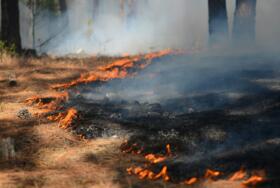
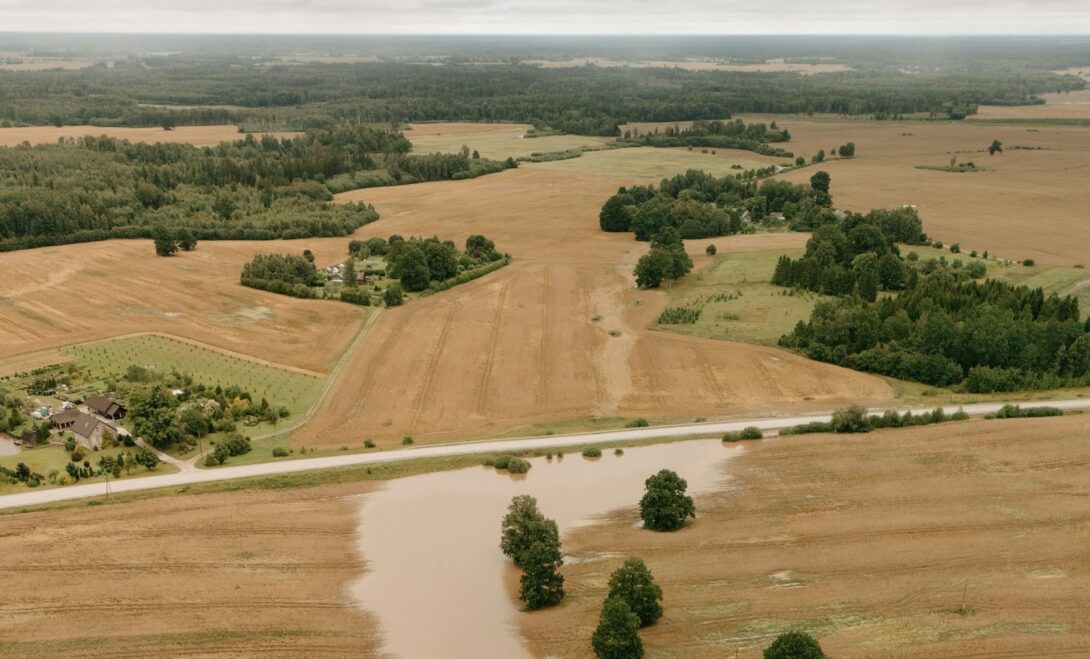
Europe’s summer of 2026 has made that reality difficult to ignore. Extreme heat contributed to an estimated 35,000 excess deaths during the multiple summer heatwaves. Roughly 9 million tonnes of crops were lost, more than 600,000 hectares of land and forests burned, and hundreds of thousands of people were forced to evacuate. Low river levels disrupted transport and even forced nuclear reactors to shut down because cooling water became scarce. At the same time, tinder-dry landscapes have increased Europe’s vulnerability to deliberate arson, potentially turning a relatively simple act into an instrument capable of causing mass disruption.
This does not mean that military aggression, cyberattacks or terrorism matter less. Rather, climate change increasingly interacts with and magnifies these threats. But in contrast with these more conventional security threats for which Europe has decades of experience and established mechanisms for deterrence, defence and crisis response, accelerating climate change is taking us into largely uncharted security territory. Risks and impacts are evolving faster than our institutional responses, and governments have comparatively limited experience and preparedness for what is coming.
And this is not only a European security story. The devastating catastrophe that unfolded along the Nepal–Tibet border is another warning of what climate insecurity increasingly looks like. The glacier collapse and resulting ice-rock avalanche triggered devastating flash floods that swept through valleys, destroying communities, bridges, and hydropower infrastructure and claiming more than 1000 lives in Nepal alone, with over 4000 people still missing. Scientists and the UN warn that accelerating glacier melt is increasing the risk of catastrophic floods across the Himalayas in the coming years, threatening millions of people.
2026 should not be dismissed as a freak year. But even describing it as the “new normal” is misleading, because normal implies a stable baseline. There is no stable baseline while global temperatures continue to rise.
Without faster and deeper global emissions reductions, today’s extremes are stepping stones towards still greater risks.

The strengthening El Niño is an immediate reminder. The World Meteorological Organization has warned that there is a near 100 per cent likelihood of a very strong El Niño event during the northern hemisphere autumn and winter of 2026–27. Its consequences are going to extend well into next year. El Niño can bring drought to some agricultural regions and destructive rainfall to others, damaging crops, livestock and infrastructure. Poor harvests in major producing regions would not remain local problems: disruption can travel through commodity markets and supply chains, affecting food availability and prices around the world.
For the UK and Europe, treating climate change as a security issue cannot mean simply handing responsibility to the military. Armed forces will increasingly be needed during major fires, floods and evacuations, and climate damage to infrastructure can itself undermine military readiness. But soldiers should support, not substitute for, properly funded civilian capacity. The deeper task is to rebuild civil defence and societal resilience for an age of climate disruption: stronger fire and rescue services, heat-health plans, flood protection, resilient power and water systems, early-warning systems, emergency communications and communities that know what to do when disasters strike.
The UK government’s new plan to encourage households to stockpile basic emergency supplies, including tinned food and bottled water, is therefore sensible. Prepared households can cope through the first days of a crisis and allow emergency resources to be concentrated on the most vulnerable. But household preparedness cannot become an excuse for governments to shift responsibility onto individuals. Resilience ultimately depends on public infrastructure, capable institutions, and investment made before disaster hits.
Most importantly, security policy must address the underlying driver. Adaptation can reduce deaths and damages, but it cannot indefinitely outrun worsening heat, drought, fire, floods and glacier loss. Climate security therefore requires both preparation for impacts that can no longer be avoided and faster emissions reductions to prevent far greater disruption.
National security is ultimately about protecting the conditions that allow society to function. Climate change is now threatening those conditions simultaneously, across borders and across sectors. Governments should start treating it accordingly.

Patrick Schröder is a senior research fellow in the Environment and Society Centre at Chatham House. He is a coordinating lead author for both the IPCC Assessment Report 7 (WG III – Mitigation) and the UN Global Environment Outlook 7. Patrick is also a member of the International Science Council Expert Group on Plastic Pollution.