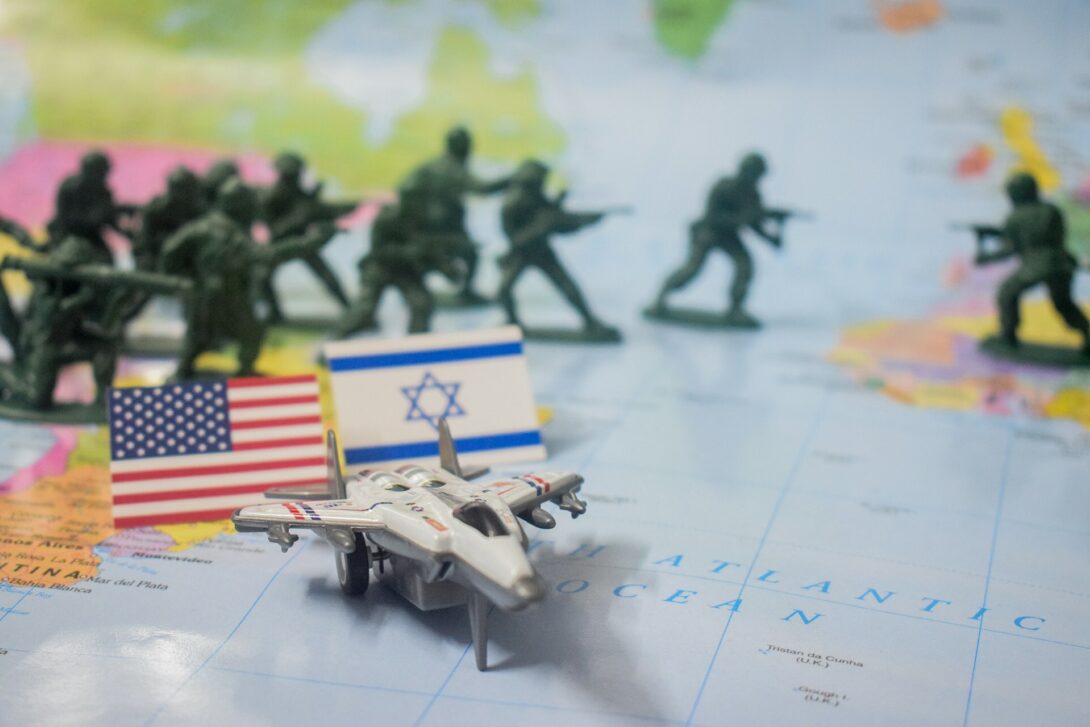
Beyond the Supplier-Client Dynamic: Strategic Autonomy and the Future of U.S.–Israel Ties
The recent multi-front conflicts raging through the Middle East have done more than simply shift lines of engagement; they have precipitated a revolution in strategic defense thinking and transformed relations between the United States and Israel. The security alliance between the two countries has long functioned on a mutually beneficial premise: combining American industrial scale and financial support with Israeli technological innovation and operational experience. However, political friction over military aid, exemplified by the Biden administration’s May 2024 decision to withhold a shipment of 3,500 bombs, has hastened the shift in Israeli defense doctrine toward strategic independence.
In December 2025, Israeli Prime Minister Benjamin Netanyahu announced a landmark NIS 350 billion ($108 billion) allocation over the next decade to establish an independent domestic arms industry. Approved alongside the Defense and Finance Ministries, the initiative explicitly aims to minimize reliance on external powers, "even friends," and secure national sovereignty over critical supply chains.
Unsurprisingly, this shift is considered a threat to the traditional U.S.-Israeli alliance. From Washington’s point of view, Israel’s strategic independence creates a danger of diminishing American diplomatic leverage, making it difficult for Washington to condition weapon deliveries and influence Israeli decision-making when tensions rise in the region. On the other hand, from Israel’s point of view, strategic independence is a response to changing dynamics in American political pressure, which could lead to delays in weapon deliveries. Israelis view these delays as exposing the operational risks associated with reliance on foreign supply chains.
However, beneath this friction, a deeper paradox emerges. A less dependent Israel reduces Washington’s strategic bargaining position; nevertheless, it alleviates the strain on American weapon supplies and aligns with Washington's broader mandate. The extended campaigns on several fronts have stretched the United States' weapons arsenal to its limits. Thus, Israel can reduce stress on strained U.S. weapon stocks through self-sufficiency in the manufacture of bulk ordnance. This step fulfills the United States' mandate, within its strategy for regional partners, to assume greater responsibility for defense.
Beyond Supply Chains: The Risk of Diplomatic Isolation
Beyond the tactical friction of munition resupply, the joint campaign against Iran revealed a stark strategic divergence between the U.S. and Israel. As the United States engaged in bilateral negotiations with Tehran, Israeli defense officials found themselves increasingly sidelined from high-stakes talks. Israel has viewed this very critically, seeing its security needs, especially the requirement for strict limitations on Iran's ballistic missile infrastructure, as being overlooked in US diplomacy. Therefore, the changing Israeli defense strategy arises from the belief that operational reliance on an ally during operations followed by peace negotiations can put one side's security needs at risk.
Consequently, Israel has begun its transition from a beneficiary of dependence to a self-reliant defense producer.
Over the coming decade, the Ministry of Defense will set new operational standards to ensure sovereignty in the arms supply chain. A cornerstone of this plan involves tasking domestic defense prime contractors, namely Rafael Advanced Defense Systems and Elbit Systems, to manufacture indigenous precision guidance kits equivalent to the U.S. Joint Direct Attack Munition (JDAM) standard, which converts conventional Mk-80 gravity bombs into GPS/INS-guided smart munitions.

Crucially, this change shouldn't be seen as a sign of detachment or retreat into isolation; rather, it's a sensible response to the new realities of our world. Right now, governments in the West are scrambling to increase ammunition production, but their defense industries are facing tough challenges. Factors like high global demand, low inventory levels, and intense political discussions in Washington are all putting pressure on these systems. It’s a complicated situation that requires both strategic thinking and a willingness to adapt.
Defense self-reliance for Israel means more flexible options for deterrence in the region, shielding its operational plans from the divided concentration of Washington and its European allies. Defense self-reliance does not mean Israel's withdrawal from the Western defense system; rather, it means a functional rebalancing. While Israel will still depend on the United States for strategic assets that require substantial financial investment, such as F-35 fighter jets and heavy-lift aircraft, it is rapidly becoming independent in mass-produced ammunition, artillery, and armored warfare.
Simultaneously, Israel's mature air defense umbrella—anchored by indigenous systems like David's Sling, Arrow 3, and the Iron Beam laser defense network—demonstrates that Jerusalem is no longer merely a recipient of Western security, but a co-developer and exporter of critical military technologies. The landmark €4 billion deployment of the Arrow 3 anti-ballistic missile system to Germany points out the way Israeli industrial autonomy bolsters NATO’s eastern flank. Under this construct, Israel grows as a technology-based strategic partner.
Worth mentioning, developing defense manufacturing lines that are not dependent on any foreign entities will take considerable time and financial resources, with the cost per unit higher if manufactured domestically than if sourced from foreign production lines. Nevertheless, given current geopolitical volatility, Israeli defense strategists consider this "autonomy premium" a necessity for their strategic defense interests.
In the end, Israel's pursuit of self-sufficiency will reconfigure the dynamics of this critical alliance. It should be noted that the US is not just a warehouse anymore, but a diplomatic entity that is conducting negotiations with regard to Iran, Lebanon, and Gaza, where US and Israeli interests might differ. This change doesn’t suggest a split; instead, it shows that while military and intelligence connections remain crucial, the relationship has evolved into a more equal partnership. It’s still unclear whether this new balance will lead to lasting stability in the region or create additional strategic risks.
The views expressed in this Commentary are the author's and do not represent those of RUSI or any other institution.

Alaa Zoubi is a Research Assistant with the Middle East, North Africa and Turkey in the New Global Order Programme at RUSI. Her research focuses on the intersection of international law, security, and diplomacy, with a particular interest in how legal frameworks and judicial interpretation can contribute to long-term peace and stability in regions affected by protracted conflict.