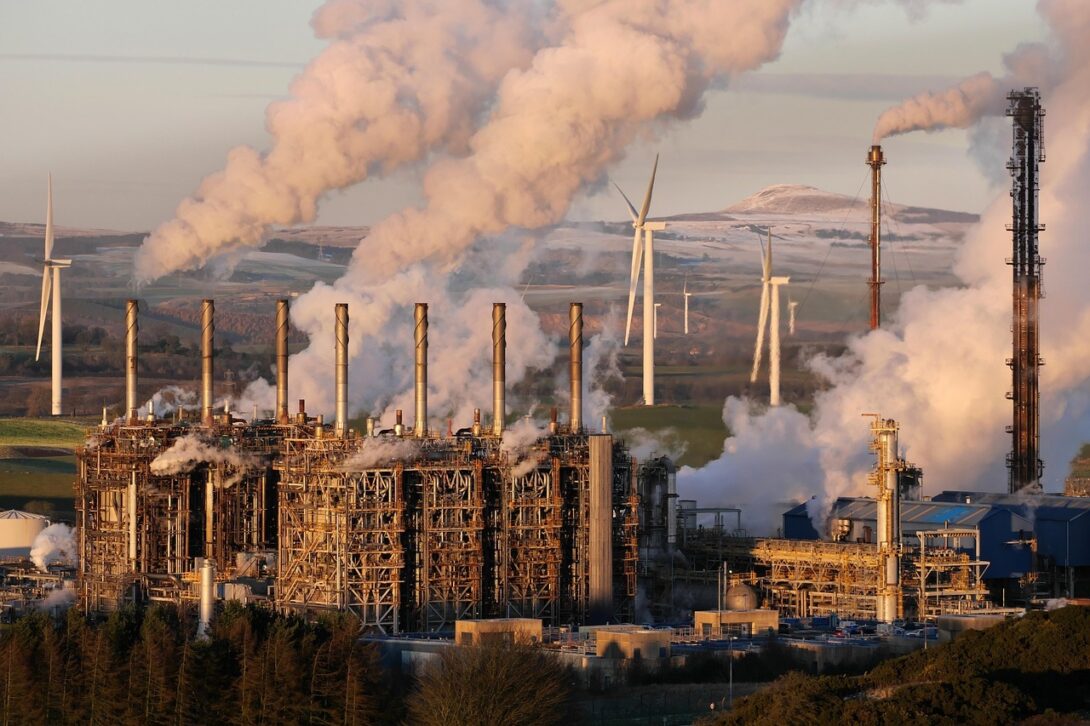
Mossmorran: A Strategic Site Without a Strategy
In September, a defence company asked Fife Council whether turning the former ethylene plant at Mossmorran into a factory for explosives, propellants and pyrotechnics would need an environmental impact assessment. The council replied that it would, and that the scale of the plan means public consultation before an application is lodged.
The proposal has arrived in a strange place: a site that was for forty years part of the country's industrial base, and whose future no published plan describes.
It was not always so. Mossmorran came to Fife in the late 1970s through an extensive public inquiry, at which the national interest in using North Sea gas was argued in the open and weighed against the objections of the communities around Aberdour and Dalgety Bay. Its ethylene plant is leaving without any comparable argument, with a screening request in place of an inquiry.
Across the Forth, Grangemouth has been given almost everything Mossmorran lacks. Scotland's national planning framework names it as an Industrial Green Transition Zone; the UK and Scottish governments funded Project Willow to study what its refinery site could become; and its just transition plan was published in June 2025.
None of these was extended to Mossmorran. The just transition plan promised for it in April 2024 has still not appeared; the UK Government's £9 million is contingent on suitable proposals, and Fife's next local development plan is not due until 2029.
The local MP, Melanie Ward, says she has pressed the Mossmorran task force for "a proper process to evaluate and decide on an appropriate future use of the site", and Holyrood recognised in February that the task force is working on a plan, but neither has been published. Mossmorran is a strategic site without a strategy.

In that vacuum its purpose will be set by whoever applies first, and the first proposal to surface publicly comes, The Courier has reported, from a company incorporated in May 2025 that has not answered questions about its previous defence work. That is not an argument against the proposal, which may yet prove sound, but an argument that nobody has published what sound would look like.
It will be said that the planning system is the test, but planning asks whether a use is acceptable on a site, not whether it is the best use of a scarce one, and an environmental impact assessment measures harm, not purpose. Holyrood has accepted as much for AI data centres, voting in September that no planning decisions on them should be made until ministers publish national guidance.
The order of events matters, because demolition is the one decision that cannot be taken back. ExxonMobil told MPs last December that it would "demolish the site and return the land back to a greenfield basis", while staying "open to any suggestions", and the council expects demolition to begin next year.
What demolition would clear is what makes the site worth deciding about: a grid connection that a Unite officer told the same MPs "loads of companies would love" and a pipeline to the terminal at Braefoot Bay. In a country whose grid connection queue grew past 700 gigawatts, and where ILI Group plans a 600-megawatt data centre near Auchtertool, in the same part of Fife, that is no small loss.
Any test should begin with consent, which at Mossmorran was never quite settled. The plant was approved over local objection, and the flaring of 2017 to 2020 left one Fife councillor recalling children waking at night convinced their houses were on fire. Decades of tolerance are not consent to whatever comes next, least of all to the manufacture and storage of explosives.
What is needed is not a new national designation, which can freeze a site as surely as neglect can, as East Lothian found when Cockenzie's safeguarding for energy generation and carbon capture left its council asking for "greater flexibility of future use".
It is a short, published test, agreed by Fife Council and the Scottish Government before any application is decided, that asks whether a proposal secures something the country cannot easily source elsewhere, reuses the site's connections rather than clearing them, can stand without permanent subsidy, keeps skilled work within reach of the communities that hosted the plant, and can earn their consent. It should be applied to this applicant, and every rival alike, with demolition sequenced so that the answers still matter.
Mossmorran came to Fife by public inquiry. It should not leave by default.

Matthew W. C. Dallas is an Edinburgh-based analyst from Fife who writes on Scotland's industrial transition. He was also a branch office bearer in the Scottish National Party.