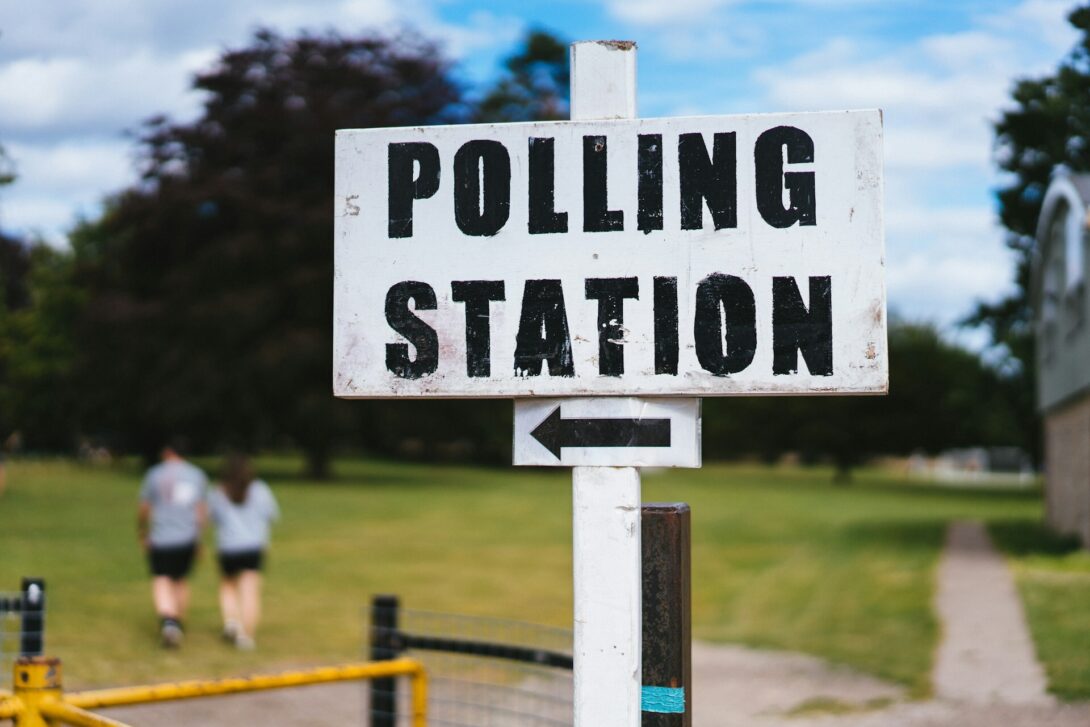
The only bias the voting system should have is to the voter
Andy Burnham’s announcement that he’ll fight the next election on a pledge to reform Westminster’s voting system has opened up a crucial debate about how our democracy is functioning.
The backdrop to this is the last general election, which was the most disproportionate in British history. In plain English, that means it saw the biggest mismatch ever between the votes people cast and the seats parties won. On the night, Labour won two-thirds of the seats in Parliament, an unassailable majority, on just over a third of the vote. Meanwhile, more than 20% of voters backed the Greens and Reform UK, but the two parties received just over 1% of the seats. The result was that millions of votes simply didn’t count, as almost three quarters (over 21 million) did not directly affect the outcome.
What we saw in 2024 was Westminster’s two-party voting system, First Past the Post (FPTP), failing to cope with the multiparty politics we now have. It was the first general election on record to see four parties get over 10% of the vote. Since then, we have had five parties polling consistently over 10%, meaning FPTP could throw up even more volatile and unrepresentative results. The concern now is that a future election under this system could be so unrepresentative that it provokes a crisis of trust in our democracy.
The Prime Minister recognised these concerns in his conference speech. He warned that FPTP could see a government elected “on 30% of the vote or less”, and promised “to change the electoral system so that everyone’s vote counts and everyone’s voice is heard”.
Burnham’s pledge has understandably provoked a rearguard action from supporters of FPTP within and without his own party. In the past, defenders of the status quo would argue that the trade-off for millions of votes not counting was that the system produced stable majority governments. That argument has faded now we are on our seventh PM in a decade.

Another charge they make now is that moving to proportional representation (PR) would allow extremists to hold sway, as it would produce more hung parliaments. However, this ignores that FPTP leaves the country arguably more vulnerable to extremists, as it creates inflated parliamentary majorities on lower and lower shares of the vote. In the era of multiparty politics, hung parliaments are likely under FPTP as well as PR, the difference being that the former risks being detached from what voters expressed.
As a precursor to his pledge, Burnham also announced he is setting up a commission to look at what form of electoral reform the UK should adopt. This will be a key process as there are a number of fairer proportional systems that could replace FPTP. The term ‘proportional representation’ covers several electoral systems, but the unifying theme is that they work to ensure that votes match seats.
We are not starting from a blank slate. For instance, two proportional systems have worked well in the UK for decades: The Additional Member System (AMS) in the Scottish Parliament, London and, until this year, the Welsh Senedd; and the Single Transferable Vote (STV) in Scotland (for councils) and Northern Ireland (the Assembly and councils). Both of these are proportional and preserve a direct constituency link.
The debate over electoral reform is only just beginning and will undoubtedly be a heated and highly partisan affair, so the PM’s approach to put the question to an evidence-based process is the correct one. Yet, to have the best chance of success, this commission needs to be truly independent and trusted by the public. It needs to be squarely focused on the voter by looking for a system that ensures their votes count and Parliament properly represents how they voted.
The voting system’s job should not be to prop up one party or another, nor to boost one side into power. The only bias the voting system should have is to the voter.

Darren Hughes is the Chief Executive of the Electoral Reform Society. Founded 1884 to fight for fair votes, it is one of the oldest pro-democracy organisations in the world. Today it is an independent advocate for proportional representation at Westminster, as well as broader democratic reforms to the House of Lords and UK elections.
Darren has led the organisation since 2017. Prior to that had direct experience standing under a proportional electoral system as he was elected as an MP in his native New Zealand aged just 24. He served across three terms in the country’s House of Representatives, holding roles as a government minister, an opposition shadow minister and a party whip.