Is Andy Burnham's foreign policy just vibes?
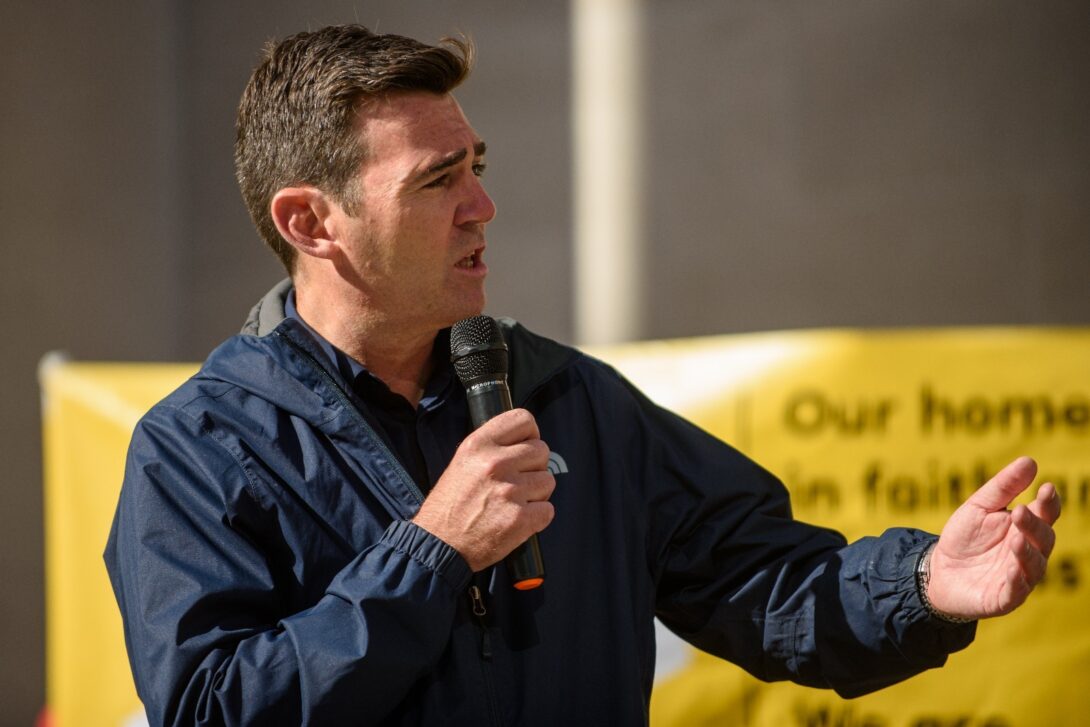
Fears that Andy Burnham’s ‘vibes-based’ policies at home might spill over into his foreign and defence affairs appear to have been well founded. When it comes to the ongoing crisis in the Middle East, Britain’s most pressing external challenge outside of Ukraine, Prime Minister Burnham’s foreign policy has thus far featured a cringeworthy series of empty promises and diplomatic own goals.
With the Straits of Hormuz disrupted, the Iranian-sponsored Houthis attacking Saudi Arabia and threatening the Bab al-Mandab Strait – another vital shipping lane connecting the Red Sea with the Gulf of Aden and the Indian Ocean, and the Iran conflict flaring and receding in an endless cycle, Britain is facing perhaps its most dangerous Middle Eastern strategic environment in decades.
Against these threats, Britain needs allies and Burnham alongside his Foreign Secretary, Ed Miliband, has made one of his early moves to antagonise one of our most important in the region. The government’s announcement of a package of sanctions against Israeli settlers in the West Bank, against the advice of numerous senior advisers in Number 10 and our own Ambassador in Tel Aviv, caused immediate blowback and further damaged an already fragile relationship.
Warnings by MI6 that further deteriorating our partnership with Israel could jeopardise our intelligence sharing with them, potentially making broader intelligence flows outside of an imminent attack more conditional or less generous, went unheeded in pursuit of domestic vibes.
So much for Burnham’s promise, prior to becoming PM, that “strengthening our alliances” was one of his foreign policy priorities.

Then there is the joint UK and French Straits of Hormuz operation which Burnham inherited. Burnham reaffirmed the plan to President Trump back in early September and reiterated our intention to work in concert with our allies to reopen the Straits of Hormuz, but he has done nothing to reinforce the mere handful of military assets Starmer was willing to commit to achieve it.
The original plan would see us bring only a single Destroyer to bear alongside support ships, mine clearance and what limited airpower we have in the region. Worse, the plan stipulates that the operation can only commence in a “permissive environment”, which the Iranian regime shows no sign of being willing to provide. In other words, it’s just vibes with no follow through.
All of this is set against the canvas of Burnham’s stated mission that we must “rebuild Britain’s hard power” by boosting defence spending. Thus far, not only has extra spending not been committed to ensure we hit 3% of GDP for defence by 2030, but Burnham’s latest position that national security “can’t come at the expense of social security” also makes it near-impossible to reach given the British state has buried itself under a mountain of welfare commitments it can’t afford.
While his agenda has been largely devoid of meaningful action on improving the fundamentals of British power and credibility, amidst the fluff there have been some far-sighted diplomatic manoeuvres. Next month’s planned state visit to the UK by Oman’s Sultan Haitham, at the King’s invitation, is an important piece of statecraft. The first such visit by an Omani Sultan since 1982; Oman is one of Britain’s closest allies in the Gulf and the key mediator between Iran and the West.
Britain has longstanding joint defence agreements with Oman. With our naval base in Bahrain deep inside the Persian Gulf, highly vulnerable to Iranian attack, the UK Joint Logistics Support Base at Duqm on the Omani coast would be a safer staging ground for British naval operations in the region in the future. Deliberately developed to accommodate Britain’s Queen Elizabeth-class aircraft carriers, if Burnham’s government ever develops the political will to launch operations to reopen the Straits of Hormuz or take on the Houthis, it’s the ideal base to do that from.
In the same vein, Burnham’s commitment to “strengthen defence collaboration” with Saudi Arabia looks prescient given the escalating attacks on The Kingdom by Iran’s Houthi proxies in Yemen. Early in his role, Burnham dispatched the former Chief of the Air Staff, Air Chief Marshal Sir Harv Smyth, as UK Defence Envoy to Saudi Arabia. In mid-September, he sent a team of military advisors to The Kingdom to look at options to expand British assistance in response to the Houthi offensive, bolstering the Sky Sabre air defence systems Britain already sent under Starmer.
While a lot depends on whether the government carries out its promises and makes good on its flashes of strategic sense, there are at least some signs that Burnham’s government may act as well as talk and his foreign policy could end up being more than just vibes.

Damien Phillips is a Fellow of The Cobden Centre and a regular contributor to The Spectator. A specialist in international affairs and political economy, he has also written for CapX, The Critic, Reaction, Conservative Home and The Telegraph.