Use Ukraine's experiences to stop ecocide for good
The Russian invasion of my country has cost many thousands of lives and caused trauma that will live on in our memories for generations.
While, for now, the war rages on, there will be a day when it has ceased. Ukraine will rebuild its infrastructure, and while we will remember those we lost forever, we will begin the process of healing.
But even after the invasion becomes a distant memory, there is one form of damage that will live on for centuries, the damage done to Ukraine’s natural environment.
The Council of Europe’s summit last weekend (only the fourth to take place since 1949) included a declaration to establish a register of damages caused by the invasion. Ursula von der Leyen, president of the European Commission, also promised a dedicated tribunal in the Hague in order to bring Russia's crime of aggression to trial. It is also crucial that the crimes against Ukraine’s environment receive proper attention and consideration in international judicial institutions.
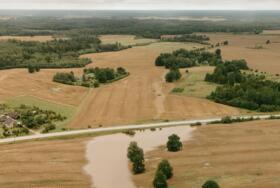
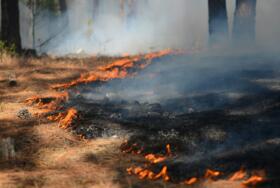
Ukraine’s rivers and lakes are now contaminated with toxic chemicals, our fields are riddled with shrapnel and unexploded mines, forests have been burned and there are risks of radioactive contamination. EcoZagroza, the site of the Ukrainian environmental ministry, records some 2,287 verified reports of environmental damage caused by the Russian aggression.
Some areas of Ukraine may continue to be uninhabitable after the war, land will be unusable and water will not be safe to drink. In a century or more the environmental effects will remain.
This is not just a problem limited to the Ukrainian conflict, the use of Agent Orange in Vietnam more than half a century ago has left vast areas of the country bare to this day. Following the use of the toxin in the late 60’s large areas of forest and vegetation were defoliated, and many have not recovered with local samples still detecting large concentrations of the herbicide.
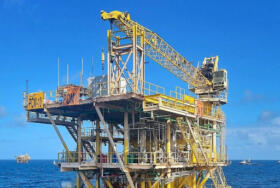
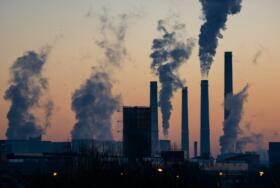
Importantly, ecocide also occurs in peacetime. There are plenty of times when companies or governments have been responsible for comparably damaging crimes against nature outside of war and these should be regarded with the same contempt as the damages caused by military aggressors.
In Ukraine this is all too familiar, the Chernobyl disaster has left a large area of Ukraine empty. Due to the catastrophic nuclear failure, in which a meltdown caused widespread radiation poisoning, large parts of the Kyiv region are still uninhabitable. It is important that cases like this are included in every legal definition of ecocide. To properly protect our environment for generations to come, we need comprehensive legal protection for the environment, around the world, at all times.
It is our duty of humanity to stop crimes against the environment through the recognition of ecocide and the introduction of strong international processes to bring the perpetrators to justice. While the crimes against Ukraine’s environment cannot be punished retroactively, by putting ecocide into law, we can help to make sure that they are not repeated.

By putting Ecocide into law, we will be making a clear global declaration that it is morally and legally unacceptable. We will be acknowledging the intrinsic value of the earth by giving it the legal rights that it needs. Damage to ecosystems may still take place, but it will no longer be an accepted norm. By criminalising a moral wrong, we provide tools for lawyers to act and speak on behalf of those harmed, and society at large no longer deems it acceptable for the crime to take place.
In this difficult time, Ukraine’s voice can and should be heard louder than ever. Groups like Stop Ecocide International have been doing great work to introduce legal protection against ecocide, I’m proud to be able to use my voice to support them to secure a victory that will protect far more than just the Ukrainian people and environment.

Yevheniia Mykhailivna Kravchuk is a Ukrainian politician who serves as a deputy in the Verkhovna Rada, the national parliament of Ukraine. Born on 23 December 1985, she has established herself as a prominent figure in Ukrainian legislative affairs. As a member of parliament, Kravchuk participates in shaping policy and representing her constituents within Ukraine's parliamentary system.