Environmental collapse is officially a national security threat
For four centuries, the waters off the Newfoundland coast were home to the largest cod fishery in the world. Elizabethan fishermen wrote of shoals “so thick…we hardly have been able to row a boat through them.” By the 1990s, the fishing industry was vast, particularly in eastern Canada, where a web of economic activity had grown out to support the sprawling fishing fleets. And then, in 1992, the cod population collapsed.
It began with the super-trawlers. Equipped with modern navigation systems, they pursued cod with unprecedented efficiency. Historically, it took a hundred years to catch eight million tonnes. The super-trawlers did it in fifteen. And so the ecosystem collapsed. Cod populations fell to less than 1% of historic levels. The fishing industry went with them. Tens of thousands of people became unemployed. An entire way of life was lost. Thirty years later and the cod has not recovered.
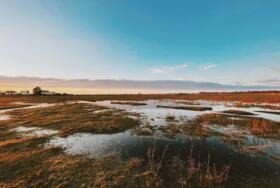
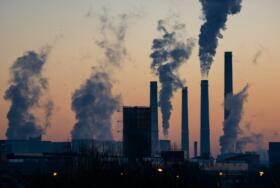
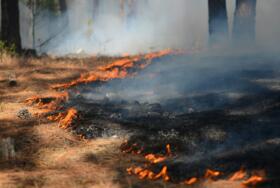
These are the disastrous consequences of failing to respect ecosystems integrity. Today, this failure has reached a planetary scale. Ecosystems worldwide are being pushed to their limit, lost to development and overwhelmed by the escalating stress of climate change.
Early this year, an important report from the UK government grappled with what could happen next. It is called ‘Global biodiversity loss, ecosystem collapse and national security: A national security assessment’. And it is unprecedented.
There are three reasons for this. Firstly, it is the best example anywhere in the world of applying security assessment methods to the threats arising from environmental change. Often, these threats are primarily considered by environmental ministries, which focus on localised changes like rising sea levels, and not the big picture of how the security of food supply, the economy, and so on could be threatened. Here, the assessment was partly undertaken by security threat assessors and so focuses on the issues critical at the top table of government planning.
Secondly, it makes a definitive connection, stating that “global ecosystem degradation and collapse threaten UK national security and prosperity.” This has been well understood for a long time but for a government to conclude this definitively and publicly is a significant moment.
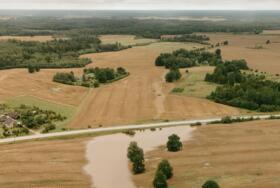
Thirdly, the assessment recognises how desperate the situation has become. Ecosystem degradation is happening everywhere and having severe impacts, like crop failure. “Every critical ecosystem is on a pathway to collapse [and] there is a realistic possibility that some ecosystems…start to collapse from 2030.”
Yet the assessment received little attention, with the scant reporting focusing on the government’s decision to delay publication, which was subsequently overturned by a Freedom of Information request. A more comprehensive version has remained classified.

All this points to the political difficulties in facing up to the severity of the failure to tackle environmental degradation. Decades of warnings have been manipulated by media, politicians, and vested interests to portray environmental concerns as ‘crying wolf’. Yet in the eponymous fable, a wolf eventually comes. Environmentally, that moment is now.
For example, far more damage has been done to UK food security by climate extremes in recent years than the actions of any hostile power. If the government is serious about enhancing security, then the findings of this assessment should loom large in planner’s minds, not just important questions of defence.
The government has still not set out its response to the assessment’s findings. A paradigm shift in the scale and prioritisation of environmental action would be needed, both at home and abroad. Yet the government is scaling back its support to protect and restore nature in ecosystem close to collapse. Many governments worldwide are doing something similar.
This is partly because they are not set up for an era of environmental collapse. Environmental issues are fragmented – climate change in the energy ministry, nature in environment department – yet the threats to security result from their interrelation. In turn, the environmental crisis has been considered a slowly evolving, long term problem, down the priority list, far below the threats posed by war and pandemics. Yet as the assessment shows, environmental collapse is emerging as an equally potent threat to security and can be a factor driving other, more traditional concerns, like conflict.
Ideally, government would be rewired in a way that mobilises societies to cleanly avert these threats. The failure to do so means they will have to rewire in response to these threats manifesting and shaking national security. This will be a moment when the politics of environmental issues evolves from one of concern over what should be avoided to one grappling with the consequences of what is now happening. In that moment, populations might begin to ask why the government didn’t do more in response to its own assessment of what was to come.

Laurie Laybourn is Executive Director of the Strategic Climate Risks Initiative and an Associate Fellow at Chatham House