The Hidden Epidemic: What We Don't Know About Lyme Disease in the UK
The UK Health Security Agency’s (UKHSA) reported rise in Lyme disease cases makes for eye-catching news at a time when climate-related health impacts are being felt intensely.
There is strong evidence that climate affects the spatial and temporal patterns of risk. Warmer conditions can support the survival and increased abundance of ticks that can transmit Lyme disease. Milder winters may allow ticks to become active earlier and remain so for longer, thus extending the period in which people may encounter infected ticks. However, in practice, the relationship is not so straightforward. Hot and dry conditions can reduce tick survival, or at least limit their activity in the height of summer. And climate is only one factor in a complex ecological system.
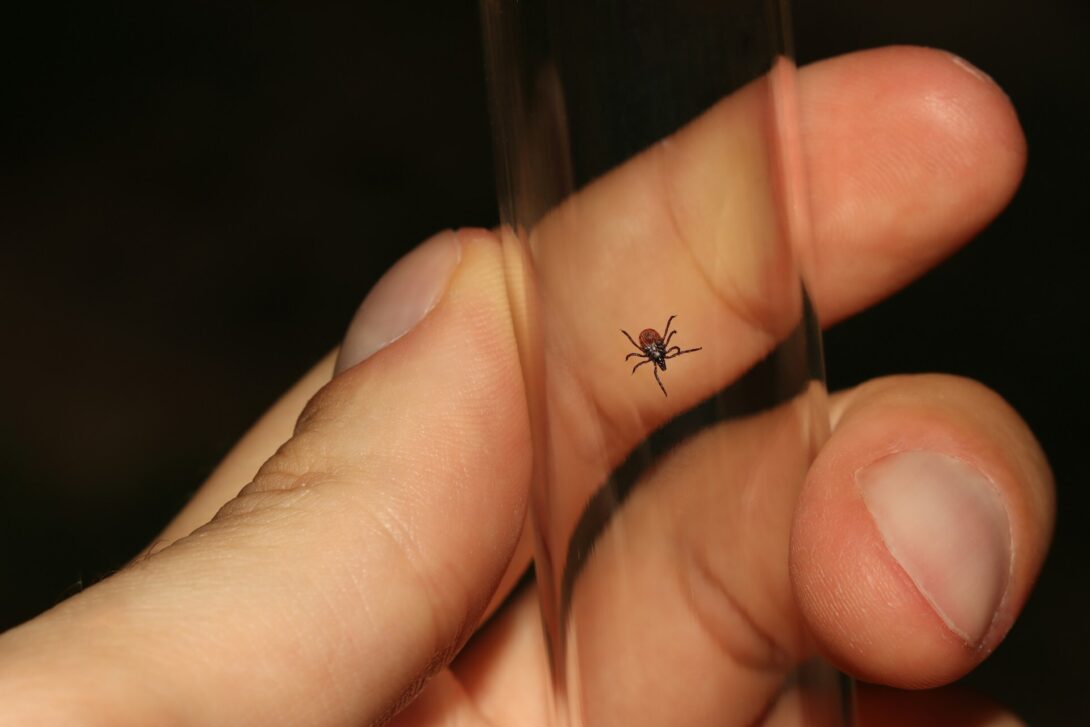
In the UK, the principal tick responsible for Lyme disease transmission, Ixodes ricinus, is already widespread. Where it is less common or absent, this may reflect landscape characteristics or the availability of suitable hosts more so than climatic conditions. This has important implications for climate adaptation and environmental policy. Initiatives to increase biodiversity, restore natural habitats or expand urban green space may also expand tick-suitable habitats. This is not an argument against such interventions, which can bring substantial environmental and health benefits. It does, however, mean that their potential impacts on vector-borne disease risk should be understood and monitored.
A substantial problem is that our understanding of Lyme disease epidemiology remains incomplete. The apparent rise to 1,168 acute Lyme disease cases in England, up from 959 in 2024, must be interpreted cautiously. The 2025 figure is similar to the 1,151 cases reported in 2023, and reported cases can fluctuate over short periods of time. While there is longer-term evidence of rising cases, disentangling the potential contributions of case definition changes, increasing public awareness, and other factors from climate change is extremely difficult.
More fundamentally, reporting is not standardised across the UK. England has publicly available data at local-authority level dating back to 2017, whereas Scottish figures are generally reported nationally, and recent comparable publicly available data for Wales and Northern Ireland are harder to identify. This makes meaningful comparisons across the UK difficult and limits our ability to identify changes in the geography of risk.
There is also significant potential for underdiagnosis and underreporting. NICE guidelines suggest that Lyme disease be diagnosed and treated clinically when the characteristic erythema migrans (bullseye rash) is present, without the need for serological confirmation. Such clinically diagnosed cases are therefore not captured by laboratory-based surveillance upon which national reported figures in England are based. The UKHSA has estimated that this could represent approximately 1,400 additional clinically diagnosed acute cases each year.

This matters for understanding geographical patterns. Parts of southern England and the Scottish Highlands are recognised hotspots of Lyme disease. Yet reported risk may still underestimate the true burden in such areas where clinicians are more familiar with the disease and its manifestations, and so may be less likely to seek serological testing to confirm diagnosis. Conversely, where Lyme disease is perceived as uncommon, patients and clinicians may be less likely to consider it, potentially contributing to further underdiagnosis.
The key question is not simply whether a changing climate will produce greater Lyme disease risk, but where and when it will alter the conditions for transmission. Warming may increase tick suitability in some areas, while drought and extreme heat could reduce survival in others. Changes in rainfall, vegetation and wildlife populations may further alter the habitats and hosts on which ticks depend. Climate change, alongside wider environmental changes, could therefore shift the geography and seasonality of Lyme disease in ways that cannot be predicted easily.
There is therefore a strong case for Lyme disease to become notifiable across the UK, with standardised reporting of both laboratory-confirmed and clinically diagnosed cases. This would not eliminate uncertainty, but it would provide a much stronger basis for identifying where and when risk is changing. More geographically consistent surveillance would also help distinguish genuine epidemiological changes from differences in diagnostic processes, healthcare-seeking behaviour and case reporting.
The UKHSA’s first One Health vector-borne disease surveillance report (2025) is a valuable step, bringing together human, animal and environmental perspectives on changing vector-borne disease risks. As climate and environmental change reshape the relationships between people, wildlife and vectors, we need to know not simply whether Lyme disease is increasing, but where, when and why risk is changing. By combining improved data on human Lyme disease cases with ongoing work on environmental surveillance – sampling of ticks or host species – we will be in an even stronger position to understand how biological, environmental and climatic factors interact to shape disease risk.

Samuel Allen is a DPhil researcher at the University of Oxford's School of Geography and the Environment, where he studies the spatial epidemiology of Lyme disease and other vector-borne diseases in the UK. His research examines the geographic distribution and drivers of tick-borne disease risk, and how this risk may shift under future climate and environmental change. Sam holds a BA in Geography and an MPhil in Population Health Sciences (Infectious Diseases) from the University of Cambridge, and is an editor for Routes: The Journal for Student Geographers.