World government?
Regular contributor John Redwood MP discusses the role played by the WHO, during the on-going Covid-19 pandemic
The response to the virus crisis has in many ways been an essay in world government. The World Health Organisation has stood at the top of the decision tree on how to handle this crisis, acting as a source of information, a clearing house for the ideas of those seeking to understand and tackle it, and a strong influence and guide on governments on what to do.
Most governments worldwide have followed the main precepts of the WHO advice. There have been attempts by some in the media and some in various governments to differentiate, yet the remarkable thing is just how similar responses are. The differences are largely ones of timing, subject to differing timetables dictated by the rate of spread of the virus to different locations from other hotspots or disease centres.
Most have begun with efforts to track and trace, with testing, to try to contain the spread via the isolation of early cases and their contacts. Most lost that battle and went on to the second phase, total lockdown of all but food, healthcare and some other essentials.
Now there are issues over how much success a country needs to record before it starts some relaxation of controls, and what the dangers are of a second wave or flare up in the virus if relaxation occurs.
President Trump is very critical of the WTO . He thinks they were too tolerant of China who failed to notify early or to let in WHO experts at the beginning. He also seems impatient with their approach to treatment and medical analysis, turning to a range of US specialist companies and experts to try to get earlier breakthroughs in treatments and prevention. He also points out that in his view the USA carries a disproportionately high burden of paying for the Organisation.
Do you think the WTO has done a good job so far? Has it given best advice? How does the mantra of more and more testing work once the disease is well spread throughout a nation? How often does an individual have to be retested for the system based on tests to work?
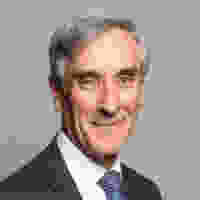
John Alan Redwood, Baron Redwood, is a British politician and academic who represented Wokingham in Berkshire as Conservative Member of Parliament from 1987 to 2024. Born on 15 June 1951, he served as Secretary of State for Wales under John Major and twice stood unsuccessfully for the Conservative Party leadership during the 1990s. Following his ministerial career, Redwood held positions in the Shadow Cabinets of William Hague and Michael Howard before spending his remaining parliamentary years as a backbencher. Prior to entering Parliament, he earned a doctorate at All Souls College, Oxford and served as Director of the Number 10 Policy Unit under Margaret Thatcher.