Supporting Scottish families through the cost-of-living crisis
Across Scotland, too many families are forced to choose between heating and eating, between rent and childcare. Food, energy, and rent bills continue to rise combined with a stagnation in wages are having a detrimental impact on household budgets and our economy. 54% of voters state this the issue most important to them, and 49% of households said their finances have become worse in the last 12 months.
Polls show around half of households have struggled to pay for food bills in the last months of 2025 and 37% say the same for energy bills.
This all combines into living standards falling at the fastest rate since records began and the Office for Budget Responsibility (OBR) predicting that real household disposable income will only grow by an average of 0.5% a year until 2029.
This crisis is not inevitable. It is the result of political choices and governments must respond positively to give the public hope that a brighter future is on the horizon.
There are several factors that led to this situation. Economic mismanagement from Westminster cannot be overstated. Brexit has caused UK GDP to fall by up to 8%, investment reduced by 12-18%, employment and productivity reduced by 3-4% [4]. We are still feeling the damaging impact of this to this day with no hope of change. The Labour UK Government show no signs of reversing this economic self-sabotage and seem intent on damaging our economy further.
The Labour UK Government’s extraordinary decision to increase employers National Insurance contributions without understanding the consequences – a tax on jobs – making it more difficult for businesses to employ staff. This has been evidenced with UK unemployment rates at their highest in five years at 5.2% in the UK. Fortunately, this has not translated to Scotland where the unemployment rate sits at 3.8%. This National Insurance hike is also impacting the public sector, with the rise costing Scottish Government a forecasted £2 billion over the next five years. This is money that should be going to the front line of our public services. These political choices have all contributed to consistent low economic growth, preventing new businesses to contribute to our tax base and in turn limiting the money available to fund our public services and improve living standards.
Of course, not all of this is home-grown structural pressures that have contributed to the cost-of-living. Global energy shocks related to the war in Ukraine for example has seen a rise in worldwide energy costs.

Increases in the cost of housing, and slow wage growth is putting pressure on the next generations disposable income and thus, less money is going into the economy to contribute to growth. The Office of National Statistics cite that the average monthly rent in the UK has increased by 4% over the previous12 months. With figures like this it can feel like we are in a doom loop of ever-increasing costs, slow wage and economic growth leaving many worried for the future. This is why it is incumbent on Governments to deliver on the economy and deliver on the social contract. This is exactly what the SNP Scottish Government are committed to doing.
In Scotland the SNP are making decisions to protect household incomes, reduce essential costs and support local businesses and jobs. We are providing direct support for families with over £3 billion a year allocated to policies which tackle poverty and the cost-of-living crisis, including the unique Scottish Child Payment which has contributed to Scotland being the only country in the UK where child poverty is falling.
Costs are also decreasing for workers with the abolition of peak rail fares putting money back into commuters’ pockets.
We are also supporting businesses thrive with Non-Domestic Rates relief forecast to save ratepayers £864 million in 2026/27. Additionally, the continuation of the Small Business Bonus Scheme for the next three years will remove 100,000 properties from rates altogether.
When too many families are feeling anxious about the future, the Scottish Government must be on their side – protecting incomes, investing in our people and building an economy and society that works for the people of Scotland.
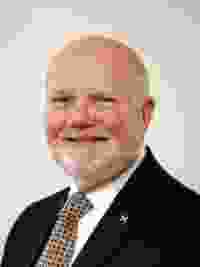
Colin Beattie is a Scottish National Party politician who was born on 17 October 1951. He has served as Member of the Scottish Parliament for the Midlothian North constituency since 2011, representing what was previously known as Midlothian North and Musselburgh before boundary changes. Before entering the Scottish Parliament, Beattie built his political career in local government as a councillor on Midlothian Council, where he rose to become the SNP group leader.