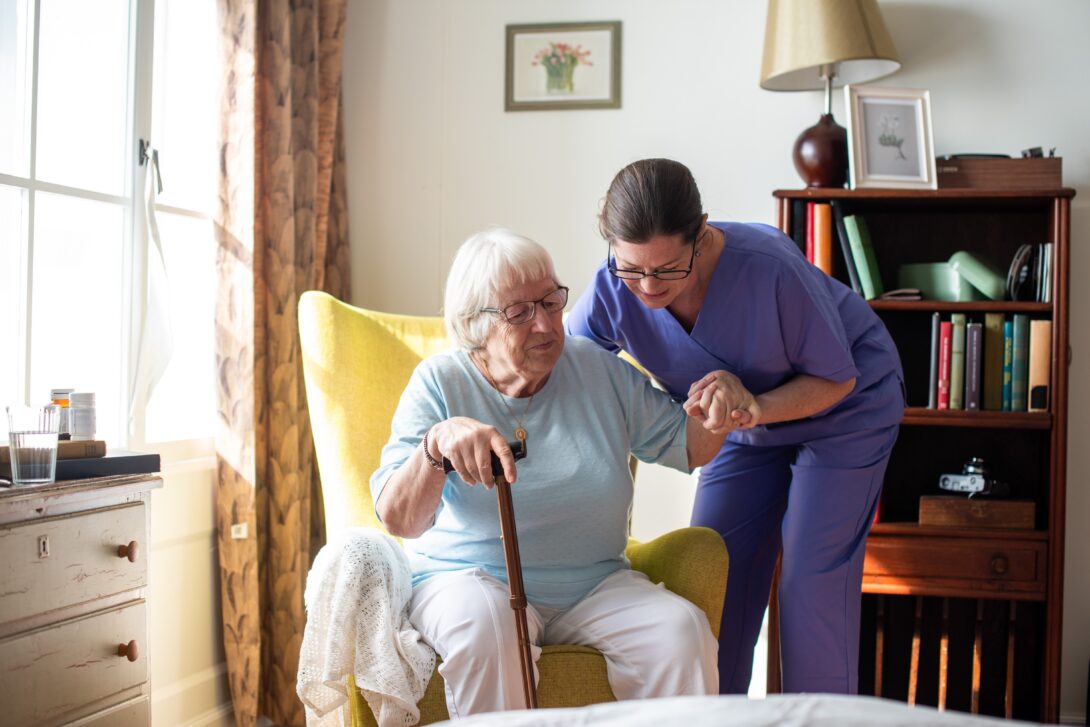
Fixing the NHS means tackling the social care crisis Beveridge left behind. It is time for a new vision
When William Beveridge set out his vision for the modern welfare state in 1942, he did so with remarkable clarity and ambition. His aim was nothing less than to defeat the five giants standing in the way of social progress: Want, Disease, Ignorance, Squalor and Idleness. It was a founding act of national purpose, and one that produced, among its greatest achievements, the National Health Service, defining Britain's sense of itself for almost eighty years.
But the settlement that gave us the NHS left another challenge unfinished. People in the UK are living longer than ever before but not healthier for longer. Healthy life expectancy has stagnated and, in some communities, declined. Around one in two people will develop cancer in their lifetime. Around one in eleven people aged 65 and over are living with dementia. More than half will develop a cardiovascular condition. One in six men and one in five women will experience a stroke.
Want and Disease have not been defeated. They have been relocated into a fragmented care system that obscures its true costs and was never designed to manage the scale or complexity of the challenge it now faces.
That failure does not stay confined to social care. It reaches directly into the NHS itself. Delayed discharges now cost the health service over two billion pounds a year, and the picture is worsening. Behind that figure lies a more complicated reality than is often acknowledged. The problem is often not a shortage of care home beds or home care providers, capacity exists across much of the country. What the system too often lacks is the coordination to use it. Occupied beds mean longer waits in A&E, delayed ambulance handovers, and slower emergency responses elsewhere. This is a single system, and when one part blocks, the effects spread.
The reasons for those delays are more systemic than they first appear. Discharge planning begins too late, assessment processes create their own bottlenecks, and providers are too often brought in at the last moment rather than treated as partners in a shared process. A system better designed around collaboration would move faster.
But the deeper prize lies further upstream. Care providers who are genuinely embedded in their local health and care communities, responding early and managing complexity before it becomes crisis, can prevent admissions from happening at all. That capacity exists. Realising it consistently requires the kind of sustained investment and system-wide commitment it has never quite received.
The conversation about fixing the NHS cannot therefore be separated from the conversation about social care. Yet too often, it is.
In social care, Want is visible in financial insecurity. Individuals and families face catastrophic and unpredictable costs shaped as much by geography as by need. A self-funder in a care home can pay close to four hundred pounds more per week than a local-authority-funded resident in the same setting for the same service, while the system relies heavily on unpaid family care to mask the true extent of its underfunding.

At the same time, we are failing to organise care around the realities of modern illness. Today's challenge is not acute conditions treated and discharged in days. It is the long-term management of dementia, frailty and multiple co-morbidities. Yet our institutions remain structured around a rigid divide between health and care, and between national and local responsibility for funding. The result is a system that spends considerable time and energy arguing over who should pay rather than how best to care.
At the Care Association Alliance, we work with providers on the frontline of care every day, and it is from that vantage point that we have been developing a programme of reform. Over the coming months we will set out, paper by paper, what a genuine National Care Service should look like in practice, starting with the case for a nationally coherent funding framework and extending to commissioning, workforce and the relationship between health and care.
The renewed focus on a National Care Service reflects that the status quo is not sustainable. But we should be equally clear about what it is not. It cannot simply be layered onto a structurally flawed system, nor should it be understood as an extension of the NHS. Social care differs fundamentally in both function and funding. Importing the NHS model wholesale would risk importing its operational pressures while undermining the diverse provider base on which care depends. Good care is, by its nature, local. It depends on relationships, on knowledge of place, and on providers who understand the people they serve. Any National Care Service worth the name must strengthen, not displace, that local infrastructure.
Reforming this system must start with funding. Britain's social care system is not failing because of a lack of dedicated people or willing providers. It is failing because it was never given a funding model equal to the demands placed on it. Today, the financial burden of caring for an ageing population falls largely on local authorities whose budgets vary enormously from one part of the country to the next. The result is a system where providers accept rates that do not cover their costs and where individuals pay vastly different amounts for the same level of need depending on where they happen to live. That is not a sustainable foundation.
Beveridge's ambition wasn't just in producing a report but shaping institutions that have changed this country permanently and for the better. That is the scale of ambition social care now requires. Not reorganisation at the margins, but a renewed national settlement built for the realities of longer lives and more complex need.

Melanie Weatherley MBE is Co-Chair of the Care Association Alliance and has spent decades working across the care sector, championing providers, older people and the creation of a fairer, more sustainable care system.