When Government Turns its Back on its Armed Forces the Armed Forces turn their backs on Government
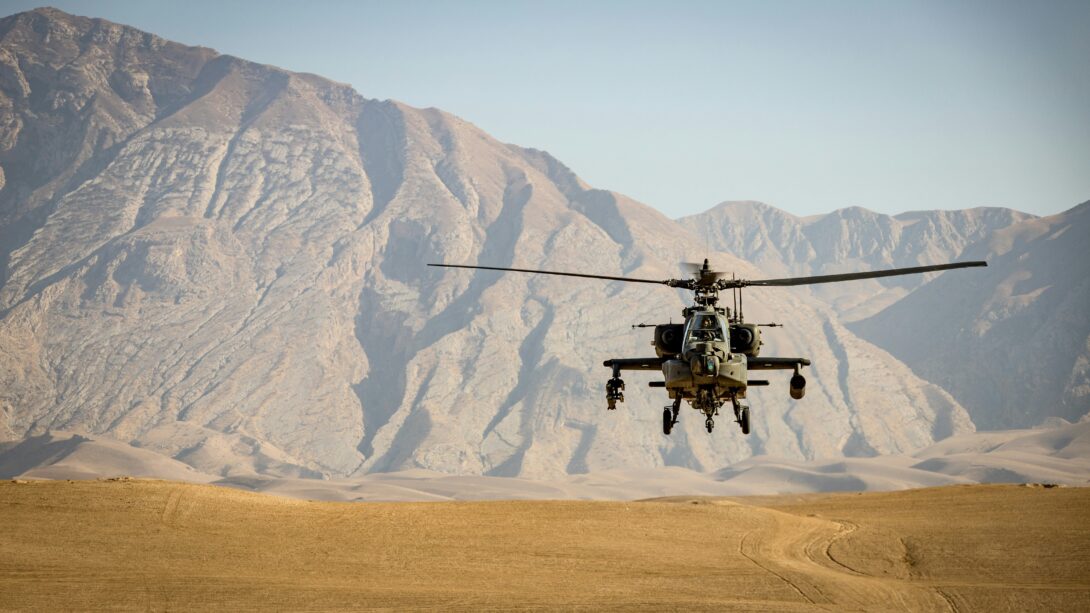
Breathing hard, my back against the dusty wall of a mud compound, its metal doors forced open to reveal a small shop, the coolness of its shade washing over me, I stared hard at the Taliban fighter at my feet.
He stared back.
Just moments earlier he had been intent on killing me and my men. What his motivation was - ideology, money, excitement - I didn't know and would never find out. For the man's deep, dark eyes were unseeing.
They were those of a man who had breathed his last, another casualty of war.
Where he lay, a small pool of blood had formed behind his head, his loose fitting robes twisted around him, the feet bare, the long hair matted with dirt, his beard matted with blood.
Around him was strewn the detritus of a medical emergency; tubes, bandages, a syringe, signs that immediately after he had been shot the soldiers then proceeded to try and save his life.
I wrote these words from the Afghan frontline in 2011. At the time British forces where fighting in a brutal conflict, yet they showed a level of compassion that is rarely spoken about during war, or once the fighting has ended. This experience is similar to my experiences in Iraq in 2003 when I witnessed the gentleness soldiers showed when burying enemy dead, tending enemy wounded or guarding prisoners of war.
Yet following both the Iraq and Afghan conflicts many tried to vilify the actions of those who fought. Some lawyers and politicians tried to dismantle the actions of soldiers from the safety of their offices. They did so without concept of what it’s like to make split-second, lifesaving decisions in the heat of combat and in an environment which is unforgiving for those who delay taking decisive action.
Self-styled human rights lawyers, and the wider judiciary in Northern Ireland, are trying to view ‘Troubles’ related incidents through the contemporary lens of today. They are trying to double guess the split second decisions made by soldiers confronted by terrorists who, if given the chance, would kill them without question.

In one instance we have the farcical situation where former members of the SAS, confronted by heavily armed terrorists at Clonoe near Coalisland, face prosecution for engaging and eliminating the threat. How can any judge say they know what’s going through a soldiers mind when confronted with such situations and how incidents, previous to what happened at Clonoe, may have shaped the soldiers actions.
In December 1989, just 2 years prior to the Clonoe incident, the Provisional IRA attacked Derryard Permanent Vehicle Checkpoint near Rosslea in Fermanagh. The terrorists used an armoured flatbed truck, the same as they did in Clonoe, they used a 12.7mm DShk heavy machine gun, the same as in Clonoe, they were armed with 7.62mm AKM assault rifles, again, the same as in Clonoe.
The difference between the two engagements is that in Derryard two members of the security services where murdered, while in Clonoe, the split second actions of the SAS saved lives and left four terrorists dead.
As an instructor at the Northern Ireland Training Advisory Team, based in Shorncliffe near Folkstone, I was responsible for training and advising the military before deployment to Northern Ireland. The legal advice, that was given by the Ministry of Defence lawyers during that training, was clear and repeated often.
If you believe your life or that of anyone else is in danger then you have the authority to use lethal force. That lethal force means engaging the enemy by firing at the centre of the visible mass until the threat has gone; be that 1 round or 20 rounds.
Anyone from the military who deliberately broke the law must face the law; there is nobody arguing against that principle. What is being questioned is why we are hounding those soldiers who made split second decisions when faced with armed terrorists intent on murder.
Any right minded person would conclude that the reaction of the soldiers at Clonoe was to protect life as outlined in the rules of engagement. If that is not the case and the government have sent soldiers on operations without the correct legal advice then they need to take corporate responsibility for any failures and they should not allow soldiers to take responsibility for those failures.
Douglas Ricardo Beattie, born 13 October 1965, is a Northern Irish Independent Unionist politician and former British Army officer who has served as a Member of the Northern Ireland Assembly for Upper Bann since 2016. He led the Ulster Unionist Party from 27 May 2021 until 28 September 2024, during which time he sought to position the party along progressive and moderate unionist lines. Beattie resigned his UUP membership in May 2026 and now sits as an independent representative.