Why we need political will and higher ambition on homelessness
I’ve had the privilege of working in homelessness for more than a decade. But in the last few months, I have seen cases that I never thought we would tolerate as a society.
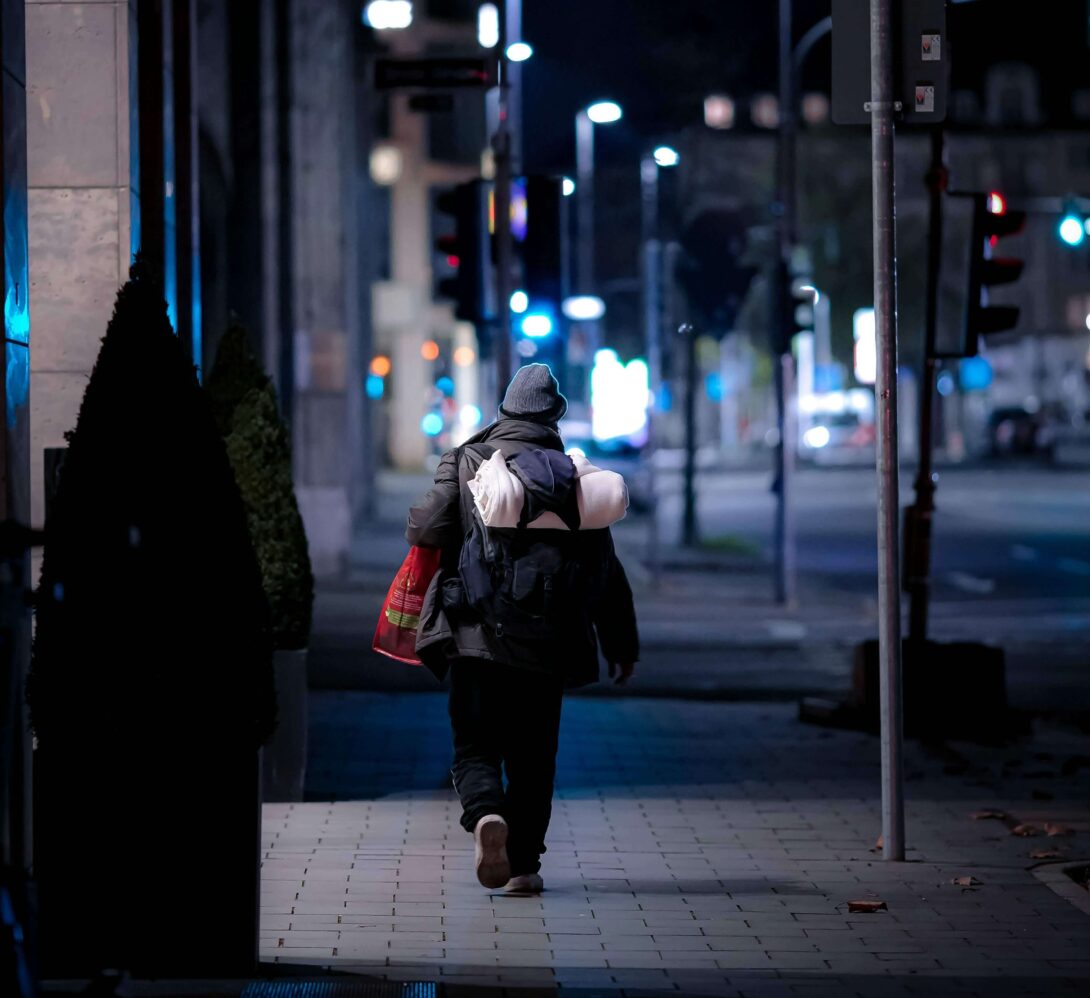
As we started 2026, our frontline staff were confronted with the shocking reality of children sleeping rough. In one case, a child as young as five was bedding down on the streets with their family, as their parents desperately tried to seek any and all available help, only to be told they were the problem of another council.
I say this not to get into a blame game with individual services or councils, but to state the fact that things feel different. Recently, England has been breaking all the wrong records on homelessness as the number of children growing up in temporary accommodation continuously increases, meanwhile the number of people sleeping rough reaches new heights.
Yet where is the urgency? Where is the political action to turn the tide on this? We’re now in a normalised emergency - and we need political will and ambition to meet it. Following the byelection result in Makerfield, the coming weeks could bring a Labour leadership contest - and perhaps a new Prime Minister. At this moment of political change, we need a nuanced, thoughtful debate about the big social issues we face. For those vying to lead, a commitment to tackling homelessness will be a defining test of their values and vision for this country.
How did we get here?
The solutions are not complicated, even if they require effort, collaboration and clear leadership to realise them.
Through our services, we hear directly from people who have been forced to sleep rough or stay in filthy and unsafe housing, simply because they have nowhere else to go. This includes children often sharing a single hotel room with parents and siblings, with no cooking or washing facilities, mothers fleeing domestic abuse being stuck in unsuitable temporary accommodation and young people having to stay on the sofas of friends and family.
At the heart of the problem is the failure of consecutive governments to deliver the truly affordable homes our country needs for everyone to thrive. For decades, England has fallen short on building enough social homes – the most affordable housing available - to tackle homelessness. Over time, this has led to an overreliance on the private rented sector, but in the face of rising costs and rents, this is placing huge pressure on people’s finances as they struggle to keep up with the cost of rent, food and bills.
In 2025, only 2.5% of privately rented homes in England were genuinely affordable for people relying on housing benefit. The choice from Westminster to keep housing benefit frozen, and wildly out-of-step with the true cost of rents, is forcing people to cycle through costly temporary accommodation, such as hostels and B&Bs. With the freeze set to continue, the gap between housing benefit and private rent will only widen as the cost of living deepens further.
Together these problems have created a bottleneck, leaving people with nowhere to turn but face the reality of homelessness. This is a human tragedy, but it is also creating a false economy, as any money the government saves by freezing housing benefit will only be spent many times over on expensive temporary accommodation.
Managing a crisis isn’t ending it
Ultimately, this means we are creating the conditions that are pushing more people to the brink – and into homelessness. As a result, our response to homelessness is forced to focus on managing the crisis with costly and so-called temporary solutions, rather than preventing or even ending it.

If we are serious about ending homelessness we need a different approach – one that prioritises prevention first and foremost and focuses on providing people with a secure place to call home as quickly as possible.
Shifting our efforts to these solutions is called a housing-led approach to homelessness. It moves people into their own secure social or privately rented homes as quickly as possible, without making them meet strict conditions first. Unlike traditional approaches, people don’t need to be employed, in recovery or receiving treatment, before they’re supported into a home of their own. It instead recognises all those things are made infinitely more possible to achieve when you already have a secure home as a foundation. An important part of this for people with more complex needs, such as trauma and poor mental health, is long-term support that adapts to someone’s circumstances and helps people stay in their home.
This approach is increasingly recognised internationally as one of the most effective ways to end someone’s homelessness. Countries including Finland, Denmark, France and Spain have adopted housing-led principles and demonstrated that homelessness can be reduced when secure housing becomes the starting point of support.
A key part of this approach is a system built around dignity, choice and what people need to thrive. Instead of asking people to navigate a maze of services before they can access a secure home, it first provides the stability needed for someone to rebuild their life and engage with support on their own terms.
Crisis is stepping up to the challenge
Over the years our frontline services have been finding it harder and harder to find genuinely affordable, settled homes for the people we support, leaving them trapped in a cycle of homelessness.
We need to be responsive to this and do things differently. That’s why this year we’ll become a not-for-profit landlord - for the first time in our nearly 60-year history. We’ll begin with one-bedroom homes in London and Newcastle, housing people who are accessing our services and experiencing the worst forms of homelessness. Our ambition is that over the next three years, we will purchase 100 homes, increasing to at least 1000 homes over the next decade.
While we know charities cannot solve the housing crisis alone, we do believe organisations like ours have a responsibility to play our part, to innovate and shape shift in response to the changing external environment.
Homelessness is one of the biggest social problems we face, and we will never solve it with sticking plaster solutions. We need to shift towards a housing-led approach, that recognises that a stable home is the foundation for rebuilding lives. But making this a reality will require ambitious political leadership who are committed to ending homelessness.
We know that homelessness is not inevitable. It is a policy failure, and that means there are policy solutions. A housing-led approach offers a different vision; one we can deliver with the right ambition and political will. We owe it to the five-year old and their family, forced to sleep rough when the system failed them, to make good on our mission to end homelessness - but we can’t do it alone.

Matt Downie is Chief Executive at Crisis UK. In 2019 he was awarded an MBE for services to tackling homelessness.