Why Parent Carers Need Support From Day One
Imagine you’re told your child has a life-limiting or life-changing condition, and the first thing you are handed isn’t support or help, but a new reality to navigate all alone.
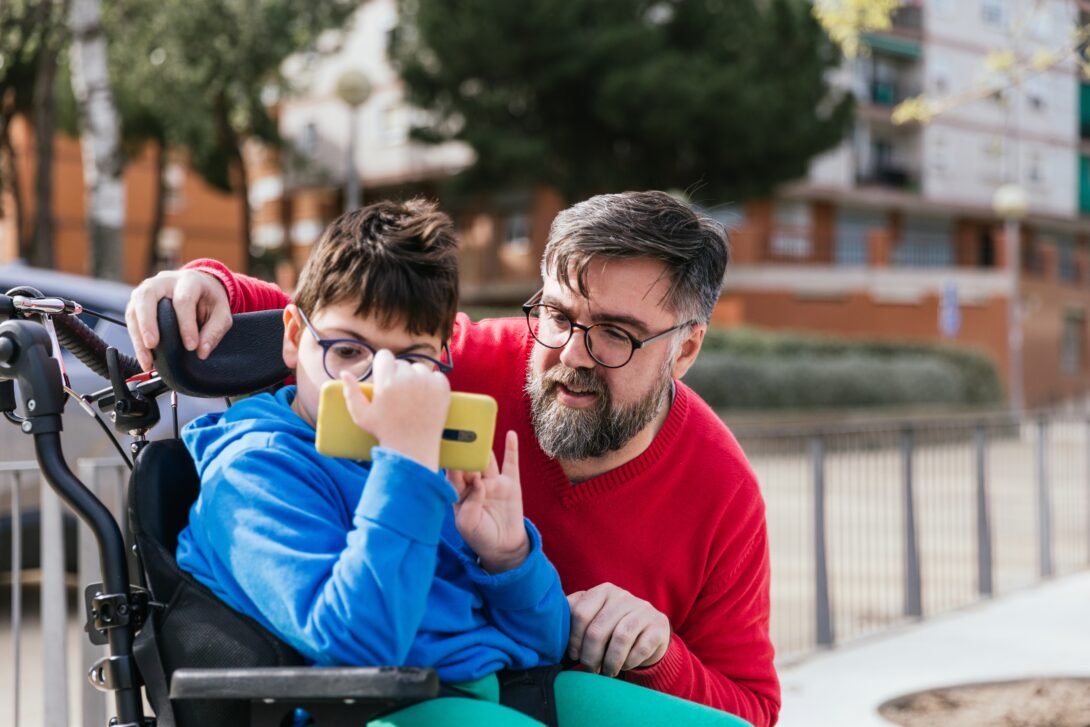
That is what happened to Harry’s parents when he was just three days old. After learning he had suffered serious brain damage and would have complex needs, they expected someone—a clinician, a health professional, anyone—to tell her how to navigate what came next.
There was silence. No emotional support. No conversation about how to process fear and grief. Just a sudden thrust into uncertainty and isolation, and the offer of bereavement counselling.
For families like Harry’s, that moment goes beyond shock or disbelief. It’s a confrontation with a new life ahead—one where everything changes, and crucially, one without a safety net to catch you.
As the MP for the Forest of Dean, I speak to parents in my constituency, and I hear the same pattern over and over. Parents walk into an appointment expecting clarity about their child’s health, only to leave with unanswered questions. With their own new diagnosis in one hand and their child’s in the other, they leave the hospital armoured with uncertainty and worry. But alongside the devastation, they can leave with support—a safety net and a village ready to help carry what comes next.
That is why I have been working with Harry’s Pals—a charity founded by Harry’s Mum, Hayley, after her own experience of being left unsupported when Harry’s diagnosis came. The charity exists precisely to fill this gap: to provide emotional support, counselling, therapy, short breaks and peer connection for parents immediately after diagnosis, so they are not left to cope alone.
Harry’s Pals offers free bespoke services including short breaks and getaways, counselling and therapy, and online peer support groups where parents can talk to others who genuinely understand what they are going through. These services may sound simple on paper, but for families struggling with the aftershock of devastating news, they are lifelines, and exactly the kind of early intervention that should be an integral part of our health and care system.
We rightly invest in clinical care for children with serious illness and disability, but we rarely think about the parents who must absorb that news and then keep life going. The emotional shock of diagnosis can be as intense as grief. Many carers describe feeling lost, isolated, and overwhelmed in ways that deeply affect their mental health, relationships, work and capacity to care. Yet very little help is offered at the time when it would have the greatest impact.
A diagnosis does not just affect a child; it affects entire families—financially, practically, emotionally. Yet our systems rarely acknowledge that fully.
This week, I am launching a new All-Party Parliamentary Group (APPG) focused on this very issue: how we can better support parent carers, particularly at the point of diagnosis. APPGs are cross-party groups that allow MPs and peers to hear lived experience, gather evidence, and push for better policy across government. This group will bring voices like Hayley’s into parliamentary debate, so we can finally face the reality of what families are enduring and identify practical ways to improve support.
Every parent carer, now and in the future, depends on what we do today.

Parent carers across the UK are in their millions, and their contribution to society is enormous, yet they are disproportionately at risk of burnout, mental health problems and financial hardship. We cannot continue to expect them to shoulder this alone.
Harry and Hayley’s story is far from unique. But because it is so powerful, it has helped shine a light on something that too often remains invisible.
Through the work of Harry’s Pals and through the new APPG, my aim is not just to raise awareness but to build momentum for change. We need a system that treats parent carers as partners in care, not afterthoughts. That recognises the emotional shock of diagnosis for what it is—a point of crisis, not an administrative footnote. That offers support early, when it matters most.
No parent should have to leave a consultation room feeling abandoned. No family should have to invent their own support network in their hour of need. And every child deserves parents who are supported to be as strong and resilient as possible.
For parent carers across the country, I will be championing that change because caring for the carers is not just compassionate, it is essential.

Matthew Adrian Bishop, born in 1984 in Newport, South Wales, is a British Labour Party politician who has represented the Forest of Dean constituency in Parliament since July 2024. Raised by his grandparents and educated at Lliswerry High School, Bishop brings extensive public service experience to Westminster, having worked in policing, children's social care, housing enforcement, and as an education welfare officer. Before his election to Parliament, he served as a local councillor and committee chair on the Forest of Dean District Council, building deep roots in the community he now represents.