Unsafe by design: how planning decisions affect women’s safety
The 8th of March marked International Women’s Day. This year’s theme has been “Give to Gain”, a campaign that emphasises the power of reciprocity and support. I think this is a philosophy worth remembering when it comes to how we tackle women’s safety in our local communities.
It is not lost on me that last week was also the fifth anniversary of the murder of Sarah Everard. Like millions of women across the country, I remember exactly where I was as the news broke, watching every woman’s worst fear unfold in slow motion. It forced me to reflect on the way I move through life as a woman, how I pause to let someone pass when I’m walking home in the dark, or how I check, then check again, to see how my daughter is getting home safely.
It’s a shameful reality that society focuses on teaching women how to manage risk rather than working to remove it. Girls are taught self-defence classes in school while the boys play football. Freshers’ fairs hand out rape alarms and student bars dispense spike-proofing drink covers to female students. There seems to be a plethora of capacity and resources out there to equip women with ways to protect themselves, but simple societal adjustment measures are harder to come by.
Women’s safety is often discussed at length after tragedies like Sarah Everard, but everyday design decisions, like lighting, still fail to prioritise it. Public safety isn’t only about policing or resourcing; it’s about how we design our public spaces for the people that exist in them.
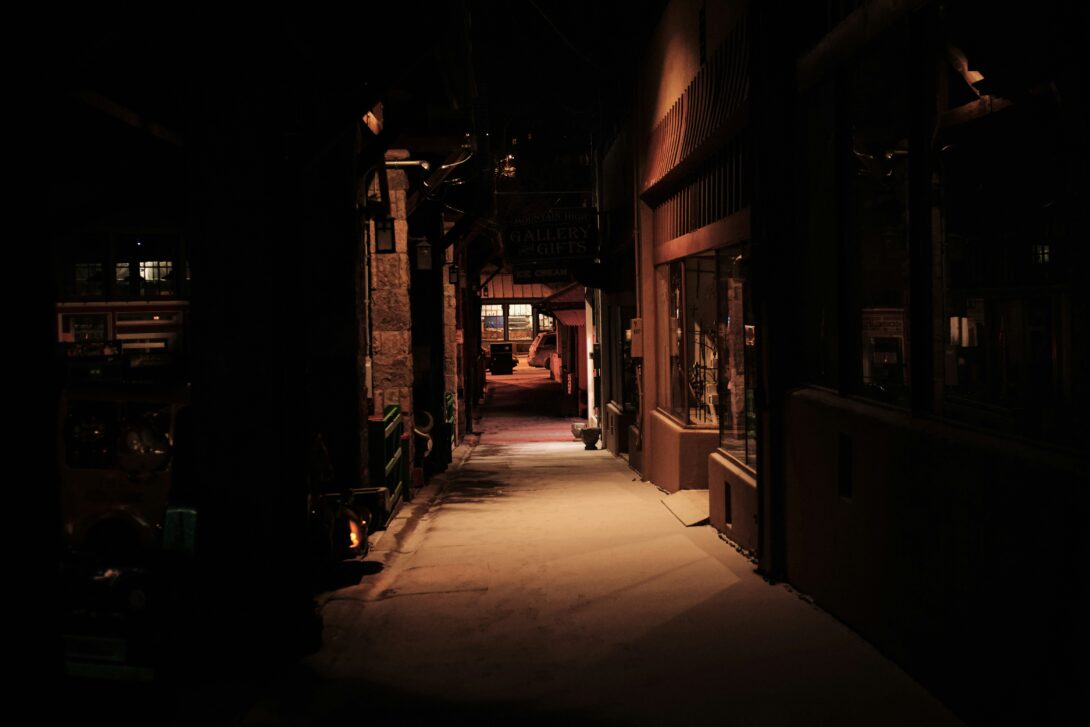
A constituent of mine recently got in touch about a broken streetlamp in a narrow lane. She reported this broken streetlamp in early January. What followed was a back-and-forth between the county and borough councils over who owned responsibility, and weeks later; the issue is still not fixed.
This one casework piece lends itself to the broader problem. On paper, this is a jurisdiction issue, but in practice, it shows how easily safety becomes nobody’s responsibility. Women navigating dark streets don’t care which council owns the streetlamp, they care whether they can see and be seen. When responsibility is fragmented like this, safety is often the first thing lost.

This abolition of responsibility is something that the new Unitary Councils structure will hopefully solve, and I know that the local Liberal Democrat candidates running in the East Surrey May 7th election take this responsibility deeply seriously.
Simple issues like lighting dictate who feels able to use public space after dark. Many women plan their routes based on lighting, avoiding dark shortcuts or taking longer paths home simply to stay on well-lit streets. Some pay for taxis to avoid walking along unlit roads altogether, a luxury that not everyone can afford. Better lighting in public areas not only improves visibility but also reduces opportunistic crime and increases confidence in public spaces.
The frustrating reality is that simple solutions for this already exist. The modern LED lights in use right now last up to ten years vs. three years for the old sodium lights, meaning maintenance costs are lower, and their efficiency is higher. They also feature directional lighting that can reduce light pollution disturbances to residents and wildlife. In Surrey, technology already could allow for better solutions, with a system where each light can be individually controlled, meaning key walking routes can be lit strategically. With this strategic and hyper-targeted lighting in mind, it would cost roughly just £50 per light, per year, to leave them on overnight where needed...a remarkably small investment for something that could make such a huge difference. Ultimately, these are not expensive or technically difficult fixes, but this is not always enacted. Planning decisions often prioritise energy savings or bureaucracy over the people actually using the space.
Women’s safety should be embedded into the everyday planning decisions from the start, not retrofitted after tragedy. A broken streetlamp may seem minor in a council report, but to someone walking home alone, it can mean the difference between confidence and fear. If the spirit of International Women’s Day this year is about giving to gain, then building safer public spaces is exactly that kind of investment. When we design our communities with women’s safety in mind, everyone benefits.

Helen Elaine Maguire is a British Liberal Democrat politician who has represented Epsom and Ewell as Member of Parliament since 2024. Born on 11 July 1977, she brings a diverse professional background to her parliamentary role, having previously served in the British Army with the Royal Military Police before transitioning to civilian careers in fundraising and as a fitness instructor.