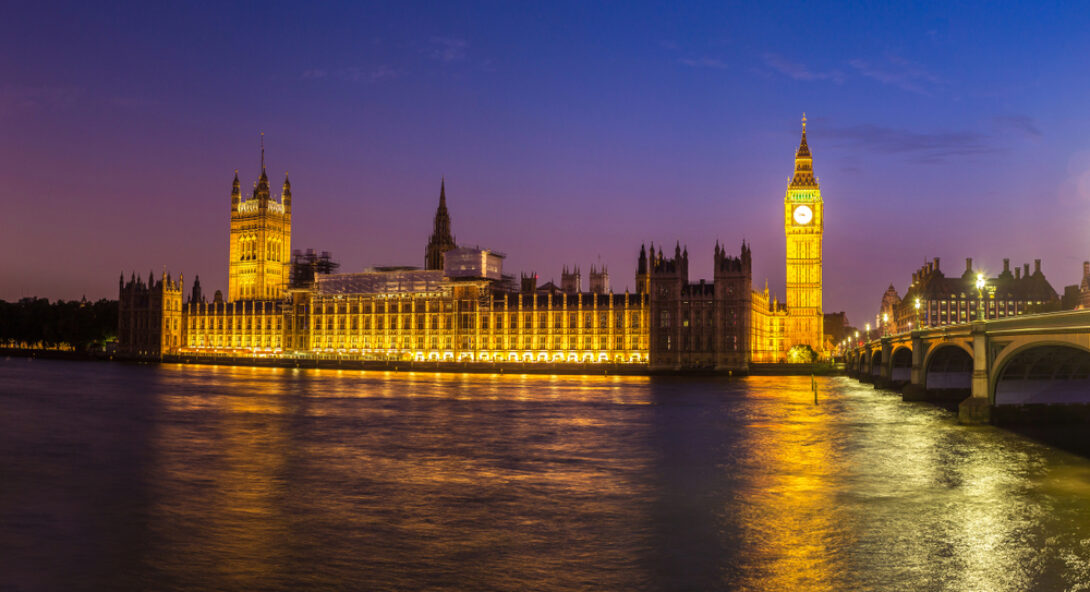
The Seven Deadly Sins of Government, and the system that encourages them
Before I stood for Parliament in 2024, I’d read books by Rory Stewart and Ian Dunt, critical of our sclerotic parliamentary system. And yet, despite those prior warnings, I still find myself repeatedly astounded by the level of dysfunction. My first career was as a management consultant - itself a much-maligned profession, almost as much as politics – but it did at least teach me the basic techniques of project management, most of which are conspicuous by their absence in Westminster.
I meet good people every day, people who want to do the right thing, many of whom have given up careers that paid a lot more money for a lot less grief - but the system they work within makes it astonishingly hard to think clearly, work collaboratively, or plan for the long term. None of this is new, and I’m sure none of it is unique to this government, but that does not make it any less harmful.
Here are what I’ve come to think of as the Seven Deadly Sins of Government.
1. Siloing: Departments as islands
Some projects absolutely need to transcend departmental silos. Take land: Britain has the same population as France, squished into an island one third of the size. We have competing demands for housing, food production, nature recovery, water, energy. So a land use framework should be the most joined-up piece of work in government.
Instead, it is being pulled apart before it even gets started. It is impossible to solve big, interconnected problems when a reductionist system breaks them into disconnected tiny ones.
2. Penny pinching: When saving becomes sabotage
There is a particular kind of false economy that masquerades as fiscal responsibility. The debate about cutting Personal Independence Payment (PIP), is a textbook case. On a Treasury spreadsheet, it may look like a saving. In the real world, it shifts costs onto the NHS, onto already stretched carers, and onto crisis support services that are already running on fumes.
Cutting the safety net does not mean the need will evaporate. It will not. It reappears in ambulances, in GP waiting rooms, and in social services departments. This is not saving. It is societal sabotage dressed up as prudence.

3. Exclusion: Talking about people instead of with them
One of the most frustrating habits in Westminster is the tendency to impose policies on people nobody has bothered to speak to. Take the fiercely-fought family farm tax, which has reduced some of my South Cotswolds farmers to tears. Decisions affecting livelihoods, landscapes, and food production are drafted far from the fields they will reshape. Farmers often find out only when it is too late to change anything.
Even the best idea will fail without the trust of the people who must bring it to life. Collaboration, not resentment, is what turns policy into progress.
4. Blindness: Overlooking nature in favour of shiny fixes
I am not anti-technology, but I am wary of the almost automatic assumption that the answer to every environmental problem must be a high-tech solution. Carbon capture and storage is receiving huge investment, while nature-based approaches remain underfunded. The new Planning and Infrastructure Bill reflects a fundamental lack of comprehension of how ecosystems work.
Nature is not an accessory. It is our life-support system. When we disregard soils, woodlands, wetlands, and rivers, we are not being modern, we are being blind.
5. Wishful thinking: Announcing targets without a plan
Lack of ambition is not the issue in Westminster. The issue is the gap between ambition and reality. For example, building 1.5 million new homes sounds bold, but without the materials, the skills, the grid capacity, the sewage infrastructure, and the transport links, they remain wishful thinking.
Targets without a plan are just numbers. And the public is tired of numbers that never materialise.
6. Short termism: Governing for headlines, not for history
Short term electoral cycles encourage instant gratification, at the expense of planning for future generations. Ministers chase quick wins to satisfy the insatiable appetite of the media. Long-term planning requires patience and perseverance, which don’t make for sexy media headlines. Nor does the problem averted, rather than the problem solved. Optics trump prudent policy.
Even when long-term thinking happens behind the scenes, it is not communicated, so the public sees only zig-zagging decisions with no clear destination. That uncertainty seeps into every part of the country, and it erodes trust one announcement at a time.
7. Aimlessness: A government without a story
The more I watch this Government, the more I find myself asking what their story actually is. What holds their decisions together? What principle or philosophy guides them? I am no fan of Thatcher, but at least she was a woman with a mission.
Without that coherent narrative, nobody knows where they stand, and the resulting uncertainty is fatal to confidence in the future, crushing optimism and leading to a perception of this government as unpredictable and capriciously cruel.
Why it matters
These seven sins are not the result of bad intentions. They are symptoms of a system that rewards the short term, fragments responsibility, and bakes in perverse incentives. And the consequences are real.
Farmers cannot plant without confidence. Businesses cannot invest without clarity. Families cannot plan without stability. A country without a sense of direction becomes anxious and brittle, and that has consequences for our economy, our communities, and our mental health.
A way forward does exist, but it will take determination from all of us, starting at the top. We need to redesign the system so collaboration is the norm, not the exception. That means breaking down departmental silos, involving the people who will live with the outcomes, and setting long-term goals that survive more than one election cycle. It means giving Parliament the tools to plan for the next decade, not just the next deadline or the next headline.
Above all, it means choosing a clear guiding philosophy and sticking to it, so the country knows where we are heading and why. Jean Chittister wrote, “The role of leadership is not to make the future bearable, but the future possible.” Real leadership is not about juggling crises, it is about creating the conditions for a future we can look forward to with confidence.

Dr Roz Savage MP is an English ocean rower, environmental advocate, writer, speaker and politician who was elected as the Liberal Democrat Member of Parliament for South Cotswolds at the 2024 general election. Born Rosalind Elizabeth Adriana Savage on 23 December 1967, she distinguished herself as a pioneering ocean adventurer before entering Parliament, holding four Guinness World Records for ocean rowing. Her achievements include becoming the first woman to row solo across three oceans: the Atlantic, Pacific and Indian.