When do scandals bring down governments?
On the 9th February 2026, Starmer and his government seriously wobbled, after Scottish Labour Leader, Anas Sarwar, called for his head. For a minute, it looked like the Mandelson-Epstein affair would bring down the government; in power for only 19 months, and after winning a landslide victory with a 174-seat majority. But Starmer’s colleagues rallied round and saved his bacon, at least until the May 2026 local and Scottish/Welsh national elections.
The many U-turns, 13 at the last count - particularly over the Winter Fuel Allowance - took their toll on the Prime Minister’s popularity. He is less popular than Tory Prime Minister, Liz Truss, was after her disastrous ‘mini-budget’, with a net popularity rating of -66%, according to Ipsos. That makes him the most unpopular party leader since records began in 1977.
Given his unpopularity and support from some in his own part to go, how on earth did he manage to live to fight another day? Why does a scandal kill one government, but not another?
Scandals, manufactured or real, have long had a unique impact on a government’s fortunes. Consider the Zinoviev letter, a forged directive from the Comintern to British Communists recommending revolution, which fuelled ‘Red Scare’ hysteria. It suggested a Labour victory would invite Bolshevik subversion, not least because they were trying to advance a trade treaty and normalise relations with the Soviet Union.
This led to a decimation of the Liberal vote and mobilised anti-socialist voters in the 1924 general election, helping to secure a Conservative landslide and Ramsay MacDonald’s ouster. In the 1963 Profumo scandal, the secretary of state for war shared a mistress (who was both significantly younger than him and likely - in a modern interpretation - trafficked) with the Soviet attaché (and GRU spy).
This event made the government look incompetent and out of touch, smashing Macmillan’s ‘supermac’ image to smithereens, and led to his resignation later that year.
Other scandals have partially contributed to the downfall of governments, rather than necessarily being the prime driver. The ‘Cash for questions’ scandal that emerged during the Major government between 1994-1996 highlighted how Conservative MPs had accepted money to ask questions in parliament for the now disgraced and late Harrod’s owner Mohamed Al-Fayed in the late 80s.
The affair contributed to the ‘sleazy’ image of Major’s Conservative Party and, together with the public feeling of economic incompetence that arose from the UK falling out of the Exchange Rate Mechanism, led to Labour’s landslide win in the 1997 general election.
In 2009, when the Daily Telegraph blew the story that MPs, of all parties, were fiddling their expenses and overclaiming, there was uproar. Not least because the country was in the depths of the Great Recession.
The ensuing furore led to a surge in support for the Liberal Democrats (who were less tainted by the scandal), leading to the Hung Parliament result of the 2010 general election, casting Brown and his Labour government out of office. Twelve years in power, a protest against the government’s decision to go to war in Iraq, and a general desire for change also contributed.
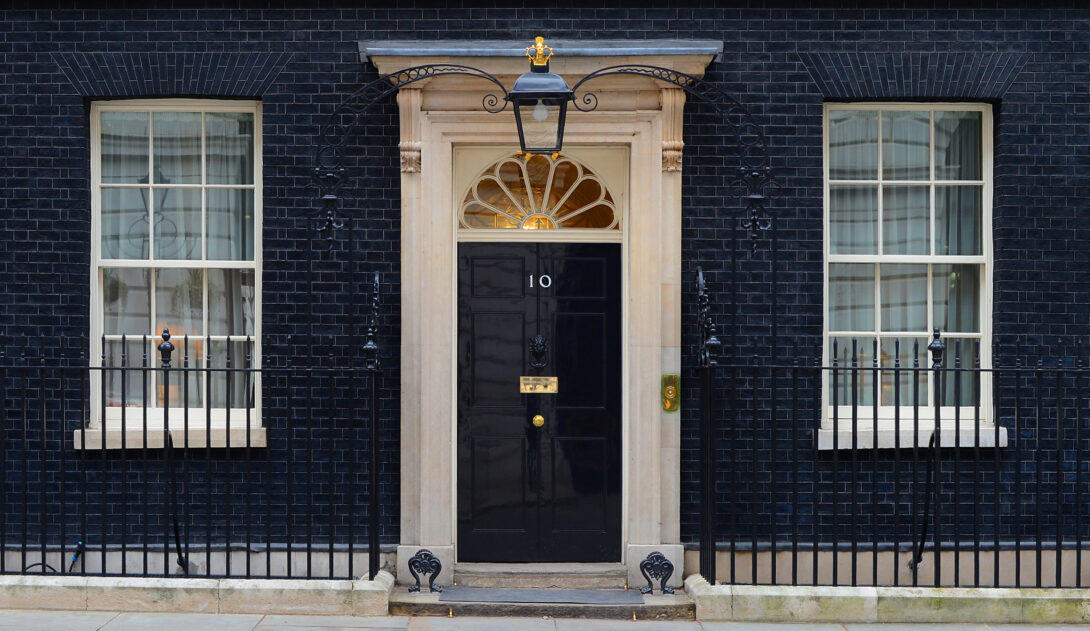
Partygate, and the Chris Pincher scandal, led to Conservative PM, Boris Johnson’s resignation after winning an 80-seat landslide victory in the 2019 election and after having served only 3 years in office. Both events illustrated that lying had become endemic in No.10. In the first case, this involved organising parties in No.10 - eight of which led to fines for 83 people including the Chancellor of the Exchequer and the Prime Minister himself - despite this being against the government’s own Covid rules.
In the Chris Pincher scandal, the Prime Minister lied about being briefed on the conduct of his Deputy Chief Whip, Chris Pincher. Pincher had drunkenly groped two men in the Carlton Club and earlier in his career had also received a formal complaint for his conduct before he was appointed to the post of Deputy Chief Whip.
When it emerged that Johnson had indeed been briefed on his conduct, this led to the resignation of his Chancellor and Health Secretary and the subsequent resignation of another 60 MPs in government positions within 48 hours. Johnson resigned shortly after.
We can conclude that a government is frequently brought down when the general public loses trust in that government as a consequence of a particular scandal. That loss of trust might be tested and manifested in a general election (as per MacDonald in 1924, Major in 1997 or Brown in 2010) or it can be hypothesised by politicians to be likely and therefore lead to a loss of confidence in their leader.
This often occurs mid-term, as per Johnson (in 2022) or as very nearly occurred in the Starmer case in February 2026. For him, this loss of confidence from his colleagues is already baked in and therefore is likely to be a contributing factor in his downfall at a later date.

A scandal is even more likely to lead to a change of government, when the prime minister is forced to resign because of it as occurred with Macmillan and Johnson. If that scandal contains a bête noire, the government’s downfall is more likely still. In 1924 and 1963, this was the Soviets/Russians. In 1997, it was Al Fayed. In 2026, it’s Epstein.
For Starmer that’s critical: if it becomes clearer that Peter Mandelson’s behaviours in his transactions with Epstein were criminal, and since Starmer has already admitted knowing that he did know the two were closer than Mandelson had apparently admitted, the easier it will be for his party colleagues to dismiss him in a confidence vote.
Many think this is a matter of when not if but the party does also need to identify potential successor candidates who can take over. Given the party’s unpopularity, who would want that poisoned chalice?

Paul Baines is Professor of Political Marketing and Head of Executive Education at the University of Leicester’s School of Business. He holds advanced degrees from the University of Manchester and other institutions, is a frequent media commentator, and has served in local government including as Mayor of Charnwood.