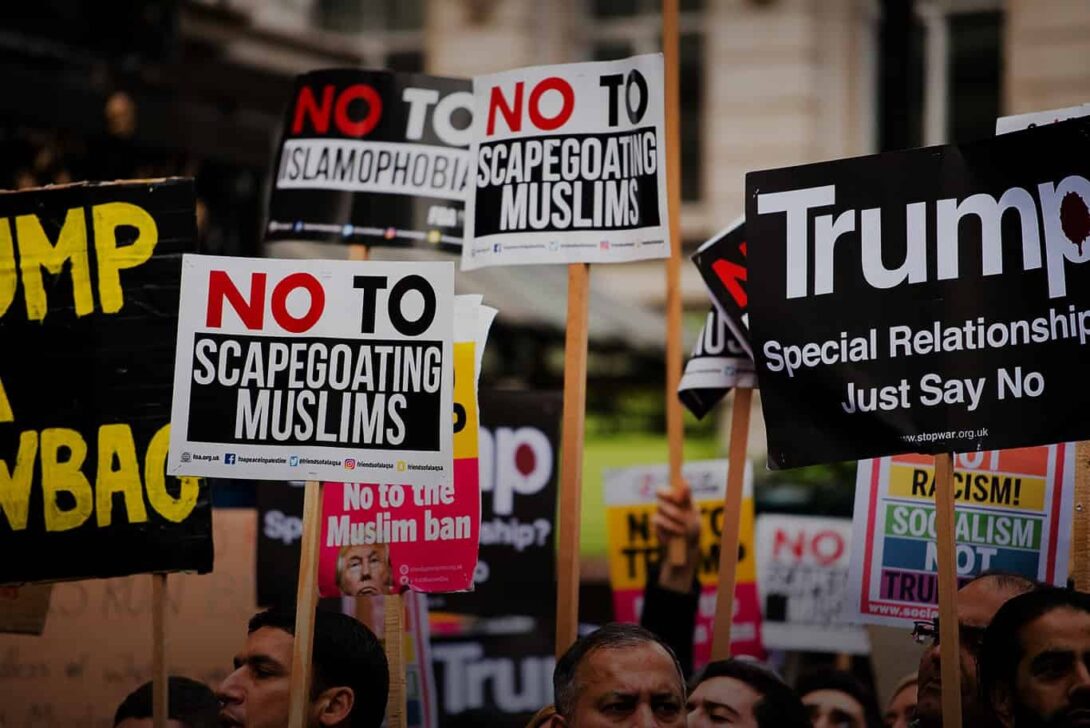
Davey was right to boycott Trump visit
As Liberal Democrats gather in Bournemouth, whoever advises Ed Davey gets full marks for suggesting the boycott of this week’s Trump banquet at the Palace. Ed has taken up the right issue at the right time.
The move signals clearly that Lib Dems reject the Labour government’s obsequious, subservient cultivation of Trump. And to focus on Trump’s active complicity in the horrors of Gaza touches the moral core of British public opinion.
I set something of a precedent by boycotting the state dinner for the King of Saudi Arabia when I was Acting Leader, and later when I rejected an invitation to dine with Trump during Theresa May’s premiership.
On both occasions, there was a little tut-tutting from party grandees and more particularly from the anti-Lib Dem press (ie. most of it). They thought I was accused of disrespecting the Royal Family.
But using royalty to massage the vanity of appalling guests - from Mobutu and Ceausescu to Trump – is, itself, disrespectful to the head of state. I never experienced any subsequent rebuke from the Palace for my boycott and I very much doubt if Ed’s dealings with the King will be affected.
The focus on Gaza is timely and correct. But there is a wider issue: the way in which the government has turned the UK into a supplicant, vassal state of Trump’s America.
The implications go beyond the indignity of bowing and scraping to Trump. Of course, the USA has been our close ally since wartime and is the centrepiece of NATO. Continued US support is currently needed to help support Ukraine in its existential struggle. But clinging to hope and sentiment isn’t a strategy.
There are two clear warnings for the UK. First, ‘strategic autonomy’ is no longer just a fancy slogan but an imperative. And, specifically, relying on the US to continue to support Ukraine is simply wishful thinking.
That means moving quickly with European allies, notably Germany and France, to establish a viable and state-of-the-art defence capability. This raises uncomfortable questions about the sharing of the UK-French nuclear deterrent with, for example, Germany.
Meanwhile, these additional defence commitments cannot be met when the UK’s lazy political consensus is that the country is ‘overtaxed’; nor when the French are paralysed by blockers who – ludicrously - claim that France is suffering unbearable ‘austerity’.
Second, there is a false sense of achievement over this week’s trade negotiations with the USA. Higher tariffs on UK exports are treated as a ‘win’ because they are only 10%.
Behind the flags and the podiums and the fanfare, the actual agreement incorporates some sinister subclauses which appear to give Washington veto rights over any third-party UK agreements or investments: a blatant infringement on our sovereignty. So much for ‘taking back control’.
This is nothing less than a rather unsubtle warning that Britain must not tax or regulate unfavourably the Tech Bros who dominate the US stock markets. Their market dominance and the algorithms they control are the foundations of the new digital economy, such that Britain risks losing even a scintilla of technological independence.
And for all that, there is little evidence that buckling under Trump’s pressure gets meaningful and sustainable better outcomes. Standing up to Trump, by contrast, has forced him to back down (see China) or secures independence albeit at some short-term cost (see India, Brazil and Canada).

It is imperative for the UK to diversify trade and investment relationships: rebuilding our partnership with European neighbours more urgently than at present; recognising that the centre of gravity of the world economy has moved to Asia (which will accelerate with Trump’s self-destructive attacks on America’s science and education system); and accepting the need to do more serious business with regimes we may not like (Saudi Arabia; China).
A bigger point is that the USA is walking away from the role it held post-war as the hegemon which established strong international institutions and order. We have seen the abandonment of the COP process on climate, the sabotaging of the WTO, the belittling of the UN and disregard for humanitarian norms. Nor is the other superpower- China – really credible in this role despite the rhetoric. It falls to the so-called ‘middle powers’, including Britain, which depend on an open economy and international rules, to pick up the pieces.
We also have to remember that the US is no longer at the heart of an alliance of shared values in which we loosely call ‘the West’. Trump has trashed independent universities, lawyers and media outlets; rejected democratic election results; stirred up political violence; trodden on basic individual rights; and normalised egregious corruption.
Democracy is more secure in Brazil., India and Nigeria than in the USA. Although Europe has its delinquents – namely in Hungary and Slovakia, the EU so obviously now represents our values in a way the USA no longer does.
The boycotts should continue.

Sir John Vincent Cable is a British politician who led the Liberal Democrats from 2017 to 2019 and represented Twickenham in Parliament from 1997 to 2015 and again from 2017 to 2019. He served as Secretary of State for Business, Innovation and Skills and President of the Board of Trade in the coalition government between 2010 and 2015. Cable studied natural science and economics at Cambridge before working as a finance officer in the Kenya Treasury and lecturing in economics at Glasgow University, where he also earned his PhD. His distinguished career included roles in the Diplomatic Service, directing research at the ODI, advising the Commonwealth Secretary-General, heading the international economics programme at Chatham House, and serving as Chief Economist for Shell Group Planning.