It’s time for Britain to wake up to Central Asia
More than half a decade after Brexit, Britain’s foreign economic strategy still feels adrift. “Global Britain” was meant to be an ambitious re-orientation – a more outward-looking, agile, economically assertive state that could spot opportunities before others did. Instead, the UK has spent the intervening years reinforcing its ties with the same familiar partners: the United States, India, the Gulf, and a smattering of Indo-Pacific initiatives that remain more rhetorical than real.
The problem isn’t that those relationships lack value. The problem is that the UK has not expanded its horizon. The global economy is shifting faster than Britain’s instincts. This is particularly noticeable in Central Asia, a region that is rising in strategic importance just as the UK is barely paying attention.
President Donald Trump’s recent C5+1 Summit in Washington, which brought together the leaders of all five Central Asian states, was a signal that the United States now sees the region as strategically significant. Critical minerals, supply-chain diversification, connectivity, and energy security were at the top of the agenda. In other words: hard economics.
The EU, too, has accelerated its Central Asia engagement, with senior officials, including European Council President António Costa, visiting Astana to advance green-energy partnerships, transport corridors and access to critical minerals. Japan and several other states are doing the same.
The UK, meanwhile, has allowed its presence to fade into the background. When the global race for new markets and secure supply chains is intensifying, Britain risks becoming the only major power without a serious Central Asia strategy.
This oversight is particularly puzzling because Central Asia is increasingly contested terrain, where U.S. interest, Chinese influence, Russia’s legacy and the EU’s search for secure supply lines all converge. It also sits on the main overland corridors linking Europe and Asia, making it central to future energy and transport routes.
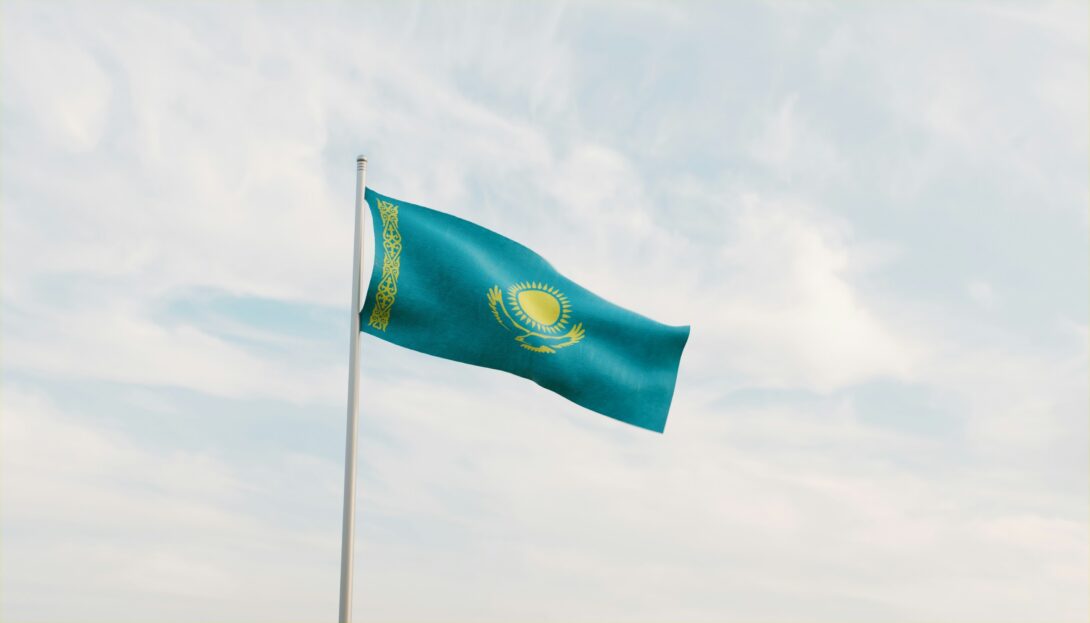
Kazakhstan is the region’s largest economy by a considerable margin, with a GDP greater than that of all four of its neighbours combined. It is also open to economic partnerships with the West. But what makes Kazakhstan particularly important today is its critical minerals. With global demand for critical raw materials accelerating, driven by the clean-energy transition, the UK cannot afford a passive approach.
Yet this is where the UK’s blind spot shows. Britain’s Vision 2035 Critical Minerals Strategy states that critical minerals are essential for the country’s defence industry, renewable energy build-out, electric-vehicle manufacturing, and high-tech production. They are the foundation of modern economies and the Achilles heel of those who fail to secure them.
The strategy also makes clear that the UK is dangerously dependent on imports, especially from China, which dominates the global processing of rare earth elements and critical minerals. London’s goal is to raise the share of critical minerals sourced from domestic production and recycling to 30% by 2035. But that still means 70% of the UK’s demand will need to come from abroad.
This is where Kazakhstan can play a meaningful role. The country has some of the world’s most significant reserves of rare-earth elements, including major new deposits announced recently. It produces more than 40% of the world’s uranium and has substantial deposits of tungsten, copper, nickel, lithium and titanium – the latter already supplied to manufacturers such as Boeing and Airbus. It also holds other critical inputs required for batteries, wind turbines and advanced manufacturing.

The United States has already grasped this, making critical minerals a priority at the White House C5+1 Summit and opening talks on partnerships in mining and processing. The EU is doing the same, positioning Kazakhstan as one of the pillars of its Critical Raw Materials Act strategy. Just as the world recognises that whoever secures reliable access to critical minerals will shape the next phase of industrial competition, Britain is hesitating on the sidelines.
Without secure supply chains, the UK’s decarbonisation plans, defence manufacturing and industrial ambitions will be constrained by global shortages. Kazakhstan offers scale, geopolitical balance, and a willingness to work with Western partners but only those who show up.
A 2023 UK Parliament report on Britain’s engagement with Central Asia prompted ministerial visits by James Cleverly and David Cameron, signalling that the previous Conservative government had begun to take the region more seriously. The current Labour government now needs to turn that early momentum into more concrete and pragmatic steps.
Specifically, the UK has a strategic partnership with Kazakhstan on critical minerals, but progress has been slow and lacks the political momentum now visible in Washington and Brussels. London should take its cue from the U.S. and the EU and organise a UK–Central Asia Summit, effectively a C5+1 with the British Prime Minister. This would provide the political signal and institutional foundation needed to deepen cooperation on critical minerals, energy security, green technology, transport corridors, and broader trade.
It would also elevate Britain’s visibility in a region where diplomatic presence alone no longer counts. Central Asian states are choosing partners based on who brings real economic opportunities and long-term commitment. Britain needs to enter the room.
Britain talks frequently about post-Brexit “Global Britain” and economic security, yet remains a marginal player in the very region that could help underpin both. In 2026, the UK must treat Central Asia as a strategic priority.

Martin Banks is a British-born journalist who has reported from Brussels since 2001, covering the EU institutions and European politics. He previously worked for many years in UK journalism, including as a chief reporter, and later freelanced for national titles such as The Daily Telegraph.