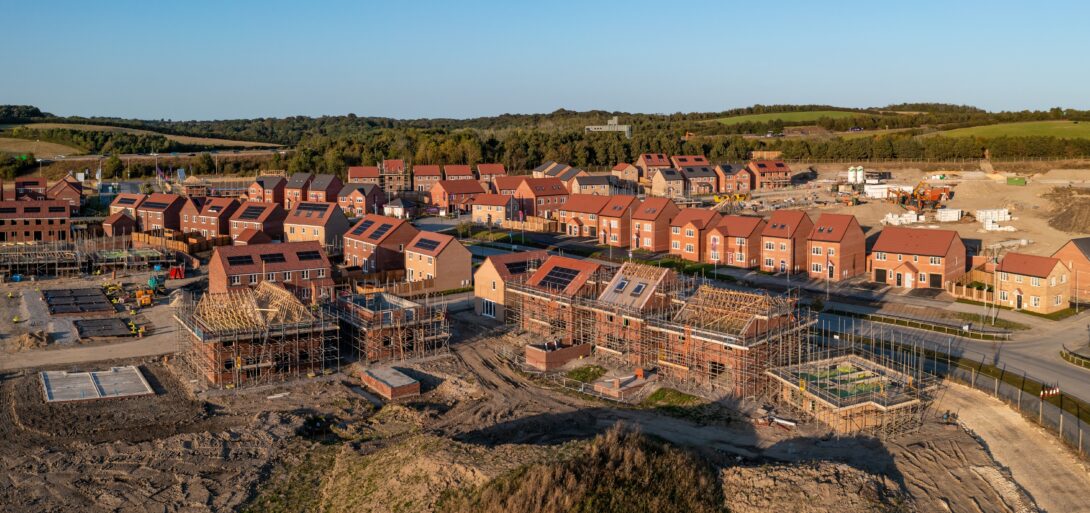
Britain doesn’t have a housing ambition problem - It has a delivery problem
As a young person myself, it’s hard not to feel a sense of déjà vu every time housing climbs back to the top of the political agenda. The language is always confident, the targets always bold. We’re told how many homes will be built, by when, and how this time it will finally be different. But the reality on the ground rarely matches the ambition on paper. In the year to March 2025, net additional dwellings in England fell to around 208,600, down on the year before, even as ministers continue to talk up 300,000 homes a year and a longer-term promise of 1.5 million by 2029. That gap between promise and delivery isn’t just technical, it’s the backdrop to everyday life for people like me.
This pattern has been repeating itself for years. Governments change, slogans change, but the shortfall remains. At some point it stops feeling like bad luck or temporary disruption and starts to feel structural. Targets sound impressive, but they don’t build homes on their own. Housing is shaped by planning decisions, infrastructure constraints, developer incentives and political trade-offs, and those things move far more slowly than press releases do.
Planning is where many of these tensions surface. Fewer permissions are being granted than would be needed to sustain consistent building, and when approvals slow, everything else backs up behind them. Even when permission is secured, there is no guarantee anything will actually be built. In recent years, only about half of residential planning permissions have translated into construction on site. On paper, progress is being made but in reality, the pipeline keeps leaking.
Moreover, local authorities are stuck in the middle of this. They are expected to deliver national housing priorities while managing intense local resistance and doing so with planning departments that are often stretched thin. Councillors face immediate backlash over traffic, density or pressure on services if developments go ahead.

The benefits of new housing, lower costs, better mobility, stronger growth, are distant, spread out and rarely credited to those who took the risk. In that context, delay isn’t irrational, it’s politically safe.
For young people like myself, the consequences are not abstract. Years of under-delivery have pushed housing costs far beyond what many incomes can realistically support. Home ownership has drifted further out of reach, and renting has become longer, more expensive and more insecure. These conditions shape when people move out, whether they can save, and how much freedom they have to take jobs or plan families. Housing policy isn’t something happening in the background; it’s something that quietly structures entire lives.
What is built matters too. Around 59,000 affordable homes were delivered in England in 2024–25, roughly a third of total supply. That matters, but it also signifies how dependent delivery still is on the wider market and how affordable housing remains constrained by the same bottlenecks. Even the parts of the system designed to soften the crisis struggle to escape it.
Governments often point to delivery programmes, including those overseen by Homes England, as evidence that the system is being fixed. These efforts are not meaningless, but they have yet to break the broader pattern. Hundreds of thousands of homes are needed each year just to keep pace with population growth and household formation, yet output continues to lag. Without a real shift in delivery capacity, these initiatives risk treating symptoms rather than causes.
At that point, the issue stops being just about housing and starts becoming a question of credibility. When targets are announced again and again without being met, they lose their force. They begin to feel symbolic, a way of signalling intent rather than committing to outcomes. Over time, that erodes trust in the state’s ability to deliver complex policy promises.
For younger voters, housing is usually where political credibility in Britain starts to fall apart. It is the area where big promises crash most evidently into everyday life. When successive governments repeat the same pledges and still miss them, it does not just disappoint, but it changes how people relate to politics itself. Disillusionment increases not because expectations are unrealistic, but because outcomes consistently fail to follow rhetoric. Over time, housing stops feeling like a technical policy problem and it starts to feel evidence of a deeper inability to govern deep-rooted problems.
Housing is complicated and there are no quick fixes. But recognising that the problem is not a lack of ambition, but a failure of delivery, is the necessary starting point. Britain doesn’t lack targets. What it lacks is a system capable of turning those targets into homes people can actually live in. Until that changes, the gap between promise and reality will continue to define housing policy, especially for younger generations like my own.

Melisa is an MA Political Economy graduate from King’s College London, with an interest in how policy decisions shape everyday life.