Britain cannot keep spending its way into decline
A couple of weeks ago I was invited to address a Trafalgar Day dinner in Penzance. Inevitably, as a great fan of Winston Graham’s Poldark novels, I reflected on the piracy associated with the coastline and the town: Piracy with the objective of avoiding paying tax.
That same objective is also associated with my own constituency in the New Forest, a glance at the place names on an Ordnance Survey map gives an indication of that history; ‘Picket Post’ just south of Ringwood, to name but one.
The tax that piracy sought to evade was effectively the only tax that had to be paid: the Excise. Our forefathers would never have tolerated the extensive taxation that we now endure, especially the state intrusion into our private affairs that is explicit in income tax.
Of course, the other side of the coin, was that the state provided very little in the way of public services. Effectively, all that government provided for was the maintenance of order and the defence of the realm.
That government touched few aspects of life, in turn had an impact on politics. Frankly, it was of little consequence as to who represented you in Parliament, and political ideologies with which we are familiar to-day were unknown. So, if you were fortunate to have the franchise, you may as well sell your vote to the highest bidder. Inevitably ‘treating’ by the candidates was common. Of course, the fact that you would vote by public declaration at the ballot, sustained such transactional politics.
I am surprised that, notwithstanding generations of electoral reform, transactional politics remains implicit, and sometimes explicit, in any number of my encounters with voters. I’m often told that somebody will vote for me if I do such and such. Or, more often, that they won’t vote for me unless I don’t do such and such. The difficulty of entering into any such transaction however, is that -given the secrecy of the ballot- I will never know if they fulfilled their part of the bargain.
Instead, the transactional nature of politics is now sustained by the ‘offer’ that political parties make to voters in their election manifestoes, which increasingly involve large amounts of expenditure on all sorts of desirable initiatives. But now it is the voters themselves that will have to pay for the goodies.

Consequently, we are now in a cycle of ever higher public expenditure to afford all that the voters have been offered, and ever higher taxes and borrowing to pay for it.
Within this cycle a particularly damaging phenomenon emerges: in an attempt to diminish the unpopular consequences of ever higher taxes on the majority, the temptation is to levy them on minorities. This results in ever greater distortions in markets. It punishes enterprise and drives entrepreneurs elsewhere. Ultimately, it will kill the goose that lays the golden egg, a goose that is already paying the lions’ share of our taxes.
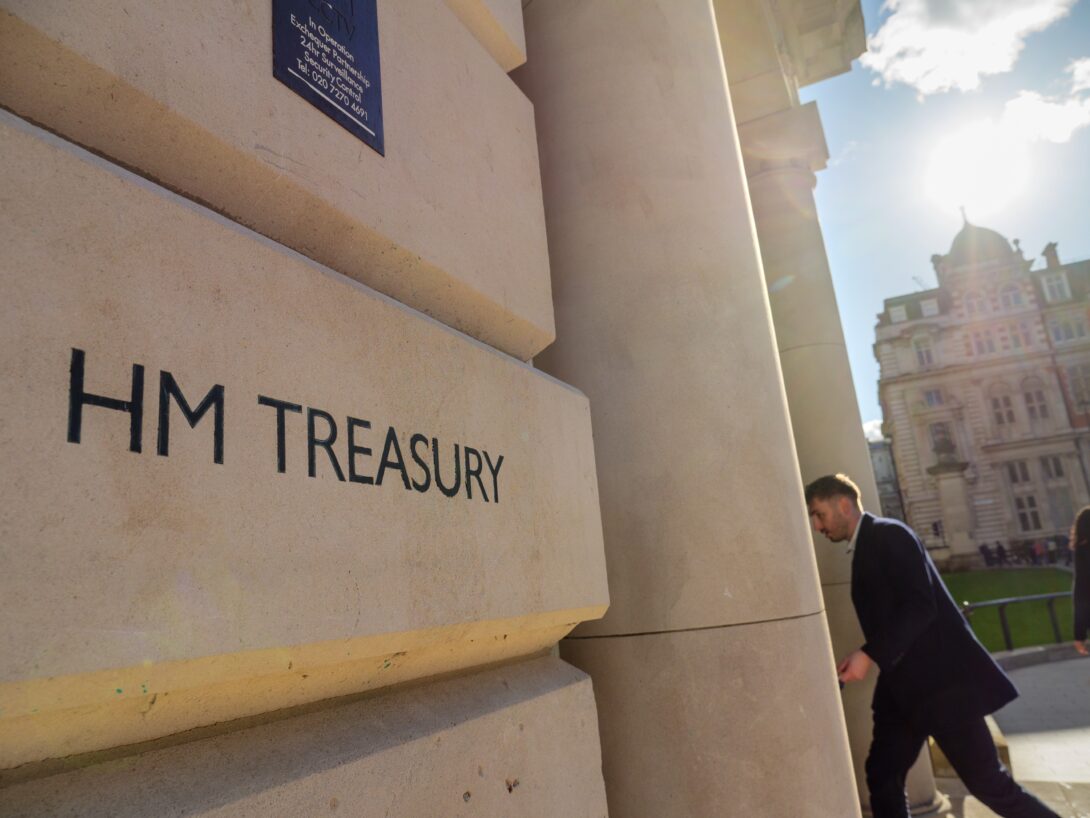
This determination to avoid the electoral consequence of taxing ‘working people’ was most evident in the Chancellor’s last budget with the attack on enterprise so evident in the measures to increase Employer’s National Insurance, to single out non-doms, family businesses, farms, and even private schools. The decisions that she took in that budget, to increase public spending at the expense of productive enterprise, now constrain her options for the next one: The backdrop to the forthcoming budget is summed up by the fact that the economy shrank last month.
The root cause of our problem is the appetite for ever increasing public spending, with government now accounting for 45% of our economy. This is highlighted as we approach expenditure of £100 billion annually on benefits. In the last year a million more recipients have been added without obligation to seek work. Yet, the government abandoned its very modest attempt to slow the rate of increase benefit growth. And against that background, extraordinarily, we are being softened-up for abandoning the two-child cap on Universal Credit in the Budget later this month. We have reached the position where more people are living on these benefits, than there are of us paying into the system to sustain them.
If we cannot break this cycle, and break it soon, we face economic oblivion, and we’ll all be reduced to piracy.

Sir Desmond Angus Swayne has represented New Forest West as a Conservative Member of Parliament since 1997. Before entering politics, he worked as a teacher and later as a manager at the Royal Bank of Scotland. Throughout his parliamentary career, Swayne has held several significant government positions, including serving as Parliamentary Private Secretary to David Cameron during his tenure as Leader of the Opposition from 2005 to 2010 and continuing in that role for two years after Cameron became Prime Minister. He was subsequently appointed Lord Commissioner of HM Treasury in September 2012 and Minister for International Development in July 2014. He received a knighthood in the 2016 Birthday Honours for his political and parliamentary services.