WTO rules best trade option post-EU
John Redwood argues that to reduce the uncertainty over our post-EU trade relations, the easiest option is to either carry on as we are, or go to WTO existing terms.
We can only negotiate free trade deals with the USA, China, Brazil, India, Canada, New Zealand, Singapore, Australia and the others if we leave the EU and its internal market. If we stay part of the customs union or if we stay in the EU we are banned from even discussing freer trade with these important partners abroad. As the government has set up a department expressly to promote our trade in this and other ways, it follows they rightly intend to take us out of the EU and its internal market.
People object and say that it takes many years to construct a Free Trade Agreement. They point out when we leave the EU we will end up with WTO tariffs on the schedule the EU imposes on other foreign countries already. This would enable us to trade reasonably with the EU, but there is no reason why they and we would wish to limit our ambitions to such an outcome.
The reason it often takes a long time to conclude a free trade deal is each country negotiating actually wishes to protect certain features of its economy and limit free trade. A process of bargaining ensures to try to get the barriers removed to your exports whilst keeping up some barriers against imports. Our negotiation with the EU would not be like this, as we already have barrier free trade in goods with them and reduced barriers in services! If we and they wish we merely say we want to carry on with it, and it is already negotiated and recorded.
To speed it all up and get rid of the uncertainty the easiest option is to either carry on as we are, or go to WTO existing terms. Neither needs renegotiating and each is already written down. Our current deal would be registered as an FTA with the WTO to make it legal for a non-member of the EU. It would take longer to sit down and negotiate a half-way house deal, less freedom than now but more freedom than under WTO. As WTO suits our profile of trade better than theirs we might as well just offer either our current arrangements or WTO.
Under WTO we would have the nice problem of how to spend all the tariff revenues on their large imports into the UK. Spent intelligently this would remove adverse effects from tariffs on our exports.

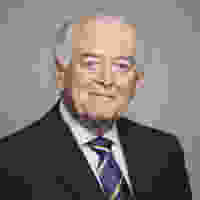
John Alan Redwood, Baron Redwood, is a British politician and academic who represented Wokingham in Berkshire as Conservative Member of Parliament from 1987 to 2024. Born on 15 June 1951, he served as Secretary of State for Wales under John Major and twice stood unsuccessfully for the Conservative Party leadership during the 1990s. Following his ministerial career, Redwood held positions in the Shadow Cabinets of William Hague and Michael Howard before spending his remaining parliamentary years as a backbencher. Prior to entering Parliament, he earned a doctorate at All Souls College, Oxford and served as Director of the Number 10 Policy Unit under Margaret Thatcher.