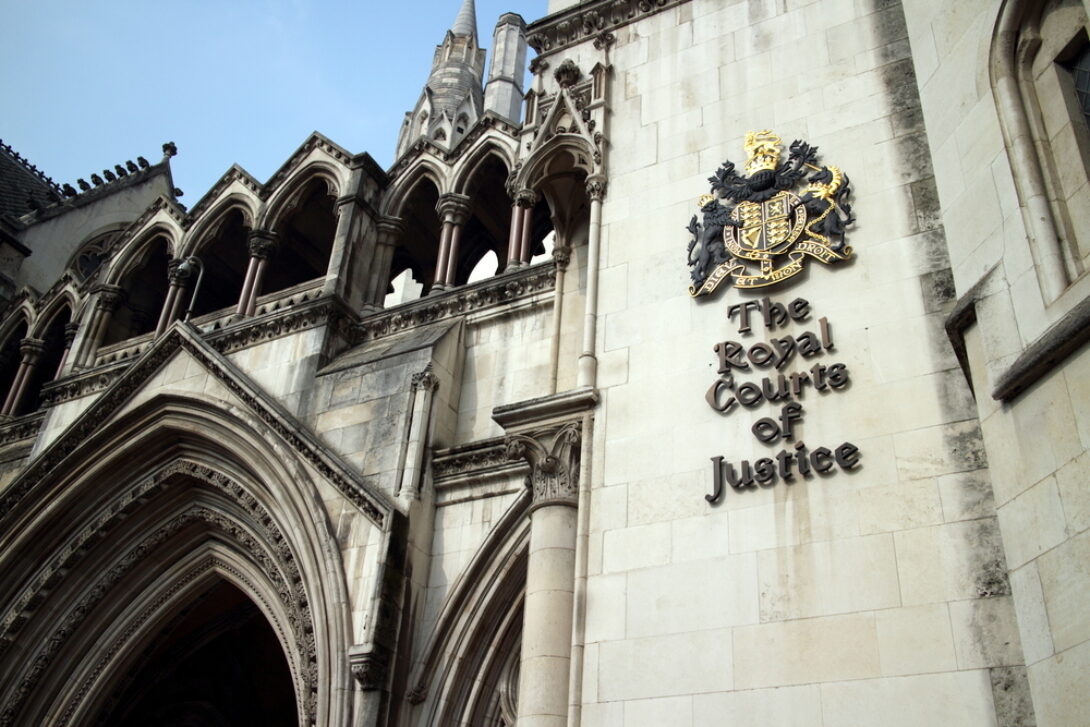
The jury's out on the Lammy proposals
The history of trial by jury in Britain is usually told as a story of a gradual movement from local custom to constitutional safeguard. Medieval juries began as bodies of local men expected to know the facts of a dispute; by the seventeenth century they had become an institution associated with independence from the Crown, especially after 'Bushell’s Case', which confirmed that jurors could not be punished for their verdicts. By the eighteenth and nineteenth centuries the jury had become a central symbol of English liberties. Blackstone described it as the “glory of the English law,” a device that balanced state power through ordinary judgment.
Yet, throughout the same period, Parliament excluded whole categories of cases from jury trial, and many minor criminal matters shifted to magistrates’ courts. The rise of plea bargaining and summary justice in the twentieth century further reduced the number of contested jury trials, even as public rhetoric continued to treat the jury as a constitutional constant. The symbolic role of 'The Jury' was more than legalistic though: it gave the appearance of something 'extra-state' enshrining liberty. In the modern era of 'the expert' however, every aspect of civil life has become governed by technocracy, from health to law, to football's VAR. In the future perhaps AI robots will preside over court rooms and RoboCops will shuffle in with the accused.
In the modern UK system, juries are used routinely only in serious criminal cases, very occasionally in specific civil torts or inquests, and almost nowhere else. In the Crown Court almost all serious criminal offences (indictable offences like murder, robbery, rape) are tried before a judge and jury of 12. 'Either-way offences' (e.g. theft, ABH) can be in the Magistrates’ Court (no jury) or in the Crown Court (with a jury). The Magistrates courts account for 90% of criminal cases of which there are no juries. Even among Crown Court cases, many are resolved by guilty pleas, meaning they don’t go before a jury. Recent data shows that roughly 60–72% of Crown Court defendants plead guilty, so only the rest (around 30–40%) end up in a jury-trial.
Against this backdrop, contemporary proposals to restrict the use of juries - most recently discussed by David Lammy - fit into a long pattern of functional pressure on the institution. Lammy’s concerns focus on racial disparities and delays within the criminal justice system. Strange then that Lammy's own treatise -'The Lammy Review: An independent review into the treatment of, and outcomes for, Black, Asian and Minority Ethnic individuals in the Criminal Justice System (2017)' admitted that juries do not discriminate against ethnic minorities. Similarly, evidence suggests that Studies of Crown Court records showed little difference in conviction rates by defendant ethnicity when the trial reached a jury.
Another motivation for the scrapping of Juries is also linked to cost savings. The suggestion is that some offences could be tried by judges alone to speed proceedings and address unequal outcomes. This is not a wholly novel idea; when Labour last considered similar reforms, critics argued that efficiency cannot be the decisive criterion for altering a constitutional safeguard. The debate today echoes that earlier tension: whether juries are an essential element of public participation in justice or an outdated mechanism susceptible to bias and inconsistency.
Legal scholars often highlight that the symbolic value of the jury is both its strength and its weakness. It represents democratic judgment but also introduces unpredictability. Foucault, in 'Discipline and Punishment', suggested that modern justice tends to move away from public, collective judgement towards expert administration, a shift that displaces the jury's cultural position. For Foucault, the jury's decline is connected to a broader move from spectacle to discipline, where decisions are meant to be technical rather than moral. Robespierre offered the opposite perspective during the French Revolution, arguing that “the people are always just,” and that involving ordinary citizens in judgment is the clearest expression of democratic sovereignty. His view captures the idealised version of jury trial that still exerts rhetorical force in British political discourse.
Modern commentary tends to sit between these poles. Some academics note that juries embody a principle of civic legitimacy, ensuring that criminal punishment does not become the exclusive domain of state officials. Others point out that empirical studies show juries are not immune to the social biases that the justice system is trying to correct.

Lammy’s proposals therefore reopen a familiar argument: whether the imperfections of the jury are a reason to restrict it or a reason to retain it as a counterweight to institutional power. The result is an ongoing tension between historical constitutional identity and contemporary criminal justice policy, with the jury positioned as both a practical mechanism and a symbolic commitment. I think, however, we need to focus on not so much the nitty gritty of the technics of Law, but on the real reasons of societal discord. In 2024 about 1.52 million individuals were “formally dealt with” by the criminal justice system in England and Wales. That is a shocking figure. There are far more pressing problems in the UK than trial by Jury. In 'The House of the Dead' Dostoyevsky lamented that 'The degree of civilisation in a society can be judged by entering its prisons.'

Brian Patrick Bolger has taught Political Philosophy and Applied Linguistics in universities across Europe. He is an adviser to several Think Tanks and Corporates on Geopolitical Issues.