Policing as infrastructure on housing development
Since entering Parliament I have consistently championed the need to deliver infrastructure alongside new housing development. Calling for a mandatory mechanism within the planning system, so that communities are not reliant on S106 agreements, or Grampian Conditions, to deliver the services needed for new and existing neighbourhoods to thrive.
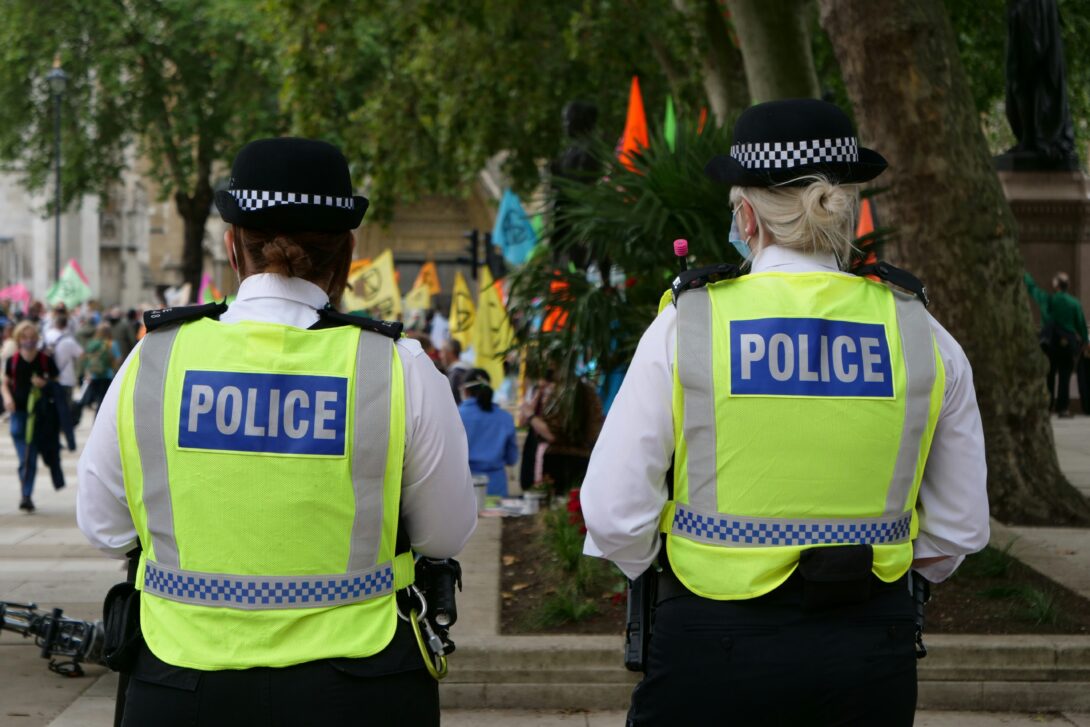
However, what is too often neglected when major housing schemes come forward is the impact on existing policing levels and pressures on other emergency services.
This has certainly been the case in Dagenham and Rainham where we have experienced significant new housing developments, generating large population increases but no commensurate uplift in policing levels.
I suspect in common with most areas across the country, my Dagenham and Rainham constituency experiences an overstretched police service. Even when local police strength in my area is at full establishment level the service struggles to meet demand and frankly, full capacity is a rarity. Generally, the Metropolitan Police in my constituency operate at around 80% capacity across ward teams, in addition to this, local police officers are frequently redeployed to other parts of London or other towns - a practice known as abstraction.
Whilst not a mandatory requirement to deliver, the use of S106 agreements to support infrastructure is well established when we talk about school places, health and community amenities, public transport services and local road improvements, though unfortunately they are not always fully delivered and often not in a timely way. We also have the provision of environmental mechanisms, which are legislated for in the planning system, such as the Carbon Offsetting Fund and the incoming Nature Restoration Fund, both addressing the need to improve air quality and meet climate change goals.
I welcome the focus and measures in relation to developments to tackle the threat of climate change and to mitigate impacts to protect our environment, but I also believe that there is an equal need to protect people, ensuring community safety as we build 1.5 million new homes.

So, following this logic, I would like to see the need for additional policing to be considered, and included, in Section 106 agreements between local authorities and developers. The National Planning Policy Framework sets the tone for this proposal stating that “Planning policies and decisions should aim to achieve healthy, inclusive and safe places which: ... b) are safe and accessible, so that crime and disorder, and the fear of crime, do not undermine the quality of life...” Officers funded in this way, as part of housing delivery, should be operationally tethered to the area and not subject to ever increasing abstraction policies.
Whilst there will always be NIMBYs who object to any form of housing development, there will be many more residents who have legitimate concerns when planning applications come in for new housing schemes.
Amongst these concerns will be the difficulties in getting GP appointments, knowledge that the closest hospital A&E department is over capacity, worries about getting a child into the local school and wondering who locally will be able to afford those new homes. Yet increasingly, in areas like Dagenham and Rainham, there will also be a recognition by many residents that current policing levels are struggling to cope with the existing population.

Margaret Mullane is a British Labour Party politician who has represented Dagenham and Rainham in Parliament since 2024. She took over the seat from Jon Cruddas, who announced in 2022 that he would not seek re-election and for whom she previously worked as office manager. Before entering Westminster, Mullane built substantial experience in local government, having served as a councillor for the Village ward on Barking and Dagenham London Borough Council since 2010. During her time in local government, she held the position of Cabinet Member for Enforcement and Community Safety, giving her particular expertise in crime prevention and public safety matters.