Planning for a green future
Regular contributor, John Redwood MP, looks at plans for a green future by taking into account various policies that protect the beauty of the English landscape.
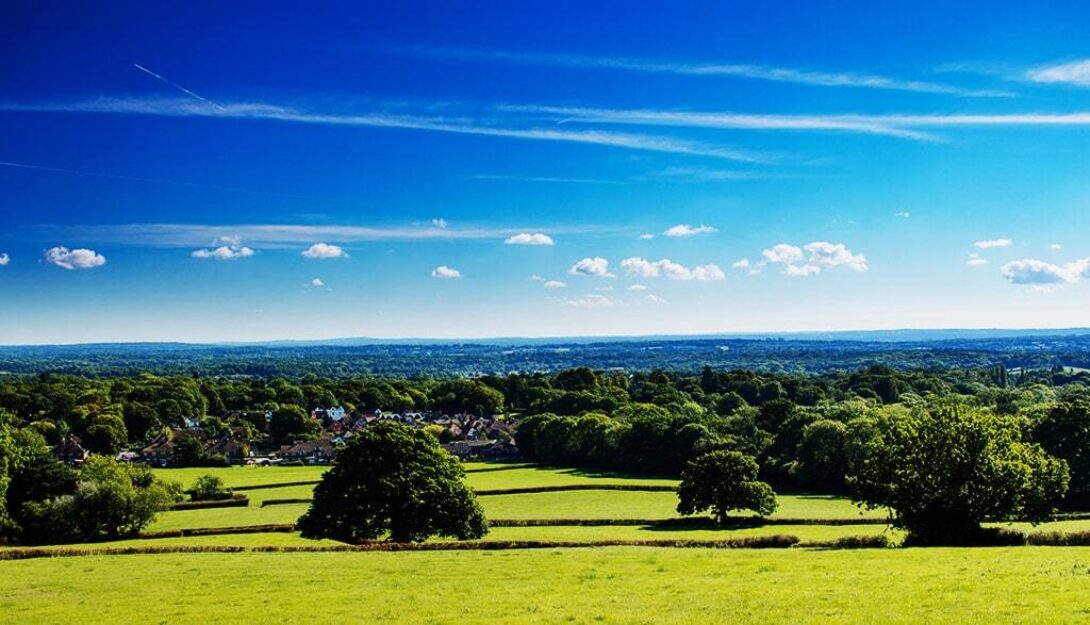
Many of us want a green policy, but definitions of what constitutes a good green policy vary. To me, a good green policy protects the beauty of the English landscape. It encourages fresh air and clean water, prevents litter and facilitates good recycling or disposal of waste. We should not prevent all new development but should seek to preserve much of the natural environment and the farms we see around us. The single most important green policy we can follow is to limit migration, as a rising population, of course, requires us to build on more green fields.
Since 1945 government and Council-led planning has become more and more intrusive, trying to limit the volume of development, and having a heavy influence over where it should go and what it should look like. Substituting the judgement of civil servants for that of private landowners, homeowners and investors have not produced a notable improvement in the beauty and utility of development over say the Georgian terraces of Bath or the Victorian villas of London, nor has it arrested the steady erosion of the countryside around every main town and city. It leaves the market short of homes, helping prices of them upwards to choke off some people's reasonable ambition to own a home of their own.
It has managed both to create artificial scarcity of development land and to encourage the concentration of development. In my own county of Berkshire large acres of West Berkshire are protected from most development by being registered as an Area of Outstanding Natural Beauty, whilst much of Maidenhead and Windsor constituencies are protected by Green belt designations. This leaves my own central Berkshire area prone to high levels of development as it does not benefit from any green space special protection.
We need to ask ourselves some basic questions about our current system of planning. How does it manage to let homebuyers and conservationists down at the same time? Why does it require a high density of development and such large mortgages to buy? Why does so much development end up in London and the South East? I will explore further in future blogs.

John Alan Redwood, Baron Redwood, is a British politician and academic who represented Wokingham in Berkshire as Conservative Member of Parliament from 1987 to 2024. Born on 15 June 1951, he served as Secretary of State for Wales under John Major and twice stood unsuccessfully for the Conservative Party leadership during the 1990s. Following his ministerial career, Redwood held positions in the Shadow Cabinets of William Hague and Michael Howard before spending his remaining parliamentary years as a backbencher. Prior to entering Parliament, he earned a doctorate at All Souls College, Oxford and served as Director of the Number 10 Policy Unit under Margaret Thatcher.