Pilgrimage to Beijing
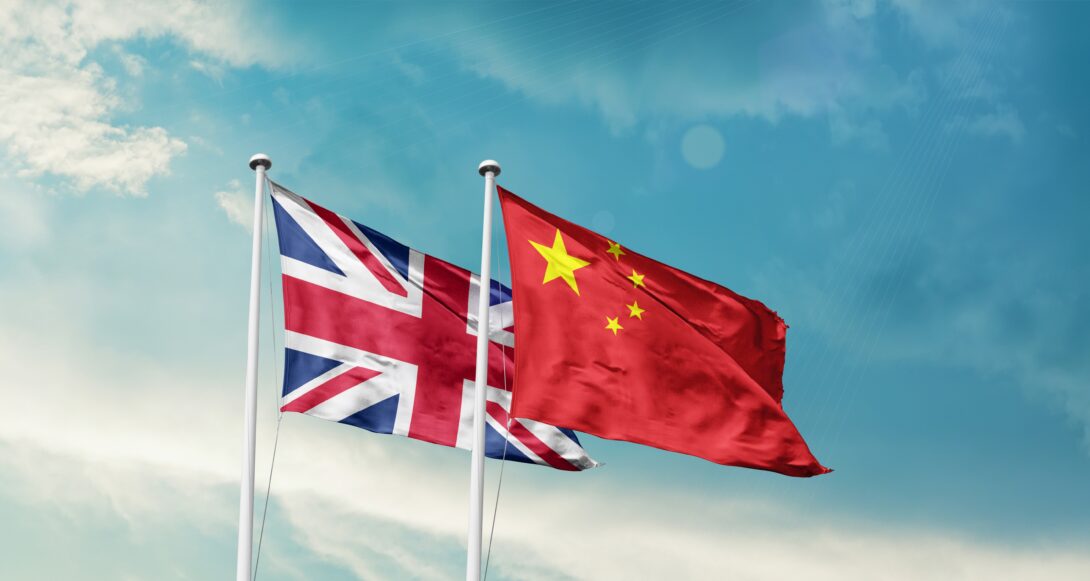
When one of the world’s superpowers becomes a totally unpredictable rogue state it makes sense to reduce dependence on it. One way of doing so is to engage more closely with the other superpower: China. That is the basic logic behind Keir Starmer’s visit to China, starting Wednesday (28 January), as it was for Canada’s Mark Carney and France’s Emmanuel Macron’s recent visits, alongside Germany’s Chancellor Merz's next month.
The Starmer visit is particularly significant for two reasons. First, Britain is one of the closest allies of the USA and most dependent on it. Starmer has, hitherto, gone to considerable lengths to avoid offending Trump, infuriating many of his supporters. Second, the UK’s relations with China have been particularly bad ever since Theresa May’s visit in 2018 and are far removed from the optimistic ‘golden era’ of the Coalition period (in which I was directly involved, with several official visits to China).
But the significance should not be exaggerated. Britain, these days, is a ‘middle power’ rather than a great power. British politicians once boasted about Britain being the ‘fifth biggest economy in the world’. The latest IMF and World Bank rankings for GDP (Purchasing Power basis) have the UK as 10th, just behind France and some way behind Brazil and Indonesia. Turkey lurks at 11th. This, together with a continuing struggle against economic stagnation and our divorce from the EU, means that the UK has less clout than in the ‘golden era’. The ruthlessly unsentimental Chinese will adjust their expectations accordingly.
What are the benefits and risks of such a visit for Starmer and the UK?
At a minimum, a visit without mishaps and rows followed by a photo-opportunity with President Xi and an impressive-sounding declaration about a ‘strategic partnership’ will be seen as a win. Britain will be able to show that it has at least some independence from the Trump administration. China will point to another Western leader beating his way to its door.
The substance of the visit centres on economics. There is a big problem for the world in that China’s weak domestic consumption has resulted in export-driven growth – mercantilism - and extreme competitive pressure in global manufacturing where China dominates. This imbalance should correct itself in time, and, in any event, largely deindustrialised Britain is much less affected than Germany.

Britain can promote exports in areas where China is relatively weak, notably services - education, creative industries, financial and professional services. And, rather than emulate good king Knut in demanding that the tide turn, putting up trade barriers, we can encourage Chinese inward investment to create jobs in sectors where China also has superior technology, for instance, renewable energy. This was, after all, how we dealt with the Japanese 40 years ago, with good results.
When I was Secretary of State for Trade our central concern was that Britain was outperformed in the China market by other Western countries. That is still true; but China is nonetheless a major market. China (including Hong Kong) now accounts for 5.3% of UK exports of goods and services: more than for Australia, India and Japan combined, albeit a long way behind the EU (41%) and the USA (27%).
Another major source of economic benefit is that leading British companies, as in pharmaceuticals and vehicles, have invested heavily in China and their repatriated profits finance investment in the UK. By common consent China is not an easy country to operate in, though probably easier than other big emerging markets like India and Brazil. We do need to remember that China, on some metrics, now has a bigger economy than the USA and is ahead in many technologies. Engagement is a ‘no brainer’.
Critics say that we should, instead, be concentrating on security ‘threats’ and ‘human rights’. As to the former, there are real issues in relation to cyber-security and it is right to be vigilant and to challenge misbehaviour by Chinese state entities. But the recent ‘spy’ panic in the Times and Telegraph is wildly overdone. At a time when the US administration and its allies like Elon Musk are openly influencing our domestic politics (and I could add the governments of Pakistan, India and Israel amongst others) it borders on the absurd to get hysterical because an obscure Labour MP had a Chinese Communist Party supporter in his office or because some Tory researchers were sharing political gossip with the Chinese about their party hopefuls. Surely MI5 has other priorities.
Human rights is a bigger issue for liberals. I take comfort from the fact that the Leader of the Canadian Liberals (and Prime Minister) is promoting Canadian interests and defending its liberal values without feeling the need to give the Chinese government public lectures on human rights. China is not a liberal democracy and makes no claims to be so, arguing that it has its own version of ‘democracy’ and ‘human rights’. In any event, it is in good company with many other non-democratic regimes in Asia, the Middle East and Africa with whom we do business.
Britain is, however, right to raise the issue of British nationals in Hong Kong and to have offered asylum to those who have chosen to leave. And a private request for compassionate treatment of those imprisoned under the National Security Law might produce dividends in a way that public lectures will not. On issues well outside British responsibility, such as Xinjiang, it is better to leave admonitions to the United Nations, whose critical but politically neutral report under Bachelet had far more impact than finger-pointing by Western governments, whose own 'war on terror' is itself open to damning criticism.
When the former leader of the ‘free world’ and our leading ally is abandoning human rights and gunning down peaceful protesters in the street, this may not be the best time to lecture the Chinese – especially from a position of weakness. Better to stick to economics.

Sir John Vincent Cable is a British politician who led the Liberal Democrats from 2017 to 2019 and represented Twickenham in Parliament from 1997 to 2015 and again from 2017 to 2019. He served as Secretary of State for Business, Innovation and Skills and President of the Board of Trade in the coalition government between 2010 and 2015. Cable studied natural science and economics at Cambridge before working as a finance officer in the Kenya Treasury and lecturing in economics at Glasgow University, where he also earned his PhD. His distinguished career included roles in the Diplomatic Service, directing research at the ODI, advising the Commonwealth Secretary-General, heading the international economics programme at Chatham House, and serving as Chief Economist for Shell Group Planning.