No famous Socialist victory in Spain
Reports of a 'famous victory' by the socialists in Spain's recent election are misleading, says John Redwood.
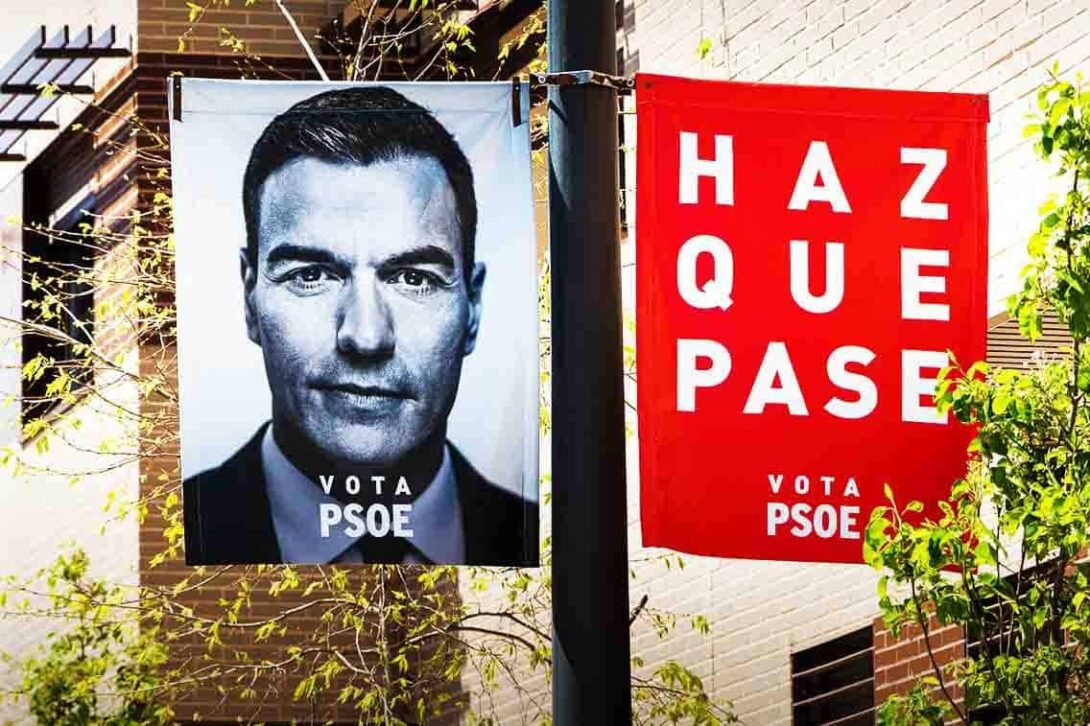
According to the BBC and others the Spanish socialist party won a famous victory. It is true they are the largest single minority party in the new Parliament and have the first chance to try to form a government.
"Winning" means they got just 28.7 per cent of the vote and 123 seats in a 350 seat Assembly. This is fewer seats than the centre-right Popular party got in the previous election when they had 137 seats. They were unable to create a stable government in coalition with others to last a full term.
The conservative PP plunged from 137 seats to just 66 seats. Their vote share almost halved from 33 per cent to 16.7 per cent. They lost votes to the right of centre challenger party Ciudadanos who increased their position to 57 seats and to the new force of Spanish nationalism, Vox, who took 24 seats from zero before. The right of centre parties commanded 42 per cent of the vote and have 149 seats between them.
The left of centre parties took just 1 per cent more of the vote, at 43 per cent. They captured 165 seats between them, with the PSOE (socialists) on 123, and Podemos on 42. This leaves them short of a majority.
The biggest third bloc comes from Catalonia. There are 22 MPs from that part of Spain where many voters wish to leave the Spanish union. Neither the left nor the right coalitions will be that keen to do a deal with the Catalans, as Catalan nationalism is unpopular in the rest of Spain whilst remaining popular in Catalonia. It is likely Spain will remain without a government pending the European and local elections. Neither the PP led coalition nor the PSOE led coalition was able to govern effectively in the last Parliament owing to the arithmetic of support.
These kind of outcomes are now very common on the continent where the main centre-left and centre-right parties no longer command enough support to form stable governments in the way they used to. It probably suits the EU, as it means there is no strong challenge or power centre in most member states capable of disagreeing or pressing successfully for a change of EU policy.

John Alan Redwood, Baron Redwood, is a British politician and academic who represented Wokingham in Berkshire as Conservative Member of Parliament from 1987 to 2024. Born on 15 June 1951, he served as Secretary of State for Wales under John Major and twice stood unsuccessfully for the Conservative Party leadership during the 1990s. Following his ministerial career, Redwood held positions in the Shadow Cabinets of William Hague and Michael Howard before spending his remaining parliamentary years as a backbencher. Prior to entering Parliament, he earned a doctorate at All Souls College, Oxford and served as Director of the Number 10 Policy Unit under Margaret Thatcher.