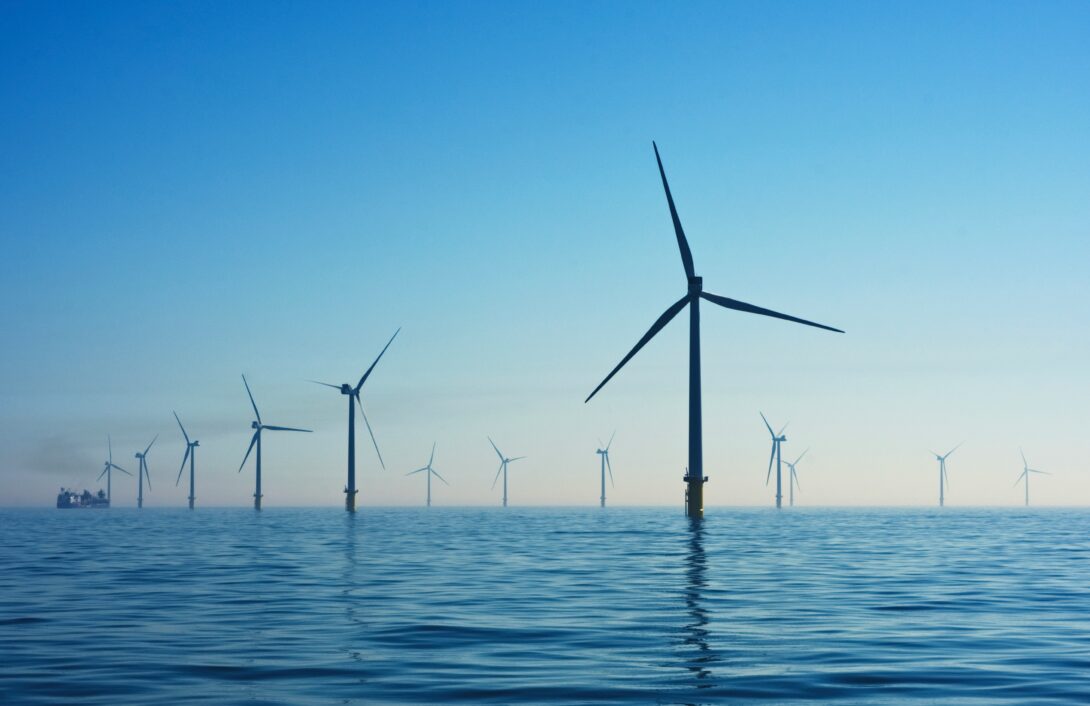
At war with Chinese windmills
Attitudes towards China have hardened in recent years in the UK notwithstanding Keir Starmer’s visit to Beijing in January. Nonetheless it was a surprise to see the UK government blocking a planned Chinese investment in the Scottish Highlands, at Ardersier, to manufacture wind turbines. It was potentially the largest turbine factory in the world, employing 1,500 people. After all, utilising China’s impressive ‘green’ technology was thought to be a safe and sensible form of collaboration.
I don’t normally warm to the rhetoric of the Scottish National Party but I have to say that I have much sympathy with the Scottish Deputy Chief Minister and Economics Minister, Kate Forbes, who said the decision was: ‘simply, sabotage of Scotland’s industrial future’.
The £1.5 billion project involving the Chinese company Ming Yang was to be on a site on the Moray Firth once used to employ 4,500 people for oil and gas platform assembly. Ming Yang is recognised as one of, if not the, leading company in the world for wind technology where China is the dominant producer with 70% of global wind capacity. Ming Yang is already a trusted partner of Octopus Energy, a reputable and popular British energy supplier.
Political dinosaurs in Britain and the USA may regard wind power as a ‘woke’ response to the ‘climate hoax’. But the Chinese long understood and planned for its development as a source of cheap, secure and clean energy. They are now being vindicated, not least by the disruption to oil and gas supplies from the Gulf. So, why is it a problem to utilise Chinese investment and technology to develop our own wind-power sector?
‘National security’ is involved. The Scottish Conservative leader has attempted to explain: ‘the Chinese will spy on British seas, defence submarines and the layout of energy infrastructure’. It seems not to have occurred to him that the undoubtedly sensitive submarine naval base at Faslane is on the other side of Scotland. Satellites and container ships can see far more than static towers in the North Sea. And there are far more obvious ways of engaging with Britain’s energy system including the (minority) Chinese stake in our new nuclear power stations.
There are ominous similarities with the story of Huawei which was excluded from the UK for equally murky reasons, also rationalised as ‘national security’. Huawei was a key supplier of telecoms technology and hardware to the UK. When Secretary of State, I queried the use of Huawei in sensitive installations but was reassured that any hypothetical Chinese attempt to create ‘back doors’ into secure systems could be monitored and managed. The benefits of Huawei’s (apparently) superior products outweighed the risks.

Theresa May was given the same advice which led to the sensible compromise on 5G: that Huawei be excluded from the most sensitive work but used for peripheral hardware. After American intervention, however, this decision was overturned, and Huawei products were ripped out of the system at considerable cost to British consumers and companies.
The American intervention, while presented as a matter of ‘national security’, was almost certainly the result of high-level lobbying by Huawei’s main commercial rival: the American multinational Cisco Systems. The two companies had been involved in fierce competition in the marketplace and in the courts for a couple of decades. Huawei were winning. Cisco’s management was however highly skilled at lobbying and appears to have persuaded President Trump that US interests were best served by blocking Huawei from Western economies on security grounds (though Cisco was itself then engaged in aggressive marketing in Russia and China). A phone call from the White House and Britain caved. Huawei has however survived its expulsion and has gone from strength to strength, mainly in emerging markets and in China itself.
Alleged Chinese security ‘threats’ are now appearing everywhere, and readers of the Times and the Telegraph are reminded on an almost daily basis of Chinese ‘spies’ lurking in universities, parliament, science labs and Chinese-owned business. The paranoid wing of the Conservative Party and, perhaps also, individuals in our security services appear to be obsessed by this Chinese ‘threat’ beyond any plausible risk assessment. They get plenty of encouragement from our friends in Washington.
Of course, there are risks and security issues. It is right to be prudent. Common sense suggests that any Chinese investment in politically sensitive sectors should involve British inspection and surveillance of any potentially suspect hardware and software. There are threats, but also opportunities.
Many of these opportunities lie in the fields of renewable energy and associated manufacture. As a result of foresight not matched in the West, China now dominates production and technology in the sector: wind and solar power and their manufacturing supply chains; high-voltage transmission; electric vehicles; batteries.
Whilst Britain has made good progress in wind power development at competitive cost - helped by lifting the absurd fatwa outlawing cheaper onshore wind – the manufacturing supply chain is less developed. In the Coalition years, one big success of the Industrial Strategy was attracting Siemens to make turbines in Hull. There are now 27 (foreign owned) factories in the UK. But only the Chinese are willing to make the high-tech and high-value nacelles ( the ‘brain’ and ‘engine’ of the turbine) in the UK. Or were, until banned.
The same issue will arise with EVs if we adopt the template of Margaret Thatcher in her response to competition from Japanese car imports: that is, to embrace UK production by Japanese companies. We should demand that BYD and other Chinese companies make their cars and batteries here. China has grown through demands for technology transfer (including theft). We should learn from them. Nervous spooks will point out that EVs have sensors which can pick up sensitive data. That is why the Teslas on Chinese roads are excluded from military bases. We should do the same but also welcome Chinese manufacturers as we welcomed Nissan, Toyota, and Honda.
I am reminded of advice I heard thirty years when working in a British multinational on prospective investments in China: ‘only the naïve ignore the threats; only fools ignore the opportunities’. Let this be the last time folly prevails.

Sir John Vincent Cable is a British politician who led the Liberal Democrats from 2017 to 2019 and represented Twickenham in Parliament from 1997 to 2015 and again from 2017 to 2019. He served as Secretary of State for Business, Innovation and Skills and President of the Board of Trade in the coalition government between 2010 and 2015. Cable studied natural science and economics at Cambridge before working as a finance officer in the Kenya Treasury and lecturing in economics at Glasgow University, where he also earned his PhD. His distinguished career included roles in the Diplomatic Service, directing research at the ODI, advising the Commonwealth Secretary-General, heading the international economics programme at Chatham House, and serving as Chief Economist for Shell Group Planning.